Massive outages as deficit hits 6,500MW
Updated 5 hours ago

Regional conflict inflates fuel prices, straining airlines and flying schools alike
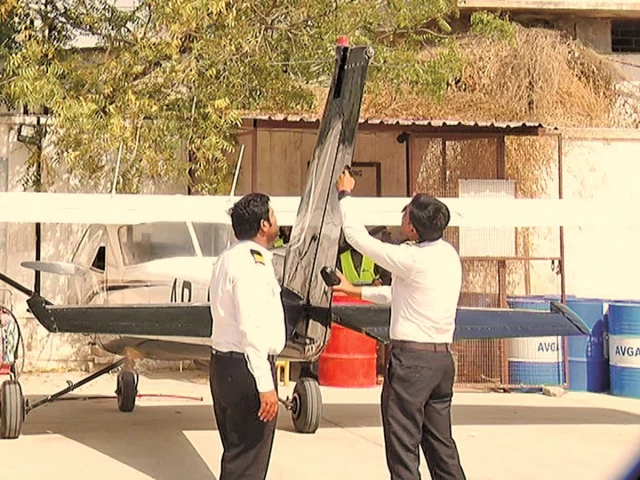
Escalating hostilities between Iran, Israel, and the United States are now sending shockwaves through Pakistan's aviation sector, with commercial flights and pilot training facing unprecedented financial pressures.
Jet fuel prices have surged, and aviation gasoline for training planes has followed suit, hitting aspiring pilots the hardest. Industry experts warn that if the trend continued, small aircraft operation could come to a halt.
Global fuel markets severely under pressure these days because of the closure of the Strait of Hormuz by Iran, following joint US-Israel attacks that began on February 28. Oil prices have since rise sharply, creating ripples across the globe.
In Pakistan, aviation experts say, commercial flight fuel, Jet A-1, has risen by Rs154 per litre, while aviation gasoline, used in smaller training aircraft, has hot up by Rs80 per litre.
As a consequence, they say, domestic fare tickets have jumped by Rs10,000-15,000, and international fares by Rs30,000150,000, as airlines struggle to absorb the sudden cost spike.
The price of crucial fuels has transformed the aviation landscape, disrupting both commercial operations. In the past 17 days, over 1,600 flights from Karachi and other airports to Gulf states and beyond were cancelled due to regional instability.
For trainee pilots, the financial squeeze is severe. At the Karachi Airport's hangars, the situation is especially concerning, as flying lessons now cost an extra Rs1 million, while reserves of aviation gasoline are estimated to last only a month.
Unlike commercial planes, training aircraft rely on aviation gasoline, produced at just five locations worldwide. Imported in 16,000-24,000 litre shipments and 200-litre drums, the fuel now costs Rs670 per litre.
"Overnight, everything changed in the aviation industry," said Imran Aslam Khan, CEO of Sky Wings. "The cost of flying training has gone up by nearly Rs1 million, and if fuel prices keep rising, these expenses could jump by another Rs2-3 million."
As Middle East tensions persist, Pakistan's aviation sector finds itself navigating both literal and financial turbulence, with the cost of flight reaching new heights long before takeoff.














This material may not be published, broadcast, rewritten, redistributed or derived from. Unless otherwise stated, all content is copyrighted © 2026 The Express Tribune.







COMMENTS
Comments are moderated and generally will be posted if they are on-topic and not abusive.
For more information, please see our Comments FAQ