Education without character cannot build a nation
Updated 16 hours ago

Talks ended without an MoU signed, as the US 'expected'

The Pakistan-facilitated and mediated peace talks in Islamabad over the weekend (April 11-12, 2026) ended after 21 hours of gruelling and one-on-one sessions between the American and Iranian delegates. It was their first direct interaction since the 1979 Iranian Revolution. Expecting this session to produce a deal or an agreement was too optimistic and based upon diplomatic naiveté. Intractable issues take their own time. The Obama-era nuclear deal between Iran and West Plus (JCPOA) took two years of painstaking negotiations.
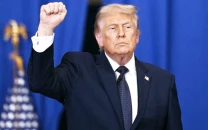
President Donald Trump and Vice President JD Vance thanked Pakistan for its 'incredible hospitality' and effective mediating role during talks "wherein the US participated in 'good faith' but did not get a deal." Vance mentioned the US had clearly defined its red lines, homing around the central issue of a firm commitment from Iran not to pursue nuclear weapons or related capabilities in the long-term. He confirmed discussions on other issues like re-opening the Strait of Hormuz (SoH), Iran's frozen assets, sanctions relief, etc. He concluded that the US was leaving 'a final and best offer.'
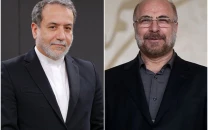
The Iranian delegation, led by Parliament Speaker Mohammad Bagher Ghalibaf and FM Abbas Araghchi, postulated their national stance and red lines from a 'position of confidence'. They rebuffed the US demand for de-nuclearisation; sought security guarantees for Lebanon/Hezbollah as a prerequisite for nuclear concessions, if any; refused to give up control of Hormuz waterway rejecting US mine-clearing claims; and termed US position as excessive and maximalist.
The talks ended without an MoU signed, as the US 'expected'. However, the diplomatic mood remains that of "No Breakthrough and No Breakdown". The two-week ceasefire remains in effect, and another round is slated for April 16 in Islamabad. As per the Council of Foreign Relations and other reports, the core issue remains Iran's nuclear programme, besides the SoH, Iranian military capability including proxies, sanctions relief and war reparations. Iran seems to be leveraging de-nuclearisation for permanent peace and sanctions relief, and would likely concede, like it did during the Oman-facilitated Geneva talks in February this year.
The fact that Pakistan was able to enjoy the confidence of both sides and hosted them, with no less than the US VP attending, testify to Pakistan's diplomatic prowess and ability to balance competing bloc interests. And this adds to Islamabad's mediatory laurels starting from American opening to China in 1971, Geneva Accords for Soviet withdrawal from Afghanistan in 1988, and Doha Accord in 2020. Indian frustration is well understood and is not worth a comment.
Consequent to the diplomatic 'deadlock' in Islamabad, President Trump ordered naval blockade of ships 'entering or departing Iranian ports and coastal areas', notching up military, diplomatic and economic pressure. Iran's southern coasts along SoH and Gulf of Oman feature several strategic ports, vital for Irani and global trade, especially for oil and container traffic.
The ports along SoH, the primary gateway to the Persian Gulf, handle Iran's non-oil trade; oil and gas being exported through SoH's Kharq island complex. Shahid Rajaee Port Complex, located near Bandar Abbas, is Iran's largest and most modern container port, handling approximately 85-90% of Iran's container traffic and 55% of its overall trade. The older Shahid Bahonar Port, also in Bandar Abbas, handles cargo and passenger traffic. Bandar-e Lengeh, west of Bandar Abbas, is a key hub for refrigerated container exports and automobile transits to Central Asia. Jask Port, east of Hormuz, is terminus point for Goreh-Jask pipeline, and Iran's major crude oil export terminal.
The Chahbahar Port Complex (CPC) along Gulf of Oman (Makran Coast) is Iran's 'only deep-water oceanic port', strategically located outside the contested SoH, which links Iran with the Indian Ocean, even if the Strait is blocked. CPC, 170 km west of Pakistan's Gwadar Port, consists of Shahid Beheshti, primary commercial terminal, and Shahid Kalantari terminal, also called 'Golden Gate' for landlocked Afghanistan and Central Asia.
Between March 2024 and March 2025, Irani ports handled nearly 235 million tons (MT) of cargo, including 153 MT oil goods, and almost 82 MT of non-oil goods, showing 1314% year-on-year growth. Iran's petroleum exports are almost entirely sea-based, generating an estimated $74 billion (2024-25), significantly aiding national economy. Its 'Shadow/Dark Fleet' bypasses sanctions and blockades with tankers using AIS spoofing (disguising their location) and making ship-to-ship oil transfers, mostly to China. Besides, since early 2026, Pasadaran/IRGC extracts transit tolls, payable in Chinese yuan or cryptocurrency, starting at ~$1 per barrel from vessels passing SoH. Ships also use specific Iranian-guided channels to avoid naval mines, laid by IRGC without GPS locators.
Technically speaking, a naval blockade is an act of war and a military operation to cut off an enemy's SLOCs (sea lines of communication), using naval and air power. It prevents ships and aircraft from entering or leaving specific enemy ports/coastal areas so as to isolate, economically cripple an enemy and making him surrender by choking off military and other critical supplies. Naval blockade is allowed under International Law once declared, and its compliance is regulated by International Maritime Law. In 'Close Blockade' warships are deployed immediately outside enemy ports; while in 'Distant Blockade' ships are further away to monitor larger areas and avoid shore-based weapons. This would be the likely scenario of the US blockade. The US 'legally' can halt, potentially seize or destroy vessels from Iran and other 'neutral nations' that attempt to break the blockade.
Militarily speaking, the US has to only block the mouth of SoH (97 km) once it opens to Gulf of Oman in the south near Chahbahar. CENTCOM has naval resources available in the theatre. Iran's residual drones/missile and speedboat responses would confirm or otherwise, if Iran overplayed its hand during Islamabad negotiations. And whether Washington is resorting to another frustrated brinkmanship.
Iranian reliance on overland trade/smuggling through Pakistan and to some extent Afghanistan would remain its discreet lifeline. Tehran's Caspian Sea opening (around 800 km) to Central Asia in the north is under development and impeded by its frosty relations with Azerbaijan due to border tensions, competition for regional influence and Tehran's support to Armenia in the Nagorno Karabakh dispute. Azerbaijan, on its part, maintains close ties with Israel evoking Iran's ire due to espionage fears, etc.
So, fingers remain crossed!








This material may not be published, broadcast, rewritten, redistributed or derived from. Unless otherwise stated, all content is copyrighted © 2026 The Express Tribune.



COMMENTS (3)
Comments are moderated and generally will be posted if they are on-topic and not abusive.
For more information, please see our Comments FAQ