UN chief condemns Quetta train blast
Updated 5 hours ago

8-16 hours of load shedding nationwide
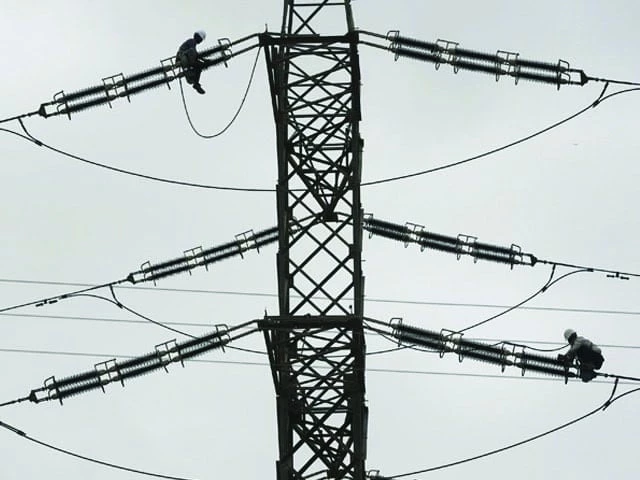
The country faces a worsening electricity crisis, with the overall power shortfall reaching 6,500 megawatts (MW). This leads to prolonged load shedding across multiple regions and growing public frustration.
According to sources, total electricity demand has surged to around 22,000MW, while generation remains limited to 15,400MW.
The energy mix includes 1,500MW from hydropower, 9,250MW from thermal sources, 1,200MW from wind, 2,850MW from nuclear, 400MW from solar, and 200MW from bagasse.
The widening gap between supply and demand has resulted in 8 to 16 hours of load shedding in various parts of the country. In the Lahore Electric Supply Company (Lesco) region, unannounced load shedding continued throughout the night.
Sources said generation from gas-based power plants declined due to fuel shortages, contributing to reduced output. Lesco reportedly faced a 1,000MW shortfall, with nighttime demand reaching 2,900MW. Urban areas experienced frequent hourly outages, while rural areas saw outages exceeding eight hours. Complaints of low voltage have also increased.
Officials noted that electricity demand drops during the day due to solar usage, but load shedding intensifies in the evening hours.
The government on Wednesday apologised to power consumers for higher than promised "load management" arising from lower water availability for power generation.
In a statement, the Power Division said it was "apologising for the additional load management necessitated by reduced hydropower availability."
A spokesman for the Power Division also urged consumers to conserve electricity, particularly during nighttime hours, and to adopt energy-saving practices.
The power ministry reported a temporary increase in load management, attributing it to a sharp decline in hydropower generation during peak hours last night, which strained the electricity supply and widened the demand-supply gap.
"Hydropower production dropped by 1,991MW during the night, contributing to a total shortfall of around 4,500MW at peak demand," the spokesman said, adding that the overall electricity demand during peak hours was recorded at approximately 18,000MW.
The spokesperson said the reduction in hydropower generation was due to decreased water releases from the country's dams. The Power Division clarified that load management was currently limited to nighttime hours, and there was no shortfall during the day.
However, many distribution companies, particularly Islamabad Electric Supply Company (IESCO), have officially announced three hours of loadshedding in the morning.
The Power Division expressed optimism that the situation would improve in the coming days as water released from dams was expected to increase, boosting hydropower generation.
"Improved availability of re-gasified liquefied natural gas (RLNG) is also expected to ease the power supply situation," the spokesperson said.
The prolonged load-shedding has started disrupting daily life and raising fresh questions about power sector management, planning failures and the transparency of official claims.
Across both urban and rural areas, consumers report outages far exceeding the limited "load management" described by authorities. In remote districts, electricity cuts stretching up to 12 hours - and in some cases as high as 16 hours - have effectively brought routine life to a halt.
"Prolonged hours of loadshedding have virtually suspended routine life. In remote areas, even 12 hours of outages are being observed," said Sammi-ur-Rehman, reflecting growing public frustration.
Field reports suggest the worst-hit areas fall under the Multan Electric Power Company (Mepco), where residents describe a pattern of hourly outages.
In Muzaffargarh, villagers say nights have become unbearable. "We cannot even sleep properly," said Zaheer, adding that outages lasting 12 to 16 hours have become routine rather than exceptional.
The disruption is no longer confined to rural areas. Urban centers, including Faisalabad, Lahore and Kasur, are also experiencing recurring outages ranging from three to eight hours, undermining official assertions of minimal shortfall in major cities.
Consumers say lack of a clear, publicly shared schedule has compounded the crisis. Many reports that outages occur unpredictably, disrupting businesses, household routines and essential services. The situation has also revived memories of the power crisis of the past decade, with social media flooded with comparisons to a period marked by chronic electricity shortages.
Officials, however, continue to project a controlled scenario.
A spokesperson for Lahore Electric Supply Company (Lesco) said there is little to no shortfall in the provincial capital, attributing outages to maintenance work and targeted cuts in high-loss feeders. But this explanation appears increasingly at odds with on-ground realities reported by residents.
Behind-the-scenes, supply constraints are becoming harder to ignore.
A senior Petroleum Division official confirmed that gas supply to power plants has been sharply reduced due to a halt in liquefied natural gas (LNG) cargoes until early May. At present, only limited indigenous gas is being diverted to the power sector - a shortfall that directly affects generation capacity.
Legal challenges are beginning to surface. A petition filed in the Lahore High Court has contested unannounced load-shedding, arguing that consumers are being denied equitable access to electricity despite paying high tariffs.
Meanwhile, businesses across the province report mounting losses due to erratic power supply, while households face worsening conditions amid rising temperatures. With summer demand yet to peak, concerns are growing that the current situation may deteriorate further in the coming weeks.
For now, the reappearance of extended outages - despite years of relative stability - points to deeper structural vulnerabilities. As the gap between official assurances and lived reality widens, pressure is building on authorities to explain not just the causes of the crisis, but why it appears to have returned with little warning.







This material may not be published, broadcast, rewritten, redistributed or derived from. Unless otherwise stated, all content is copyrighted © 2026 The Express Tribune.








COMMENTS (2)
Comments are moderated and generally will be posted if they are on-topic and not abusive.
For more information, please see our Comments FAQ