Avatar leak sparks frenzy ahead of streaming debut
Updated 9 hours ago

Culinary traditions of city's many communities are on full display during holy month
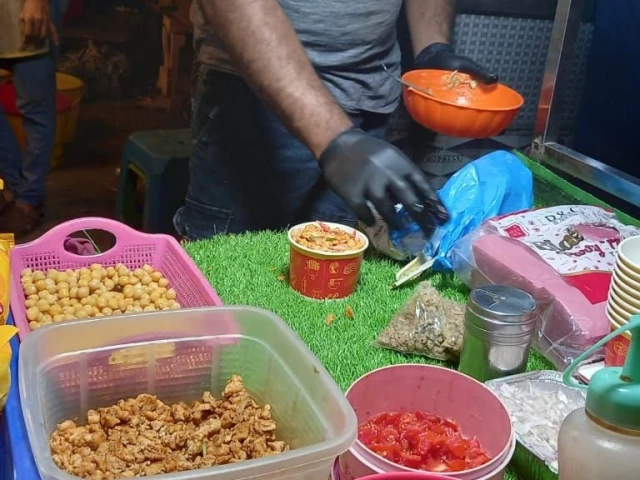
As Ramazan evenings descend on Karachi, the city transforms into a vast open-air dining space. Markets become livelier, streets glow with lights, and food stalls begin preparing dishes that draw crowds of hungry visitors. Across the city, different neighbourhoods reflect the culinary traditions of the communities who live there.
From the Deccani flavours of Hyderabad Colony to the lively Bohra Food Street near Pakistan Chowk and the historic Haleem Biryani of Pan Mandi in the old city area, these places highlight the diversity of Karachi’s Ramazfan food culture.
Deccani flavours at Hyderabad Colony
One of the most distinctive places to experience traditional iftar dishes is Hyderabad Colony. The neighbourhood is home to families whose roots trace back to India’s Hyderabad Deccan, and many of their culinary traditions have been carefully preserved over generations.
As sunset approaches during Ramazan, stalls and small eateries begin preparing dishes that fill the streets with the aroma of spices and slow-cooked meals. Residents say that these recipes have been passed down through families and continue to hold an important place in their community gatherings.
Among the most popular dishes served at iftar are harees and haleem, both prepared through long hours of slow cooking. Harees in particular is made in a traditional Deccani style using wheat and meat that are cooked together until they form a thick and smooth mixture. It is usually topped with fried onions, green chillies, and lemon, adding layers of flavour to the dish.
Another staple of the area’s iftar spread is namkeen dahi baray. These soft lentil dumplings are soaked in chilled yoghurt and lightly seasoned with spices. The dish is particularly popular because it offers a refreshing taste that balances the heavier foods often eaten at sunset.
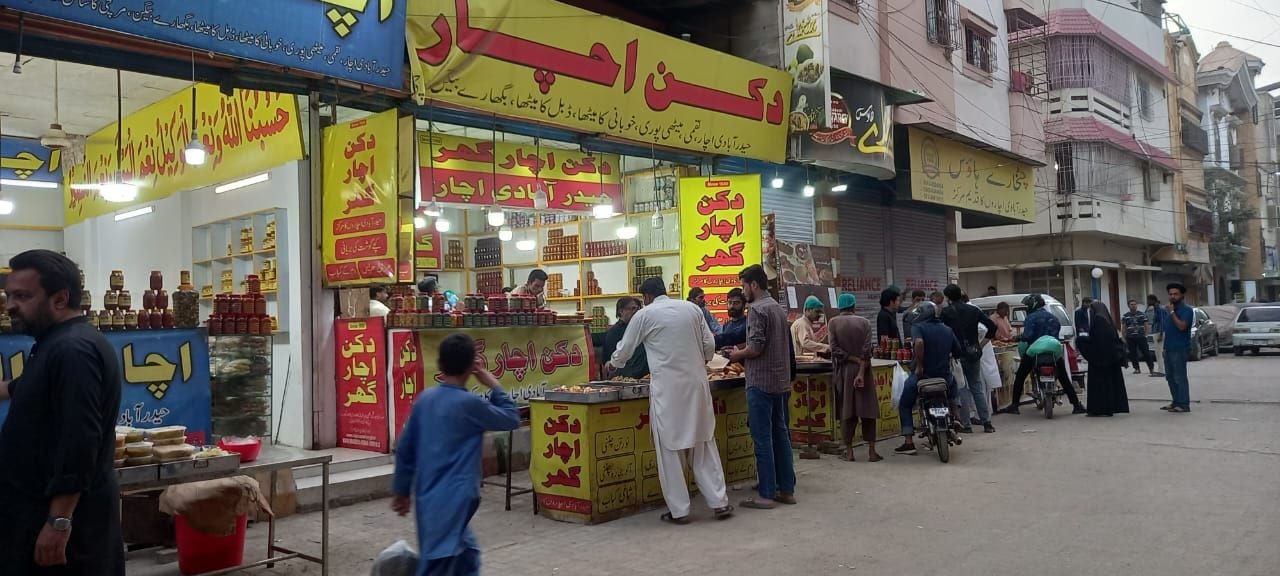
The famous Hyderabadi Achaar street is full of suprise foods like Luqmi. PHOTO: Author
Street vendors also serve khattay aloo, a tangy potato dish prepared with tamarind and spices. Its sour and mildly spicy flavour makes it a favourite among those looking for something different at iftar.
A signature dish of Deccani cuisine, baghare baingan, can also be found at several stalls. Small aubergines are cooked in a rich mixture made from sesame seeds, peanuts, coconut, and spices before being finished with a traditional tempering. The result is a deeply flavoured curry that reflects the richness of Deccani cooking traditions.
Adding to the culinary fame of Hyderabad Colony is its kache gosht ki biryani, another highlight of Ramazan evenings. Prepared with tender, raw mutton that is marinated in aromatic spices and layered with fragrant basmati rice, this biryani is slow-cooked to perfection. The kache gosht absorbs the flavours of the rice and spices, resulting in a dish that is succulent, rich, and full-bodied. Many locals consider it a must-try when visiting the area during Ramazan, and visitors often line up at biryani stalls long before sunset to get a taste of this iconic Deccani speciality.
During Ramazan evenings, visitors from different parts of Karachi often come to Hyderabad Colony to try these dishes, turning the neighbourhood into a lively gathering spot before and after iftar.
Bohra Food Street lights up Ramazan nights
A short distance away, another food destination has been drawing crowds during Ramazan nights the Bohra Food Street near Pakistan Chowk.
After iftar, as Karachi slowly returns to life, this small street begins to fill with visitors. Colourful stalls line both sides of the narrow lane, while families, groups of friends, and food enthusiasts gather to explore the variety of dishes being prepared.
The food here reflects the traditions of the Bohra community, whose cuisine carries strong influences from Gujarati and Middle Eastern cooking styles. These influences give the dishes a distinctive flavour that stands apart from typical street food found elsewhere in the city.
One of the most popular items on the street is malpua, a traditional dessert that attracts many visitors each night. The sweet is made from a flour batter that is deep-fried in ghee and then topped with thick rabri. Served warm, its soft texture and rich sweetness make it one of the most sought-after treats on the street.
Another favourite snack is aloo kachori, a crispy pastry filled with spiced potatoes. The golden pastry is served with tangy chutneys that add both sourness and heat, making it a popular evening snack.
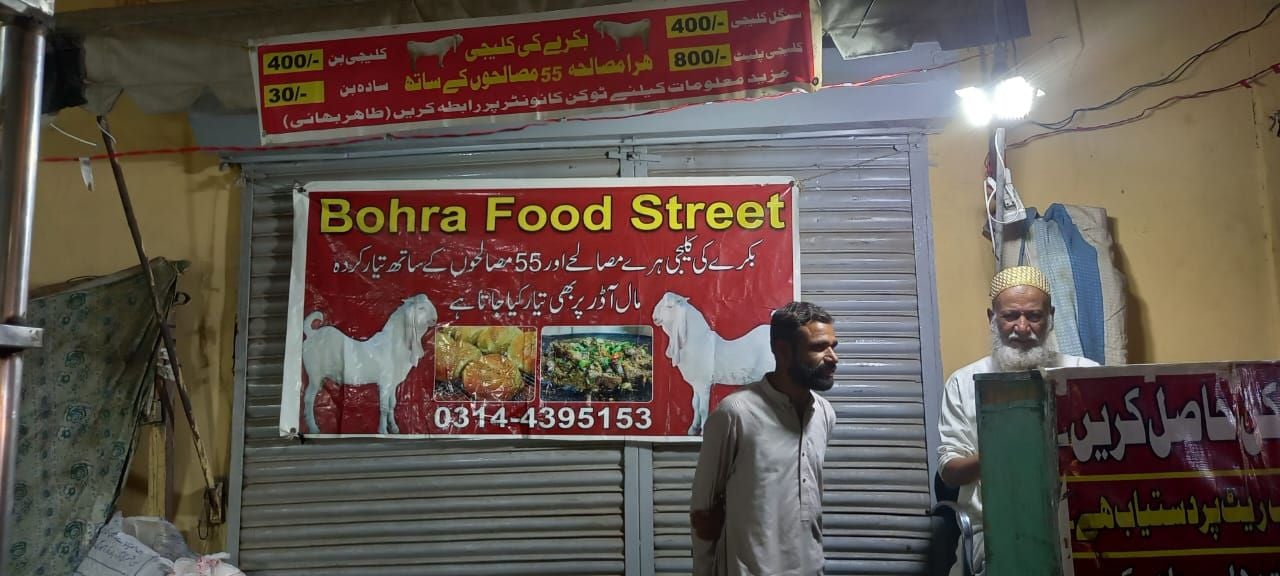
A view of Bohra food street. PHOTO: Author
For savoury options, the kaleji burger has gained particular attention. In this dish, spiced beef or mutton liver is fried and placed inside a soft bun with onions and chutney. Compared with conventional burgers, it offers a more traditional and strongly flavoured alternative.
Some stalls also prepare khausey, a noodle dish influenced by Burmese and Gujarati cuisines. It features noodles served with a thick curry and topped with fried onions, green chillies, lemon and a variety of garnishes that create a layered taste.
Traditional dishes such as haleem and nihari are also available and become especially popular closer to sehri, when people stop by for a late-night meal with freshly baked naan.
Visitors with a sweet tooth can try sweet samosas, filled with khoya, coconut and dry fruits. After frying, they are lightly coated in sugar syrup, giving them a crisp texture and delicate sweetness.
The famous Haleem Biryani of Pan Mandi
Further towards Karachi’s old city area lies another Ramazan culinary attraction the historic locality of Pan Mandi.
Among the many Ramazan food markets across the city, Pan Mandi has gained particular fame for its unique Haleem Biryani, a dish that draws food lovers from across Karachi.
As the lid of the large cooking pot is lifted, the aroma of ghee and warm spices fills the air. Inside is a remarkable combination where the thick richness of haleem blends with fragrant rice, creating a dish that is neither purely haleem nor traditional biryani, but something entirely its own.
Food lovers say the dish’s appeal lies in this unusual combination. The soft texture of the haleem mixes with the individual grains of rice, creating a rich and satisfying flavour that has become closely associated with Ramazan in the city.
The story behind this dish goes back several decades. According to locals, the Haleem Biryani was first introduced by a migrant who arrived in Karachi from Delhi after the partition of the subcontinent. What began as a small food stall during Ramazan gradually gained popularity among residents of the old city.
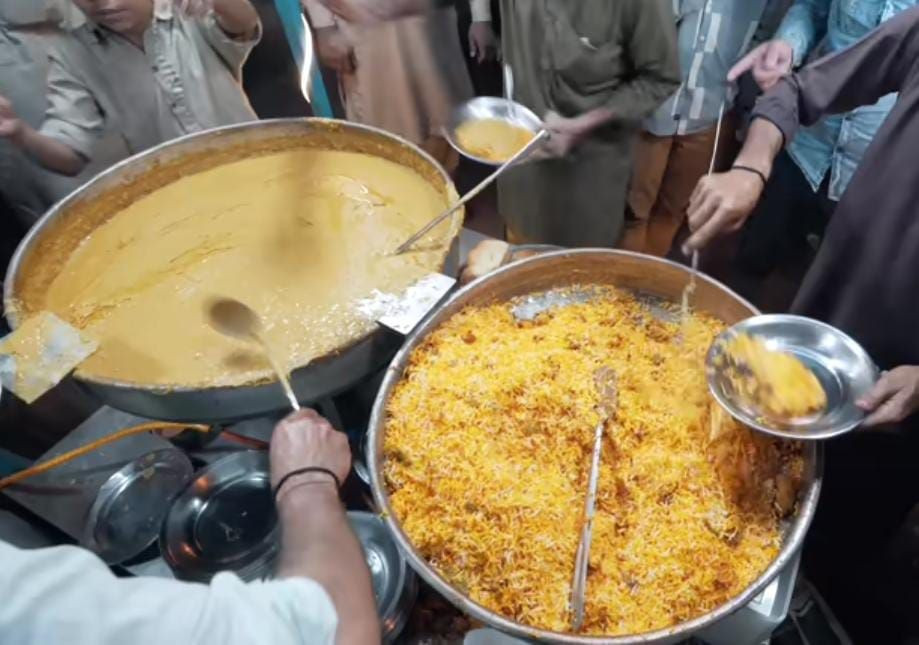
The Paan Mandi Haleem Biryani is only available during Ramazan. PHOTO: Author
Over time, the dish turned into a local tradition and today it is prepared almost exclusively during Ramazan. Many visitors now travel to Pan Mandi specifically to taste this speciality, often forming long queues at the stalls where it is prepared.
For many people, the dish carries a deeper meaning. It represents a story of migration, resilience and the preservation of culinary traditions brought by families who settled in Karachi decades ago.
Karachi’s Ramazzan food scene reflects the city’s multicultural character. Each neighbourhood offers dishes shaped by the history and traditions of the communities who live there.
During Ramazan nights, people visit these areas not only to eat but also to experience the lively atmosphere that surrounds the city’s food streets.














This material may not be published, broadcast, rewritten, redistributed or derived from. Unless otherwise stated, all content is copyrighted © 2026 The Express Tribune.






COMMENTS
Comments are moderated and generally will be posted if they are on-topic and not abusive.
For more information, please see our Comments FAQ