POL prices slashed amid global fuel ease
Updated 8 hours ago

Commission reveals gaps in water supply, electricity, communication
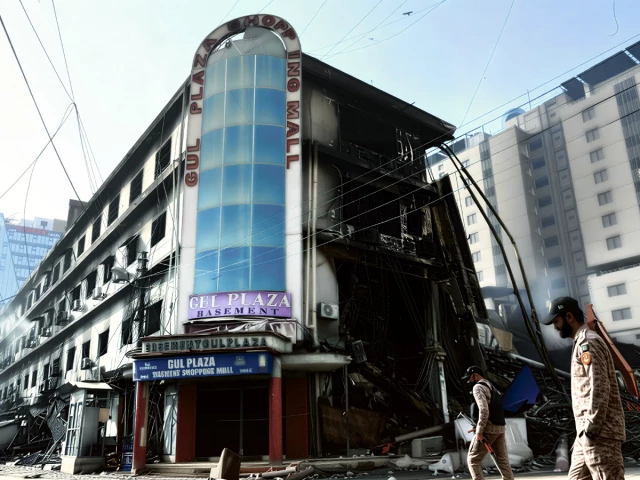
The investigation into the Gul Plaza fire has revealed serious shortcomings in Karachi's fire brigade system, including shortages of water, frequent power outages, and lack of proper communication channels, the Gul Plaza Judicial Commission heard on Thursday.
During proceedings before Justice Agha Faisal, Station Officer Muhammad Taufiq of the Fire and Rescue Department presented a detailed account of the brigade's response. He disclosed that firefighting teams often face hours-long delays while filling water tenders, and in emergency situations, there is no official means for teams to communicate with one another.
Taufiq said that on receiving the fire alert, snorkels, blowers, and tenders were available at Rampa Plaza, but smoke and flames initially prevented entry into the building. Using snorkels, firefighters rescued people from the roof.
The commission inquired about staffing and equipment. Taufiq said there are three snorkels, two fire tenders (one non-functional), over 60 staff members, and four drivers working in two shifts. Only trained personnel can operate tenders and snorkels, which hold 1,600 gallons of water. Each station has its own water tank of 55,000-60,000 gallons, which is refilled from Bolton Market and Saddar Fire Station. On the day of the fire, power to the fire station failed shortly after the blaze began.
When asked about alternatives during electricity outages, Taufiq said a UPS is available only for the control room. Water supply depends on a single line, with low pressure causing delays in filling tenders. Even running motors overnight often does not fill the tanks completely.
The commission also learned that the first tender from Saddar Fire Station reached Gul Plaza only after 10:34pm. While departure times are recorded, there is no system to track arrival, and the department has no wireless communication, relying instead on mobile phonesa system prone to failure during crowded events.
Taufiq explained that water is used first to control fires; foam is deployed only if water proves ineffective. A special type of snorkel requires a minimum height of the fifth floor to operate properly.
Further testimony from Civil Defence technical instructor Mursaleen Beg highlighted that delays in using foam or chemical extinguishers can prevent fires from being controlled in time, as water alone may not stop the oxygen supply to burning material.











This material may not be published, broadcast, rewritten, redistributed or derived from. Unless otherwise stated, all content is copyrighted © 2026 The Express Tribune.







COMMENTS
Comments are moderated and generally will be posted if they are on-topic and not abusive.
For more information, please see our Comments FAQ