SBP opens formal banking to licensed virtual asset service providers
Updated 2 hours ago

ICMA highlights rare opportunity to strengthen manufacturing credit as inflation, external risks persist
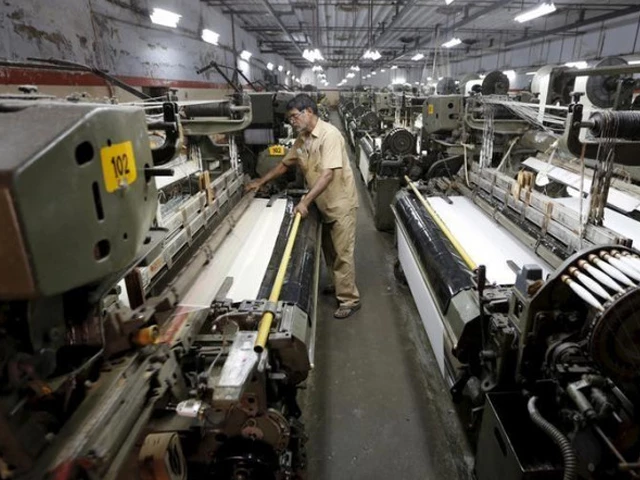
The State Bank of Pakistan (SBP)'s decision to maintain the policy rate at 10.5% presents an opportunity to expand targeted credit for the manufacturing sector while safeguarding macroeconomic stability, according to a review released by the Institute of Cost and Management Accountants of Pakistan (ICMA).
In its latest assessment of the Monetary Policy Statement, ICMA's Research Department said the central bank's decision to hold the policy rate reflected rising uncertainty triggered by conflict in the Middle East, which has pushed up global fuel prices, freight and insurance costs.
According to the review, these developments pose potential risks to global trade and supply chains. Domestically, headline inflation rose to 7% in February. Large-scale manufacturing recorded cumulative growth of 4.8% during July-December FY26.
The current account posted a surplus of $121 million in January 2026, allowing the SBP to increase foreign exchange reserves to $16.3 billion. Consumer confidence improved and business sentiment remained stable, though tax collection by the Federal Board of Revenue remained below target, widening the fiscal gap.
Against this backdrop, ICMA highlighted credit accessibility for the manufacturing sector as a key constraint on Pakistan's industrial expansion. Using its Manufacturing Credit Transmission Gap (MCTG) model, the institute assessed whether banking sector lending was keeping pace with manufacturing output. The model compares growth in credit extended to manufacturing with growth in manufacturing output.
When the gap approaches zero, credit expansion broadly matches industrial output growth, signalling balanced conditions for industrial expansion. In the second quarter of FY2026, the MCTG narrowed to negative 0.31%, bringing credit growth close to the pace of manufacturing output. ICMA described this as a rare window for strengthening industrial credit without creating broader macroeconomic pressures.
Instead of recommending a broad policy rate reduction, the institute suggested the SBP consider targeted low-interest financing for manufacturing while keeping the overall policy rate unchanged.
It cited international examples such as the European Central Bank's targeted long-term refinancing operations and sector-specific refinancing programmes by the People's Bank of China.












This material may not be published, broadcast, rewritten, redistributed or derived from. Unless otherwise stated, all content is copyrighted © 2026 The Express Tribune.






COMMENTS
Comments are moderated and generally will be posted if they are on-topic and not abusive.
For more information, please see our Comments FAQ