Workers demand railway minister's removal
Updated 2 hours ago

Rising oil, freight costs from ME crisis strain outlook including remittances life-line

Pakistan, which has long lived amid regional instability, finds itself once again on the periphery of a major geopolitical conflict, increasingly described by analysts as carrying the risk of wider global escalation. Although not a direct participant, Pakistan faces severe economic spillovers as the unfolding Middle East crisis threatens two of its most critical external lifelines: remittances from Gulf economies and the uninterrupted flow of imported oil that underpins domestic energy supply and industrial activity.
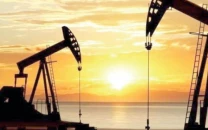
Escalating geopolitical tensions in the Middle East following ongoing US-Israeli attacks on Iran have begun casting a long economic shadow over Pakistan. Business leaders and economists warn of surging oil prices, rising inflation, external account stress and renewed risks to macroeconomic stability. Global crude markets reacted sharply as fears mounted over potential disruption of the Strait of Hormuz, a vital artery for more than 20% of global seaborne oil trade. Brent crude surged about 7-9% to around $78-79 per barrel in early trading. Some analysts warned prices could spike toward $90-100 if hostilities intensify or shipping routes remain disrupted.
For Pakistan, a structurally energy-import-dependent economy, the shock comes at a delicate juncture. Inflation has just begun to re-accelerate, and the trade deficit is widening again. According to recent economic indicators, average inflation for July-January FY26 stood at 5.2%, but February inflation has already climbed to around 7%, signalling renewed price pressures even before the full oil shock materialises.
Federation of Pakistan Chambers of Commerce and Industry (FPCCI) President Atif Ikram Sheikh urged the government to announce emergency measures to shield trade and industry from the falloutPakistan imports more than $5.7 billion worth of crude petroleum annually, primarily from Saudi Arabia, about $3.2 billion, and the United Arab Emirates, around $2.3 billion. When refined petroleum products are included, total petroleum imports reached roughly $10.7 billion in FY25, underscoring dependence on Middle Eastern energy supplies.
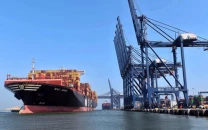
Beyond direct fuel costs, exporters face mounting pressure from sharply rising freight and insurance expenses as shipping companies reroute vessels away from conflict-prone zones. Sheikh noted that diversions around the Cape of Good Hope, South Africa, due to Red Sea risks are adding 15-20 days to transit times for Pakistani exports destined for Europe, the UK and the United States.
Freight rates on key routes could surge by as much as 300%, while marine insurance premiums have jumped under war-risk classifications, said Sheikh. This will inflate the cost of imported raw materials and erode the price competitiveness of Pakistani textiles and manufacturing exports.
To mitigate risks, FPCCI proposed building strategic petroleum reserves, securing deferred-payment oil facilities with allies such as Saudi Arabia, and arranging contingency supply agreements to ensure uninterrupted fuel flows.
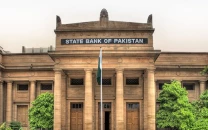
FPCCI Senior Vice President Saquib Fayyaz Magoon called for targeted support to offset soaring logistics costs. He urged the commerce ministry and the State Bank of Pakistan (SBP) to introduce freight and insurance relief measures and subsidise extraordinary war-risk premiums threatening export earnings.
Magoon also stressed the need to maximise domestic refining capacity to reduce dependence on imported refined fuels. "We need a localised, resilient strategy that protects energy supplies and keeps export engines running," he said.
Economists warn the fallout could extend far beyond trade costs. Dr Usama Ehsan Khan, head of research at the Policy Research and Advisory Council, said oil prices were already climbing rapidly and could reach $100 per barrel if Iran attempts to close the Strait of Hormuz.
He noted inflation has risen to around 7% year-on-year in February, compared with roughly 5-6% earlier, reducing the likelihood of near-term monetary easing. "There are now virtually no chances of a policy rate cut. If inflation rises further due to oil, the central bank may even have to tighten again." Pakistan's external position was already weakening before the crisis. The trade deficit widened to about $22 billion during July-January FY26 from $17 billion a year earlier, while exports fell 7.1% and imports rose 9.5%, according to recent macroeconomic data.
Maryam Ayub, an economist at PRIME, said the situation echoes the America's proxy war with Russia in the Ukraine conflict, when supply disruptions drove oil prices higher and widened Pakistan's current account deficit. "If this conflict prolongs, it will increase already elevated energy prices and add to inflationary pressures," she said. Financial markets have begun pricing in these risks. Pakistan's stock market reportedly plunged up to 9-10% at the open following the escalation, reflecting investor anxiety over oil-driven inflation and external account stress.






This material may not be published, broadcast, rewritten, redistributed or derived from. Unless otherwise stated, all content is copyrighted © 2026 The Express Tribune.













COMMENTS
Comments are moderated and generally will be posted if they are on-topic and not abusive.
For more information, please see our Comments FAQ