Massive outages as deficit hits 6,500MW
Updated 2 hours ago

Following the arrival of the holy month, low-income families are unable to afford fundamental items for Sehri, Iftar
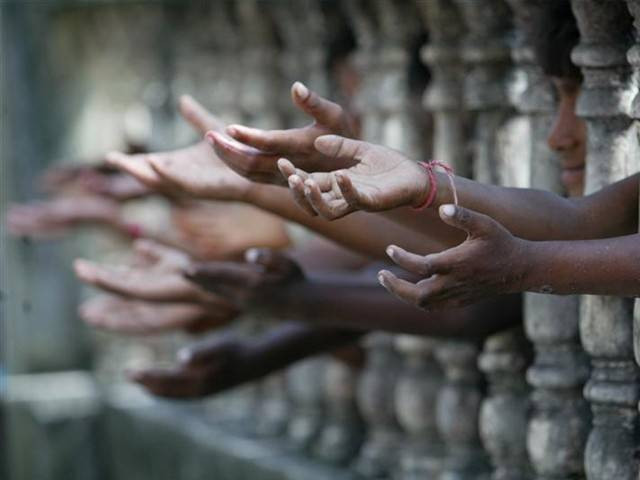
For thousands of low-income families, the holy month is not only a time of reflection and worship but also a period of financial anxiety. Rising inflation, unemployment, and stagnant wages have eroded purchasing power to such an extent that even basic food items have become unaffordable.
65-year-old Rasool Bakhsh works as a watchman in a residential and commercial building located in Saddar, Karachi. Residing in Chakra Goth, Rasool reports to duty at 8am every day and remains on duty until 8pm. For working 12 hours daily, he earns a monthly salary of Rs25,000.
Two days before the start of Ramazan, he appeared quite distressed. While going up and down the building lift and stairs, he started giving people a pleading look. When a resident of the building asked him the reason behind his worry, his eyes filled with tears, and wiping them with a handkerchief, he revealed that Ramazan was about to begin and there were no groceries at home.
Due to low income and rising inflation, thousands of people like Rasool Bakhsh in Karachi are troubled. They include members of the labour class and the lower middle class. This was also evident before the first Iftar of Ramazan when people came to buy fruit. Wealthier individuals were purchasing good-quality fruit by the dozen and by the kilogram, while low-income individuals were trying to buy cheaper fruit in small quantities.
Abdul Hameed Khan, an employee of a factory in the SITE area, told The Express Tribune that the Commissioner of Karachi had once again issued official price lists for food items this year, and deputy commissioners and assistant commissioners in the respective districts were taking action against shopkeepers who failed to comply. "However, even if the official rates are enforced, after the increase in expenses, low-income individuals no longer have sufficient purchasing power to buy food items," said Khan.
Mirza Maqsood, a labour representative, revealed that workers in factories were not even being paid the minimum wage set by the government, hence it was unlikely to expect their purchasing power to improve.
"The government has increased the minimum monthly wage from Rs37,000 to Rs40,000, but is that sufficient in today's circumstances? The erosion of purchasing power is also severely hurting people's self-respect. This can be seen during Ramazan at Iftar tables set up for the public, where even respectable, self-reliant individuals can be seen breaking their fast," noted Maqsood.
Renowned economist Dr Kaiser Bengali confirmed that due to unemployment and inflation, the purchasing power of ordinary people had indeed declined. "A poor person cannot afford fruit throughout the year, so how can they afford it during Ramazan? I have seen families who do not buy eggs for their children on regular days," noted Dr Bengali.
Dr Bengali urged the government and district administration to ensure the advance stocking of food items that were in high demand during Ramazan and maintain their supply throughout the month. "It is not necessary for the government to stock these items itself; this can also be done through the private sector. This would prevent prices of these items from rising during Ramazan," opined Dr Bengali.









This material may not be published, broadcast, rewritten, redistributed or derived from. Unless otherwise stated, all content is copyrighted © 2026 The Express Tribune.













COMMENTS
Comments are moderated and generally will be posted if they are on-topic and not abusive.
For more information, please see our Comments FAQ