Avatar leak sparks frenzy ahead of streaming debut
Updated 7 hours ago

When possessiveness becomes romance, lessons on toxic relationships from MZHT
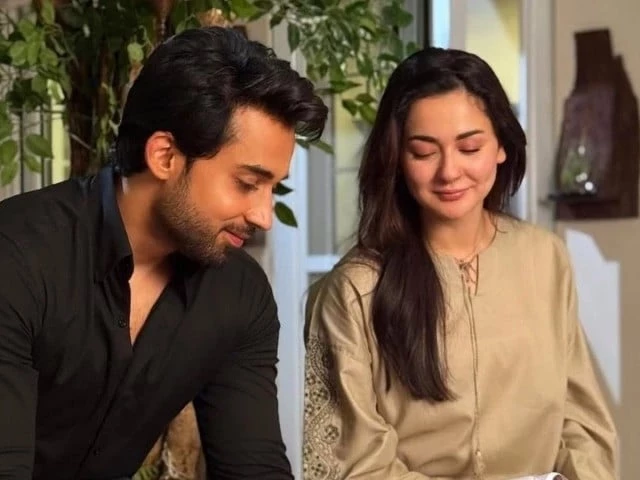
As Pakistani audiences debate what healthy love looks like on screen, Meri Zindagi Hai Tu (MZHT ) has evolved beyond a commercial hit.
It has become a cultural flashpoint, drawing critique for its uncomfortably familiar tropes. Its polarisation raises a deeper question: what kinds of toxic relationships are we quietly validating in 2026?
Starring Hania Aamir and Bilal Abbas, the series follows Ayra — a principled medical student — and Kamyar, a privileged man whose idea of romance often intersects with coercion.
Repetitive plot, romanticised coercion
At the heart of the backlash is not just frustration with repetition, but disbelief that a 2026 drama still treats boundary-breaking as a lover’s badge of honor.
The drama's main character, Kamyar, recycles a familiar trope: a wealthy man relentlessly pursuing a woman until she gives in. He shows up uninvited, dismisses refusals, and ignores her autonomy — yet the narrative repeatedly frames this behavior as romantic.
Over time, Ayra’s resistance softens, and she gradually develops feelings for him, reinforcing a troubling idea: persistence justifies passion. This repetition subtly conditions audiences to see obsession as a viable form of love.
Rather than being treated as a red flag, persistent boundary-crossing is framed as strategy. One viewer summed it up bluntly:
What’s particularly nauseating abt #MeriZindagiHaiTu is how the background score whenever Kamiar is harassing Ayra is all so funny and boppy.
— Mahwash Ajaz 🇵🇰 (@mahwashajaz_) November 16, 2025
This is neither funny nor cute. This is literally mental sickness. He is obsessive, angry & violent.
He is a criminal. Not a cutie.
Others argued that the issue extends beyond Kamyar’s behavior to the flat writing and limited development of Ayra’s character.
Exactly lets make him cute and funny🤦🏻♀️Why Ayra shown dumb tho she knows its harassment but she cries mein kya karoun,doesnt tell her parents ,dont even try calling the police and maybe get a restraining order,yes hes rich and influential but you are a dr u not some jahil
— Dramafan (@KhyberSKY) November 17, 2025
Between Kamyar’s persistent boundary-crossing and Ayra’s underdeveloped arc, MZHT presents a romance that feels inherently problematic.
A core viewer critique on social media is that MZHT doesn’t just depict toxic behavior — it normalises it.
Some argue the show gives abusive and alcoholic men like Kamyar a free pass, even using religion to justify morality in contrived ways:
That scene where Ayra tells Kamyar's mom’s friends he was under a black magic spell and now has become religious was so damn disgusting and insensitive to the victims. The makers made the wife victim-blame her own husband, and he changed now to protect Faria. 🙄#merizindagihaitu
— Raven (@velvetmodernism) February 16, 2026
But the narrative isn’t one-sided. Others point out that Ayra and her family can also slip into toxic patterns, blurring the villain/victim binary:
#merizindagihaitu https://t.co/mLcdHscmGG pic.twitter.com/mwLOWG8fjr
— Mehwish (@orivida_) February 14, 2026
Visual Storytelling and Subtle Cues
Alongside normalising toxic dynamics in its plot, MZHT is also troubling in how it subtly encourages viewers to root for Kamyar, largely because of his handsome appearance and charismatic framing. Dim lighting, lingering close-ups, and romanticised music recast coercive behavior as desirable.
When Kamyar marries Ayra out of revenge — acting on fabricated lies instead of confronting the truth — he punishes her by repeating the same obsessive, controlling patterns, further blurring the line between romance and harm.
Yet the narrative portrays him as irresistible: a man Ayra can’t seem to let go of, creating a dynamic in which emotional dependency begins to resemble captivity rather than choice.
Many viewers admit that part of the appeal lies not in his actions, but in Abbas’s on-screen charisma, making abusive tendencies feel forgivable or even romantic.
On social media, memes and reaction videos often celebrate Kamyar’s allure, unintentionally reinforcing the same boundary-crossing the show normalises.
Despite success, criticism persists
Despite the backlash, MZHT remains one of the year’s most talked-about dramas. Its soundtrack — performed by Asim Azhar — has topped playlists, and the on-screen chemistry between Hania and Abbas continues to captivate viewers.
Adding to its buzz, controversies on platforms like X have fuelled engagement. Every critical meme, trending debate, and hot take has amplified the series’ visibility — whether audiences agree with its portrayal or not.
In that sense, MZHT may be less of a love story and more of a mirror — reflecting back to society the narratives about masculinity, persistence, and forgiveness that television continues to package as romance.
In 2026, is obsession romantic or coercive? Is persistence love, or a disregard for boundaries? Should emotional harm be framed as passion? MZHT forces us to confront what we celebrate — and what we tolerate — on screen.













This material may not be published, broadcast, rewritten, redistributed or derived from. Unless otherwise stated, all content is copyrighted © 2026 The Express Tribune.






COMMENTS
Comments are moderated and generally will be posted if they are on-topic and not abusive.
For more information, please see our Comments FAQ