Kim Kardashian expands TV empire with 'Team Moms' on Paramount+
Updated 4 hours ago

The New World screwworm is a parasitic fly whose larvae feed on living tissue, causing a painful infestation
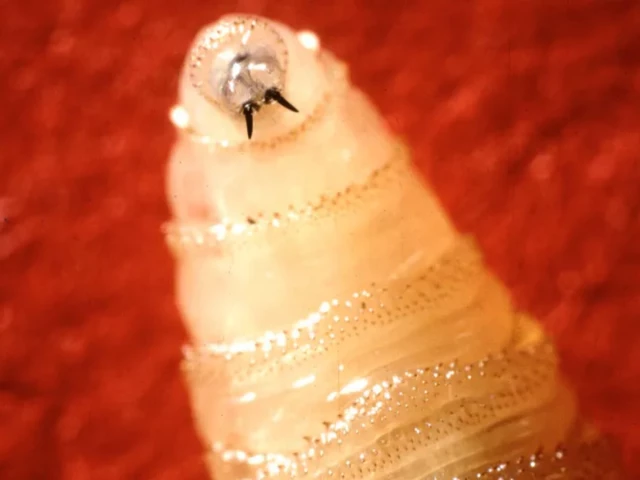
Texas has issued a statewide disaster declaration in response to the growing threat posed by the flesh‑eating parasite known as the New World screwworm (Cochliomyia hominivorax), even though the parasite has not yet been detected within the state or across the United States. The move, announced by Governor Greg Abbott, aims to mobilize state resources for prevention and response efforts as the parasite continues its northward movement from Mexico toward the U.S. southern border.
The New World screwworm is a parasitic fly whose larvae feed on living tissue, causing a painful and destructive infestation known as myiasis. Although the parasite most commonly affects livestock — posing a potentially devastating threat to cattle, sheep and other animals — it can infest humans under certain conditions, making health officials and agricultural authorities highly concerned.
In Texas, the disaster declaration allows the state’s specialized response teams to fully utilize government prevention and response resources in an effort to halt the parasite before it establishes itself domestically. Abbott stressed that the parasite’s continued advance “poses a serious threat to Texas’ livestock industry and wildlife,” underscoring the economic as well as public‑health implications of a possible infestation.
The parasite is native to regions of South America, the Caribbean and parts of Central America, where New World screwworm infestations have periodically caused major losses in animal populations. Female screwworm flies can lay hundreds to thousands of eggs in wounds or moist body openings, after which larvae burrow into living flesh and feed voraciously until they drop to the ground to pupate.
Although rare, travel‑associated human cases have been documented in the United States in recent years, prompting concern among health officials. A travel‑linked infection was confirmed in Maryland in 2025 after a person returned from El Salvador, highlighting how movement across borders can facilitate isolated human cases even when the parasite has not yet established local populations.
Preventive advice from health authorities emphasizes basic protective measures — such as keeping open wounds clean and covered, and using insect repellent in areas where the parasite might be present — in addition to safeguarding livestock and wildlife. The larger focus remains on early detection and coordinated response to prevent the parasite from gaining a foothold in U.S. territory.
Experts have long warned that environmental factors, including warmer temperatures and shifting ecosystems, could influence the spread of parasitic organisms. While the New World screwworm’s return represents a clear agricultural and veterinary threat, the state’s proactive disaster declaration signals how seriously officials are taking the potential public‑health and economic impacts.















This material may not be published, broadcast, rewritten, redistributed or derived from. Unless otherwise stated, all content is copyrighted © 2026 The Express Tribune.






COMMENTS
Comments are moderated and generally will be posted if they are on-topic and not abusive.
For more information, please see our Comments FAQ