Afridi awaits Imran's signal for Islamabad move
Updated 1 hour ago

Security guards deployed at pharmacy areas, at internal, external entry points, are also required to wear body cameras
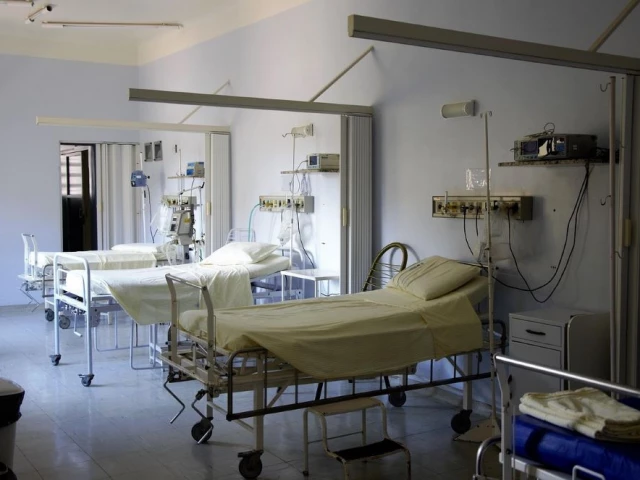
The Punjab government has imposed a complete ban on the use of mobile phones during duty hours in public sector hospitals, according to a notification issued by the Department of Specialised Healthcare and Medical Education.
Under the directive, hospital staff in grades below BPS-18 are prohibited from using mobile phones while on duty, particularly in clinical and service delivery areas. The department said the decision was taken after taking serious notice of mobile phone use affecting patient care.
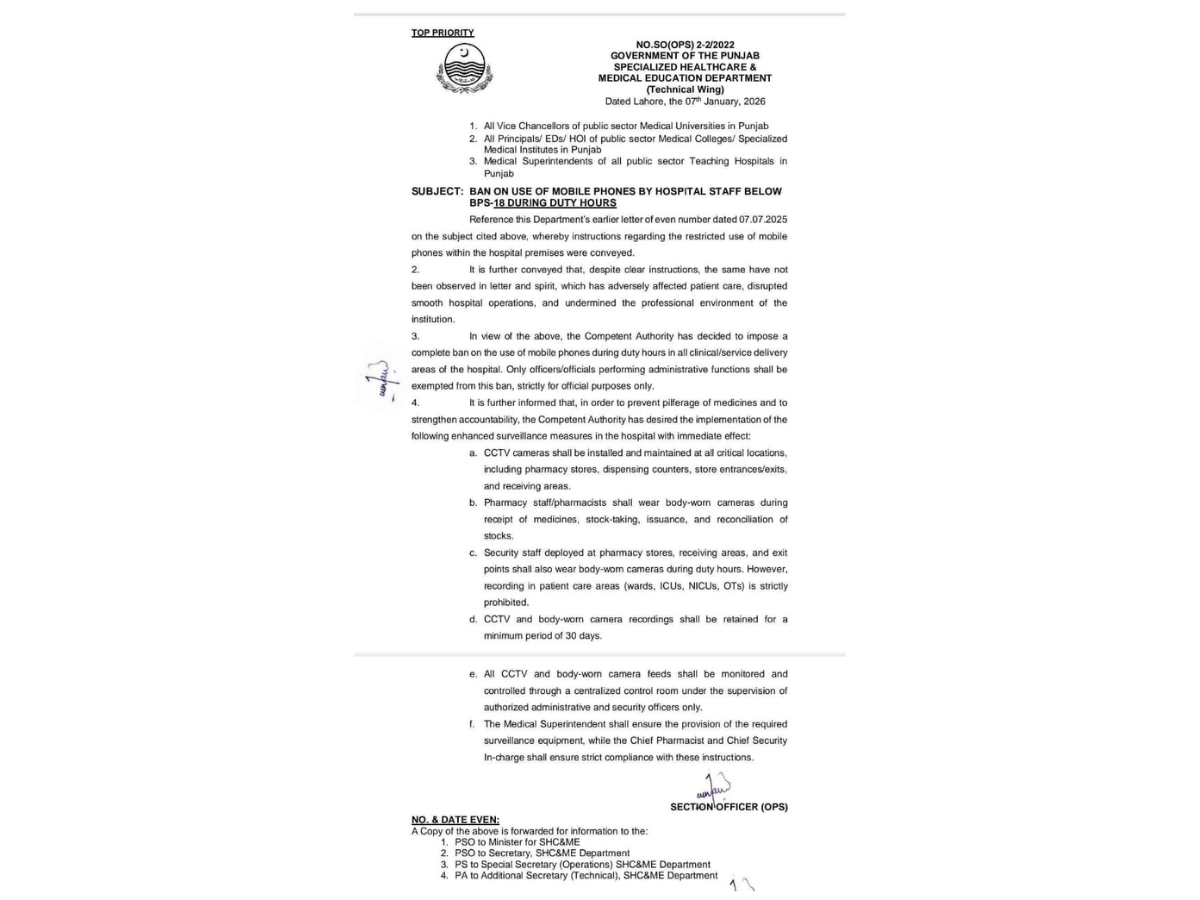
The ban applies to wards, intensive care units (ICUs), neonatal intensive care units (NICUs) and operation theatres, where recording has also been strictly prohibited. However, officers assigned purely administrative responsibilities have been granted limited exemptions for official work.
Read: CM Maryam orders updated free medicines list
To curb medicine theft, the department has also ordered enhanced surveillance measures in hospitals. CCTV cameras are to be installed at pharmacy stores and dispensing counters, while pharmacy staff have been directed to use body-worn cameras.
The notification stated that body cameras must be worn during stock receipt, issuance and reconciliation. Security guards deployed at pharmacy areas and at internal and external entry points will also be required to wear body cameras.
All CCTV and body camera footage is to be retained for a minimum of 30 days and monitored through a central control room. The control room will operate under the supervision of authorised administrative and security officials only.
Read more: Sindh to digitise drugs in govt hospitals
Medical superintendents have been instructed to ensure the provision of surveillance equipment, while chief pharmacists and chief security officers have been directed to strictly enforce the orders.














This material may not be published, broadcast, rewritten, redistributed or derived from. Unless otherwise stated, all content is copyrighted © 2026 The Express Tribune.







COMMENTS
Comments are moderated and generally will be posted if they are on-topic and not abusive.
For more information, please see our Comments FAQ