Political leaders mark Eidul Azha with messages of unity, sacrifice and compassion
Updated 1 hour ago

Farmers seek lifting of hunting ban amid rising crop losses
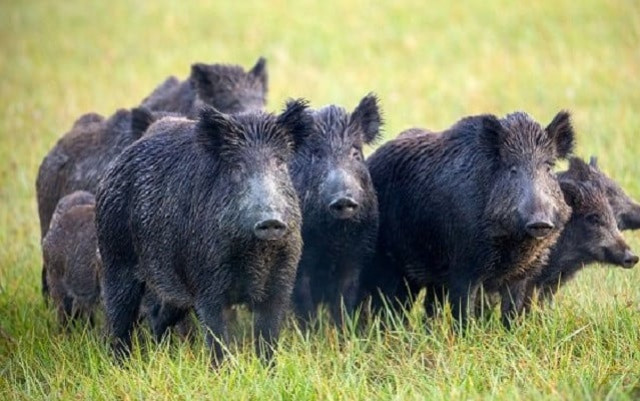
Once famous for soil that yielded abundant crops, Soon Valley, located in Tehsil Naushera of Khushab district, is now facing a growing crisis as wild boars increasingly destroy farmland, pushing local farmers towards economic ruin.
Residents say a government-imposed ban on hunting wild boars, enforced under wildlife protection laws, has severely impacted agriculture and livelihoods in the area.
Farmers in Soon Valley say the unchecked population of wild boars has become their most pressing challenge.
The valley is a major producer of potatoes, wheat and various vegetables.
For local farmers, sowing a crop is not merely an agricultural activity but an investment of their life savings, along with hopes tied to children's education and family responsibilities.
According to growers, cultivating a single acre of potatoes now costs more than Rs200,000, including expenses on seed, fertiliser, electricity and labour. However, when crops near maturity, herds of wild boars often attack fields under the cover of darkness.
Farmers say the animals cause more damage than consumption, uprooting plants with their powerful snouts and destroying entire fields within hours.
Talking to Express, political and social figure Mian Salahuddin said the current policy has created a crisis on the ground.
"The ban on hunting wild boars in the name of wildlife protection has effectively tied the hands of farmers," he said.
"If a farmer kills a boar to protect his crop, he faces heavy fines and, in some cases, imprisonment."
He argued that the law does not reflect the realities of Soon Valley.
"Wild boars are not an endangered species here. Their population has increased rapidly and is now out of control. When controlled hunting was allowed, their numbers remained balanced and they stayed away from farms and settlements.
Now they are fearless because they know no one can stop them," he added.
Farmers say the losses they face are not only financial but also psychological.
Many rely on bank loans or money borrowed from commission agents to finance cultivation. When crops are destroyed, repayment becomes impossible, trapping farmers in debt. As a result, a significant number of growers have stopped farming altogether.
Thousands of acres of fertile land now lie uncultivated, with farmers saying it is better to leave land barren than invest only to see crops destroyed.
The issue has also raised public safety concerns. Residents report that wild boars are no longer confined to fields and hillsides but frequently enter roads and residential areas at night.
Several traffic accidents involving motorcyclists have been reported, resulting in injuries and fatalities.
Environmentalists in the area also warn that boars damage mountain vegetation and destroy eggs of ground-nesting birds, disturbing the valley's natural ecological balance.
Farmers of Soon Valley have jointly appealed to the provincial government, Chief Minister Punjab and the Wildlife Department to urgently address the issue.
Their primary demand is the immediate lifting of the ban on hunting wild boars.
Alternatively, they suggest issuing hunting licences or launching a government-led population control campaign. Farmers also argue that if the government insists on protecting the animals, it should compensate farmers fully for per-acre crop losses.
"You cannot claim to support agriculture on one hand and allow farmers' livelihoods to be destroyed on the other," said a local farmer.
"If immediate action is not taken, agriculture in Soon Valley will collapse, directly affecting food supply and the national economy."
Residents urge policymakers to visit the valley and witness the situation first-hand.
"Laws are meant to serve people, not destroy their livelihoods," a farmer said. "Our plea is simple: let us live, and let us protect our means of earning."











This material may not be published, broadcast, rewritten, redistributed or derived from. Unless otherwise stated, all content is copyrighted © 2026 The Express Tribune.










COMMENTS (2)
Comments are moderated and generally will be posted if they are on-topic and not abusive.
For more information, please see our Comments FAQ