Woman dies after alleging sexual assault by husband
Updated 17 hours ago

Cold, foggy conditions persist across the province as winter bites
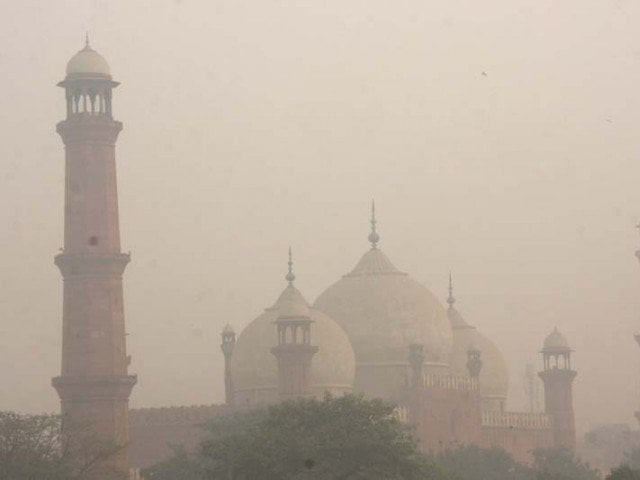
Pollution levels across Punjab remained high on Monday, with several districts recording unhealthy to very unhealthy air quality, as cold, dry weather and dense fog continued to trap pollutants.
According to data released by the Punjab Environmental Protection Agency (EPA), the province's average Air Quality Index (AQI) stood at 165 during the monitoring period from 8:00am to 3:00pm, placing the air quality in the "unhealthy" category for sensitive groups.
Several districts recorded AQI levels exceeding 200, signaling conditions hazardous for children, the elderly and individuals with respiratory or cardiovascular illnesses. Rahim Yar Khan topped the list with an AQI of 214, followed closely by Kasur (208) and Muzaffargarh (198). Other major urban centres also reported elevated pollution levels, including Lahore (181), Gujrat (182), Khanewal (183) and Narowal (187).
At the lower end of the scale, air quality remained comparatively better, though still degraded, in Sargodha (118), Gujrawala (123) and Multan (133), all falling within the moderate to unhealthy-for-sensitive groups range.
In Lahore, the average AQI was recorded at 181, reflecting widespread smog conditions across the city. EPA monitoring stations showed significant variation by location.
The highest pollution level was recorded at Kahna Nau Hospital (AQI 214), followed by LWMC (197) and Town Hall (187). Other hotspots included PKLI and Safari Park (186)), FMD Research Centre (182) and University of Engineering and Technology (180).
Relatively lower but still unhealthy readings were observed at Punjab University (171), Egerton Road (160) and Wagha Border (156). Nearby air monitoring stations also indicated elevated pollution, with Raja Jang, Kasur recording an AQI of 160.
EPA officials noted that AQI calculations are based on particulate matter size PM2.5 concentrations, with the permissible standard set at 35 micrograms per cubic metre, a threshold significantly exceeded at most monitoring locations.
Meanwhile, meteorological conditions continue to favour the persistence of smog, according to the Pakistan Meteorological Department's weather outlook issued on Monday.
A continental air mass was prevailing over most parts of the country, while a shallow westerly wave over Kashmir was gradually moving eastward. These conditions, combined with weak winds and temperature inversions, are limiting the dispersion of pollutants.
Cold and dry weather is expected across Punjab on Tuesday and dense fog expected during night and morning hours. In hilly regions such as Murree and Galiyat, very cold and partly cloudy conditions are expected.
The past 24 hours saw cold and dry weather across most of the country, while light rain and snowfall were reported in Skardu and Murree.
Fog affected much of Punjab, lower Khyber-Pakhtunkhwa, upper Sindh and Islamabad.
Environmental and health experts warn that continued exposure to high PM2.5 levels can aggravate asthma, bronchitis and heart disease, increasing hospital admissions. Vulnerable groups have been advised to limit outdoor activity, use protective masks and keep windows closed during peak smog hours.
With no immediate weather system expected to improve dispersion, authorities caution that air quality is likely to remain poor in the coming days, particularly in central and South Punjab, unless wind patterns change or rainfall occurs.









This material may not be published, broadcast, rewritten, redistributed or derived from. Unless otherwise stated, all content is copyrighted © 2026 The Express Tribune.















COMMENTS (1)
Comments are moderated and generally will be posted if they are on-topic and not abusive.
For more information, please see our Comments FAQ