Agricultural tax notifications declared unlawful
Updated 20 hours ago

Outsourcing, rising dropouts and policy failures leave education system in deep crisis

The outgoing year 2025 proved extremely disappointing for teachers and educational institutions, with the education system in Punjab, including Rawalpindi, appearing completely paralysed.
Throughout the year, teachers remained on the streets protesting policies that adversely affected public education.
During 2025, around 5,800 schools and 71 colleges were handed over to the private sector, while a programme to outsource a total of 10,500 primary schools in three phases continued. Due to privatisation and inflation, student dropout rates surged, with nearly 700,000 children leaving schools after outsourcing.
The number of street children in Punjab witnessed an alarming rise, reaching nearly 30 million.
The situation is expected to worsen further as schools and colleges in rural areas are also being sold, leading to additional dropouts. In many government schools, the number of enrolled students has dropped to fewer than 100.
Around 14,000 teachers and assistant education officers were not regularised, while more than 46,000 surplus teachers were transferred to far-flung schools away from their homes.
Under the pretext of merit-based appointments of head teachers, promotions of nearly 25,000 senior teachers under the in-service quota were also blocked.
Despite professional competence and long teaching experience, teachers' jobs were put at risk by making "teacher licensing" mandatory. From 2026, teachers will be required to pass a test to obtain a teaching licence.
A total of 120,000 teaching posts from Grade 14 to Grade 20 remain vacant, including 74,000 posts of primary, elementary and secondary teachers. Vacancies also include 3,661 Grade-17 head teachers, 1,173 Grade-18 officers and nearly 900 posts in Grades 19 and 20.
Due to the outsourcing policy, the number of educational institutions declined from 52,000 to 38,000. Upgradation of Quran teachers, IT lab in-charges, lab assistants and lab attendants could not be carried out.
More than 5,000 teachers were issued show-cause notices, and FIRs were registered against them for refusing to perform duties related to the socio-economic registration survey.
Nearly 1,500 upgraded afternoon schools were shut down due to financial constraints. Around 32 teachers' organisations and their 61 groups also failed to have their demands accepted during the year.
Teachers and non-teaching staff received no relief, while pensions saw a record reduction.
Due to hardship transfers and politically motivated attachments, many primary schools were either left vacant or forced to operate with a single teacher.
Leaders of the Punjab SES Teachers Association, including Nadeem Iqbal and Muhammad Shafiq Bhalowalia, Punjab Educators Association President Malik Amjad, and Punjab Teachers Union Secretary General Rana Liaquat Ali termed 2025 as a year focused only on introducing policies. They said six policies were implemented but all failed.
They demanded formulation of a national education policy, an end to privatisation, fresh recruitment against vacant posts, and an end to election, polio and dengue survey duties assigned to teachers.
They warned that until teachers are economically secure and professionally respected, the education system will remain in ruins.
Meanwhile, Punjab Education Minister Rana Sikandar said that due to effective education policies, board examination results of government schools were excellent this year.
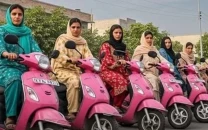
He said teachers were being provided scooters, easy loans and laptops, and claimed that outsourcing would improve the teaching system.










This material may not be published, broadcast, rewritten, redistributed or derived from. Unless otherwise stated, all content is copyrighted © 2026 The Express Tribune.





COMMENTS
Comments are moderated and generally will be posted if they are on-topic and not abusive.
For more information, please see our Comments FAQ