Pakistan, Ethiopia agree to expand engagement
Updated 1 hour ago

Battery recycling represents area where country could develop genuine competitive advantage
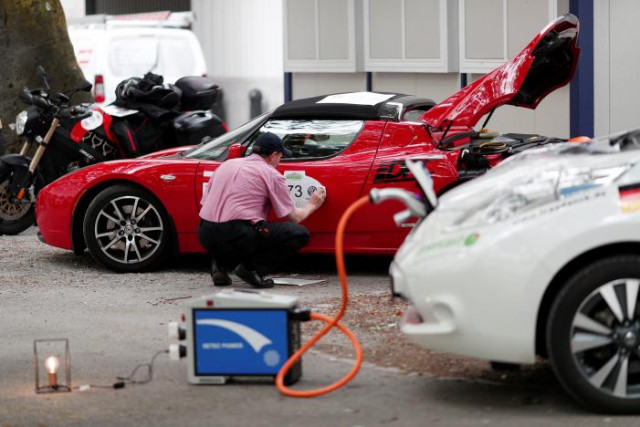
On December 16, the European Union (EU) dropped its plan to ban new combustion-engine cars by 2035, making this the EU's biggest policy retreat from its own green agenda.
As German and Italian carmakers struggle to compete with Tesla and BYD, the revised policy has offered European automakers a lifeline to continue focusing on hybrid variants. Manufacturers had warned that billion-dollar penalties would result if the existing targets remained unchanged.
EV market fragmentation
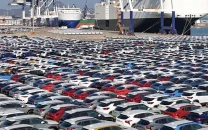
The global electric vehicle (EV) landscape is fracturing into distinct trajectories. Chinese manufacturers like BYD, Geely and SAIC have achieved massive production scale, technological leadership and significant cost advantages. Chinese EV prices typically run around 20% below EU-made models, while China's spare production capacity of three million EVs annually is twice the size of the entire EU market.
Between 2020 and mid-2024, Chinese-built EVs' market share in Europe surged from 3.5% to 27.2%, with Chinese brands alone growing from 1.9% to 14.1%. This explosive growth prompted both tariff responses and policy backtracking. European policymakers are now attempting to slow their own net-zero transition to give domestic manufacturers breathing space, while simultaneously seeking to block Chinese competition.
The European carmakers' association, ACEA, also cited insufficient market demand and inadequate charging infrastructure as justifications for the policy shift. Volkswagen welcomed the retreat, calling it "economically sound" and "pragmatic". However, Volvo, which has built a comprehensive EV portfolio over the past decade, warned that weakening long-term commitments for short-term relief could undermine the EU's competitiveness in the years ahead.
US policy reversals
This policy change came just a week after US carmaker Ford Motor cut production lines for several EV models due to weak demand. With Trump's administration reportedly deliberating an end to subsidies for Tesla, these policy shifts come at a time when both the US and the EU have already slapped tariffs on Chinese electric vehicles. This suggests the issue extends beyond protecting legacy automakers and blocking competitive Chinese alternatives, pointing instead to deeper demand-side and supply-chain challenges.
China produces nearly 90% of global cathodes and virtually all anodes, and accounts for more than 80% of final battery cell production. It hosts almost two-thirds of lithium processing capacity, nearly all graphite processing, close to 80% of cobalt processing and around a third of nickel processing. While China holds only about 1% of global cobalt reserves, it has made systematic overseas investments in refining capacity, securing control over critical mineral supply chains through joint ventures.
Pakistan's position and the way forward
Amid these supply-chain trends in the EV sector, Pakistan must chart a pragmatic course that leverages Chinese technological leadership, domestic climate commitments and demand for affordable clean transport.
Drawing lessons from global fragmentation, Pakistan should pursue a multi-pronged strategy: develop a coherent EV policy with clear targets and incentives; align EV adoption with power-sector expansion and available idle capacity, ideally linked to renewable energy development; offer incentives for Chinese manufacturers to establish production facilities in Pakistan to serve regional markets; and, crucially, prioritise two- and three-wheelers rather than passenger cars.
Firstly, we should focus on downstream integration. While Pakistan cannot compete in lithium processing or cathode production, it can build capabilities in battery pack assembly, battery management systems and thermal management.
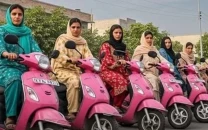
Second, the transition should begin with two- and three-wheelers. Pakistan's large motorcycle and rickshaw fleet relies on smaller and simpler batteries than passenger cars. Electrifying this segment offers immediate air-quality benefits in cities like Lahore, while helping build technical expertise and supply-chain relationships before moving towards more complex vehicle production. Third, recycling must be planned from day one.
As the EV stock matures, effective end-of-life strategies involving reuse and recycling will be essential to creating circular supply chains. Battery recycling, still at a nascent stage globally, represents an area where Pakistan could develop a genuine competitive advantage if planned strategically rather than as an afterthought.
The writer is a Cambridge graduate and works as a strategy consultant








This material may not be published, broadcast, rewritten, redistributed or derived from. Unless otherwise stated, all content is copyrighted © 2026 The Express Tribune.






COMMENTS (1)
Comments are moderated and generally will be posted if they are on-topic and not abusive.
For more information, please see our Comments FAQ