IMF loads $7 billion package with 11 new conditions for govt
Updated 3 hours ago

Markets ease after reports the agency may deploy its largest-ever stockpile draw to offset supply risks from war

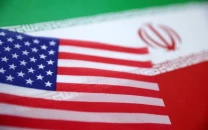
Oil prices fell on Wednesday as reports that the International Energy Agency (IEA) could release record volumes of emergency reserves eased concerns over supply disruptions caused by the US-Israel war with Iran.
The IEA has proposed the largest release of oil reserves in its history, the Wall Street Journal reported on Tuesday, citing officials familiar with the matter. The move aims to stabilise global crude prices amid rising fears that the conflict could disrupt supplies from the Gulf.
According to the report, the proposed release would exceed the 182 million barrels of oil that IEA member countries placed on the market in two coordinated releases in 2022 after Russia invaded Ukraine.
The agency called an extraordinary meeting of member countries on Tuesday, with a decision expected the following day. However, the plan could be delayed if even one member country objects.
Read: Iran launches fresh regional strikes as oil fears mount and global markets reel
Earlier, G7 energy ministers stopped short of approving a strategic oil release, instead asking the IEA to assess the situation.
“Although no country currently faces a physical shortage of crude, prices are rising sharply, and leaving the situation unattended is not an option,” a G7 source told Reuters, adding that member countries broadly support a coordinated release.
The final decision would still require agreement on key details, including the total volume, allocation among countries and timing. The IEA secretariat is expected to propose several scenarios and may also consult major non-member consumers such as China and India.
Neither the IEA nor the White House immediately responded to requests for comment.
Following the report, oil markets retreated, with Brent crude falling 88 cents, or 1%, to $86.92 per barrel, while US West Texas Intermediate dropped 35 cents, or 0.4%, to $83.10 per barrel.
Prices had surged earlier this week amid fears that the war could disrupt energy flows through the Strait of Hormuz, a key route for global oil shipments.
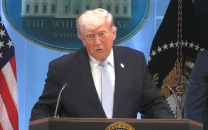
On Monday, US crude jumped to more than $119 per barrel, its highest level since June 2022. The spike was followed by a sharp sell-off on Tuesday — the largest percentage drop since 2022 — after US President Donald Trump predicted the conflict could end soon.
Analysts say an IEA stockpile release could temporarily cushion supply disruptions. Goldman Sachs estimated that a release larger than the 2022 drawdown would offset around 12 days of a potential 15.4 million barrel-per-day disruption to Gulf exports.
Read more: Pete Hegseth says Tuesday 'most intense day' of US attacks on Iran
However, uncertainty remains over the duration of supply disruptions.
Energy consultancy Wood Mackenzie estimates that the conflict is currently reducing Gulf oil and petroleum product supplies by around 15 million barrels per day, warning that prices could rise to $150 per barrel if disruptions persist.
Meanwhile, energy infrastructure in the region has also been affected. Abu Dhabi’s state oil company ADNOC has shut its Ruwais refinery after a fire at the complex linked to a drone strike, according to a source.
Saudi Arabia, the world’s largest oil exporter, is attempting to boost exports through the Red Sea port of Yanbu, though shipments remain well below levels needed to offset reduced flows from the Strait of Hormuz.
Despite the recent price decline, analysts say markets remain highly sensitive to developments in the Middle East.
“Oil prices continued to normalise lower in a volatile fashion following Monday’s sharp spike,” analysts at UOB said in a note, adding that markets will remain focused on geopolitical developments to gauge how long energy prices could remain elevated.











This material may not be published, broadcast, rewritten, redistributed or derived from. Unless otherwise stated, all content is copyrighted © 2026 The Express Tribune.






COMMENTS
Comments are moderated and generally will be posted if they are on-topic and not abusive.
For more information, please see our Comments FAQ