Dar warns UNSC over Middle East tensions
Updated 6 hours ago

Project aims to protect Mughal heritage and attract global tourists
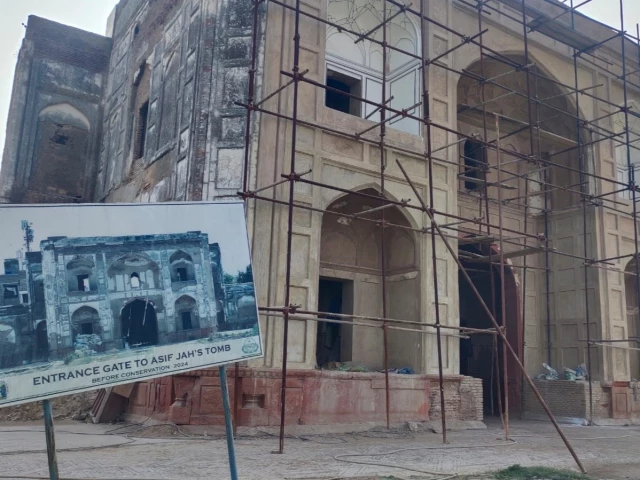
The historic Shahdara Complex, located on the banks of the River Ravi on the outskirts of Lahore, has once again come into the spotlight as the Punjab government continues a comprehensive restoration project aimed at preserving the grandeur of Mughal-era architecture. Experts believe the initiative is not only crucial for safeguarding Pakistan’s historical monuments but also a significant step toward positioning the country more prominently on the global cultural map.
Director General of the Walled City of Lahore Authority (WCLA), Najam Saqib, said that after decades of neglect, the Punjab government has made substantial investments in the conservation of cultural heritage. He noted that the Shahdara Complex had long remained overlooked due to encroachments in its surroundings and poor accessibility.
“This is a site of immense historical importance, but unfortunately, its true identity faded over time,” Najam Saqib said. “Our goal is to restore it to its original historical splendour.”
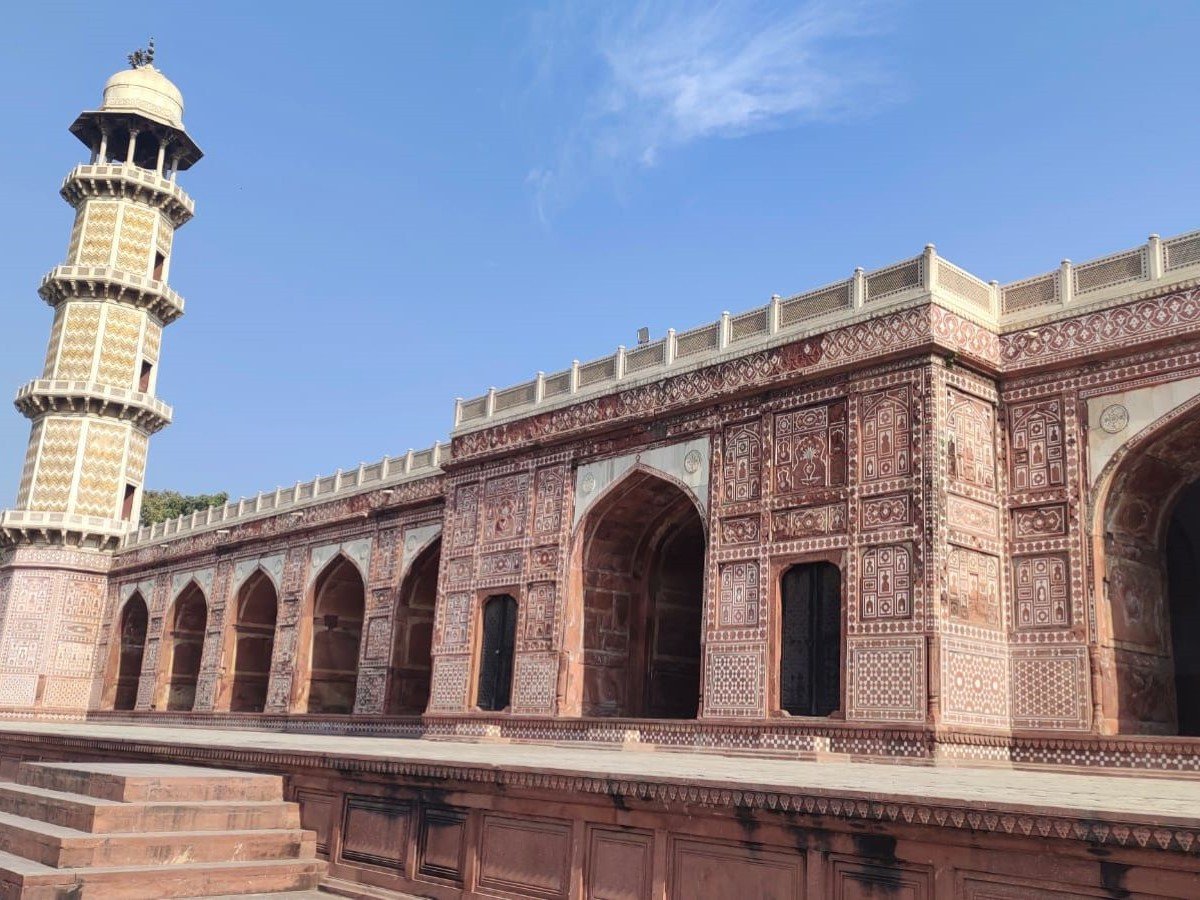
He explained that the Shahdara Complex was originally conceived as an integrated ensemble comprising the Tomb of Jahangir, Akbari Sarai, the Tomb of Asif Khan and the Tomb of Nur Jahan. However, the construction of a railway line later separated the Tomb of Nur Jahan from the rest of the complex. Among these monuments, the Jahangir Complex constitutes the largest component.
Highlighting the historical background, Najam Saqib said the Mughal emperors made Lahore their capital for nearly 14 years, resulting in the construction of several magnificent structures in and around the city. Akbari Sarai was the earliest to be built, serving as a lodging and trading centre for merchants travelling along the ancient Silk Route.
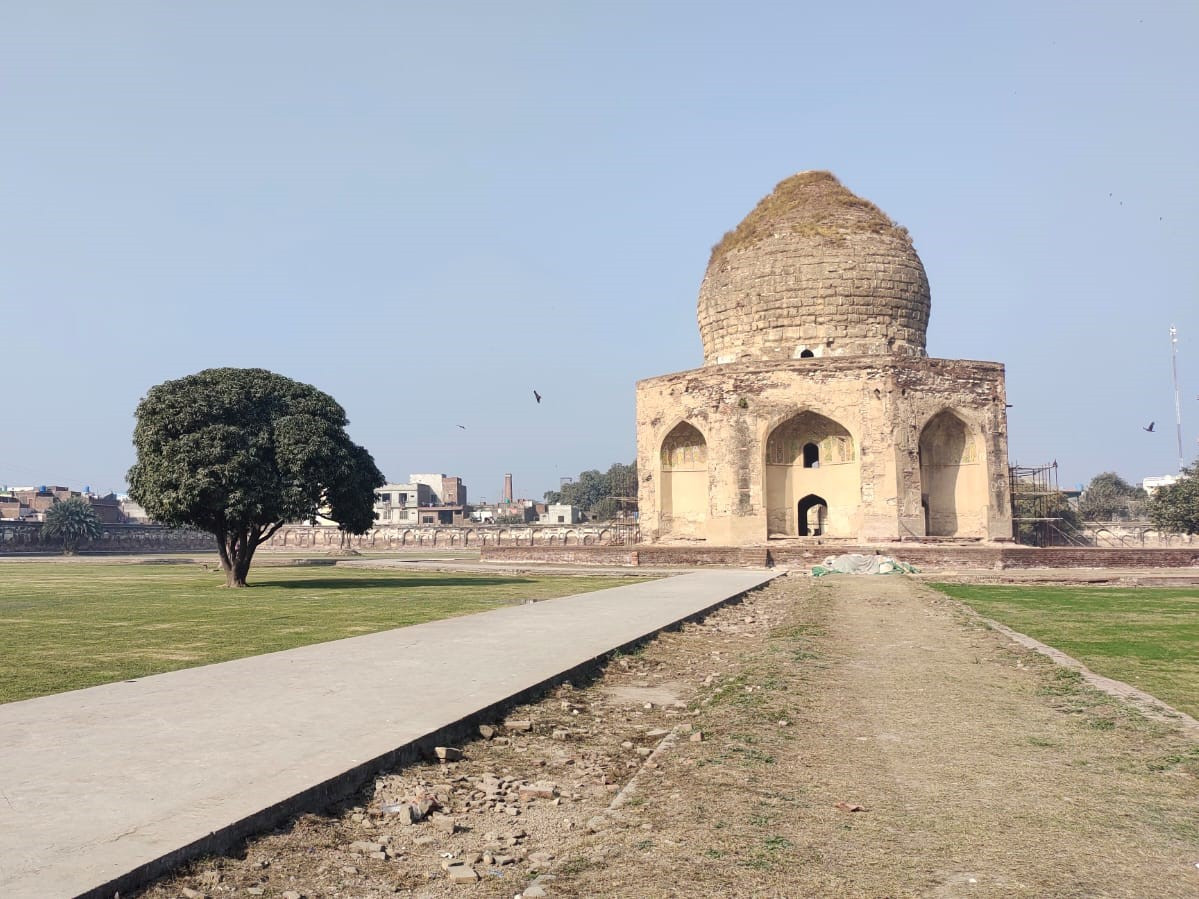
Providing details of the ongoing restoration phase, he said that repair work is underway on 180 rooms of Akbari Sarai, along with the installation of a modern lighting system and transformers to facilitate night-time tourism. Similarly, walkways, lawns and pavilions at the Tombs of Asif Khan and Jahangir are being restored.
He added that water seepage from the roof of Jahangir’s Tomb had posed a serious threat to the structure, but the issue is now being addressed. The entire project is expected to be completed within two and a half to three years.
Project Director of the Shahdara Complex and renowned archaeologist, Naeem Iqbal, said restoration work is currently in progress simultaneously on all four monuments. “In the first phase, structural stability was ensured. We are now entering the phase of fresco restoration and aesthetic conservation,” he said, adding that Rs50 million has been allocated for the first phase of the project.
Commenting on the dome of the Tomb of Asif Khan, Naeem Iqbal said historical evidence suggests it was originally clad in white marble with red stone beneath. However, due to the absence of complete design documentation, international conservation principles do not allow for full reconstruction. “Where evidence exists, restoration will be carried out, and where it does not, only protective conservation will be undertaken,” he explained.
As restoration progresses and the intricate designs and beauty of the Shahdara Complex begin to re-emerge, tourist interest has also increased. Ayesha, a visitor from Karachi, described the ongoing restoration at Jahangir’s Tomb as a positive development. “This is our national heritage. If we do not protect it ourselves, no one else will,” she said. Another visitor, Abdul Rehman, praised the improved cleanliness and organisation, emphasising that the protection of historical sites is a collective responsibility.
Dr Kausar Butt, a history professor visiting from Quetta, said such heritage sites are of immense educational value. “We teach history through books, but when students see these monuments firsthand, history truly comes alive,” she remarked.
Experts point out that encroachments remain the biggest obstacle to securing World Heritage status for the Shahdara Complex. However, citizens remain hopeful that just as the Punjab government has taken decisive action against encroachments in the Walled City of Lahore, similar efforts will be made at Shahdara, paving the way for its inclusion on UNESCO’s World Heritage List.









This material may not be published, broadcast, rewritten, redistributed or derived from. Unless otherwise stated, all content is copyrighted © 2026 The Express Tribune.













COMMENTS (1)
Comments are moderated and generally will be posted if they are on-topic and not abusive.
For more information, please see our Comments FAQ