'Suthra Punjab' emerges top public initiative
Updated 6 hours ago

Stagnant water, poor drainage blamed as health authorities warn of worsening outbreak
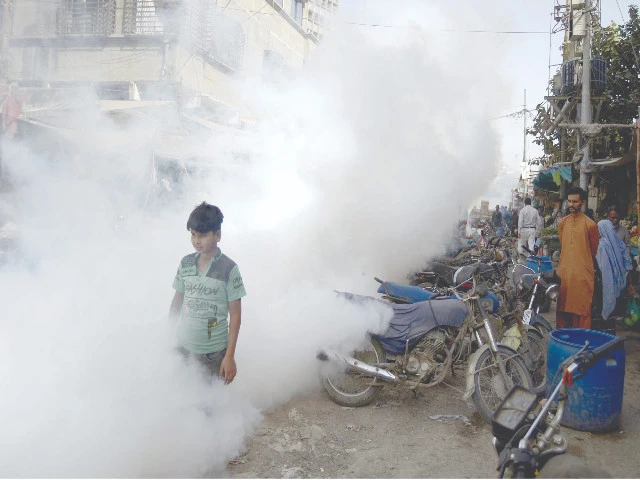
The dengue situation has taken a serious turn in Punjab, particularly in flood-affected districts, as a sharp rise in cases has prompted the Provincial Disaster Management Authority (PDMA) to issue a province-wide dengue alert.
Health officials warn that recent floods, monsoon rains and changing weather patterns have created favourable conditions for the rapid spread of the mosquito-borne disease.
According to the Punjab Health Department, more than 3,500 confirmed dengue cases have been reported across the province so far in 2025.
Officials say the figure reflects a worrying trend and is significantly higher compared to the same period last year.
In recent days, dozens of new cases have been recorded daily in flood-hit districts including Rawalpindi, Rajanpur, Muzaffargarh and Multan, where dengue wards in several public hospitals are operating under pressure due to a steady influx of patients.
Health experts attribute the surge primarily to stagnant water accumulated after floods and heavy rainfall, especially in low-lying and poorly drained areas.
Southern Punjab districts, particularly Multan, Muzaffargarh and Rajanpur, are considered most vulnerable as damaged drainage systems and sanitation issues have increased the risk of mosquito breeding.
A PDMA assessment warns that inadequate cleanliness and slow water disposal in flood-affected localities have doubled the threat of dengue transmission.
Last year, Punjab recorded approximately 5,405 dengue cases and 17 deaths.
Officials fear that if the current pace continues, this year's total may exceed last year's figures well before the peak dengue season ends. Over the past 14 years, Punjab has reported more than 380,000 dengue cases, with over 640 deaths, highlighting the persistent nature of the public health challenge.
In response, the PDMA has directed all district administrations to intensify cleanliness campaigns, remove stagnant water and accelerate mosquito-control measures, including spraying and fogging.
Dengue cases have been reported not only in the provincial capital but also in cities and towns across Punjab, raising concerns about the overall effectiveness of preventive efforts.
However, residents and civil society representatives have criticised what they describe as a gap between official claims and ground realities.
Government-run door-to-door spraying campaigns have largely remained suspended for the past five years, while fogging is often carried out at limited locations, residents allege. Many say they are forced to arrange private spraying at their own expense to protect their families.
Official data shows that in 2024, authorities conducted spraying at more than 85,000 locations and fogging at 300 sites, detected dengue larvae at over 60,000 places and registered more than 1,300 cases under the Dengue Act.
This year, with a focus on flood- and monsoon-affected areas, spraying has so far been carried out at over 50,000 locations, fogging at 150 sites, while larvae have been detected at more than 40,000 places. Legal action has also been initiated against violators, with hundreds booked and arrested.
Residents from affected localities say the measures have yet to bring visible relief.















This material may not be published, broadcast, rewritten, redistributed or derived from. Unless otherwise stated, all content is copyrighted © 2026 The Express Tribune.







COMMENTS
Comments are moderated and generally will be posted if they are on-topic and not abusive.
For more information, please see our Comments FAQ