'Our position on the Abraham Accords is clear,' FO says, reiterates no policy shift
Updated 1 hour ago

Dysfunctional status of municipal bodies stalls democracy, aggravates public grievances
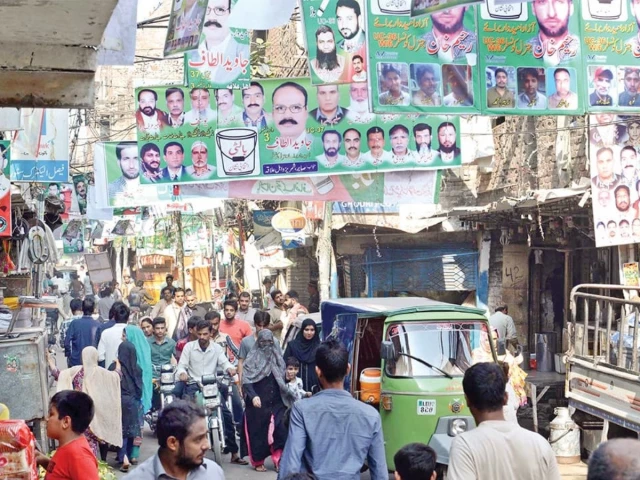
In Punjab, the absence of a local government system for several years has intensified public difficulties. With the current government reluctant to take immediate steps to hold elections, citizens have to turn to bureaucratic offices for resolving basic, quotidian problems.
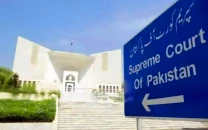
The last local government elections were held in 2016, establishing municipal corporations, district councils, and union councils with a constitutional term of four years. However, in April 2019, the Punjab government dissolved these institutions under the “Punjab Local Government Act 2019.” Though the Supreme Court later declared the dissolution unconstitutional, these bodies could not function effectively and were completely inactive by May 2021. Since then, no new local elections have taken place.
In the absence of elected representatives, administrative officers such as deputy commissioners, assistant commissioners, and chief officers have been tasked with running union councils, municipal committees, and district councils. This shift has politicized development funds, which are now often allocated based on political influence rather than public need. Elected representatives could ensure accountability in fund distribution, but without them, officials direct resources to favoured projects, often marginalizing less politically influential areas.
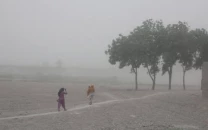
As a result, public services have suffered significantly. Residents face difficulties in accessing basic services like sanitation, water supply, street lighting, and waste management. Citizens are forced to visit district offices for even minor issues, while rural areas experience disruptions in education, healthcare, and emergency response. During floods or heavy rains, the absence of local representatives’ further delays immediate relief efforts.
In this regard, local residents shared their long-standing grievances. Tariq Chaudhry, a resident, reported delays of up to 90 days in receiving official certificates due to inactive union councils. Similarly, an elderly citizen, Khawaja Imran highlighted persistent issues with street lights and waste removal, with local offices unable to provide timely solutions.
Former Deputy Mayor Masood Khan emphasized that local governments were the foundation of democracy, offering citizens their first experience in political participation and decision-making. “Their absence not only weakens governance but also centralizes power, reducing grassroots access to authorities,” explained Khan.
Political analyst Salman Abid noted that successive governments, including PML-N and PTI, had neglected local governance. “The new Local Government Act 2025 contains several flaws. It eliminates district councils, replacing them with municipal corporations, town councils, and union councils, undermining the constitutional structure of three-tier governance outlined in Article 140-A.
Ambiguities remain regarding whether elections will be held on a party or non-party basis. Non-party elections, previously attempted, could pressure elected officials into aligning with the ruling party through bureaucratic influence, undermining democratic principles,” said Abid.
Furthermore, union council elections currently allow indirect voting for positions such as mayor and deputy mayor, contradicting Article 226, which mandates secret ballots for all elections except those held for electing the prime minister and chief minister. This method risks manipulation, coercion, and corruption. The current system also creates parallel authorities, such as semi-autonomous management authorities, weakening the constitutional role of local governments.
Despite the 18th Amendment granting provinces the authority to empower district governments, Punjab has retained centralized control over finances and administration. The government maintains that the draft “Punjab Local Government Bill 2025” is underway, with elections scheduled for 2026. Chief Election Commissioner directives are being followed, including delimitation work, and officials assure that local government elections, which are a constitutional requirement, will be conducted.



This material may not be published, broadcast, rewritten, redistributed or derived from. Unless otherwise stated, all content is copyrighted © 2026 The Express Tribune.



COMMENTS
Comments are moderated and generally will be posted if they are on-topic and not abusive.
For more information, please see our Comments FAQ