FinMin says Pakistan regaining macroeconomic stability, investor confidence
Updated 11 hours ago

It comes after Qatar expressed doubts about LNG supply due to Gulf war
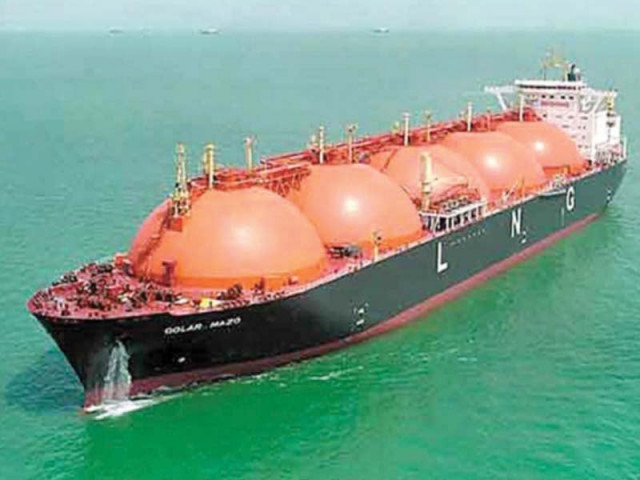
The government has decided to roll out a contingency plan to keep cars and stoves running amid disruption of fuel supplies while Pakistan's trade deficit jumped 25% to $25 billion ahead of any adverse impact of rising crude oil and liquefied natural gas (LNG) prices.
A ministerial committee responsible to ensure smooth supplies of petroleum products on Tuesday presented the contingency plan to Prime Minister Shehbaz Sharif after Qatar told Pakistan that it may not be able to provide LNG cargoes due to the ongoing Gulf war.
PM Sharif has empowered the committee to take all the necessary decisions to continue seamless energy supplies. Finance Minister Muhammad Aurangzeb chairs the committee that has representation from all the relevant stakeholders, including the Petroleum Division.
It has been decided that the government will immediately try to bring 350 million cubic feet per day (mmcfd) of local gas production online that was earlier curtailed to make room for surplus LNG.
The government has also decided to cut gas supplies to fertiliser plants, minimise gas flow to power plants from 250 to 80 mmcfd and, if needed, cut supplies to CNG stations.
Government officials said that despite the curtailment of gas to the fertiliser plants, there would not be any shortage of the commodity due to the availability of over 800,000 metric tons of stocks. To meet power needs during evening, the government may run some of the closed plants on alternative fuels. There would also be gas rationing for households considering the recent developments, the officials said.
Pakistan's crude oil supplies would be affected in the wake of tensions in the Strait of Hormuz and the Red Sea. The officials said that PM Sharif was expected to ask the Saudi ambassador to provide oil cargoes through the Red Sea as the Strait of Hormuz was closed.
Iran has broadened the scope of the war after it was attacked by the United States and Israel. Iran is now hitting energy facilities of those Gulf countries that have provided military bases to the US.
Crude oil prices jumped above $83 per barrel on Tuesday, which would carry huge implications for consumers as well as the current account deficit. Owing to limited supplies, LNG prices are also on the rise, making it difficult for the government to book cargoes from alternative routes.
The Pakistan Bureau of Statistics (PBS) on Tuesday released the July-February trade figures, which again portrayed a sorry state of external trade. The gap between imports and exports reached $25 billion during the eight-month period. The deficit was $5 billion, or 25%, higher than the same period of last fiscal year.
The trade summary showed that exports fell in all the three monitored benchmarks – month-on-month, year-on-year and for eight months.
Exports fell to $22.7 billion during the first eight months of the current fiscal year, down 7.3%. In absolute terms, exports were $1.6 billion less than the same period of last year.
The government has cut import taxes in the budget to liberalise trade and based on World Bank's estimates, the trade liberalisation should result in a 14% increase in exports compared to only 7% rise in imports. However, the results have not supported the assumptions.
Exporters are complaining about the overvalued rupee, which according to them has eroded their profitability. The rupee-dollar parity remained around Rs279.5 to a dollar. The central bank is letting the rupee appreciate but in a gradual fashion with gain of one or two paisa every day.
Contrary to exports, imports grew to $45.5 billion during the Jul-Feb period, a jump of $3.4 billion, or 8.1%, compared to a year ago. However, the central bank is offsetting the higher import cost through increased inflows of remittances and major purchases of foreign currency from the local market. Any prolonged war in the Gulf may also impact Pakistan's remittances.
PBS stated that exports further decreased to $2.3 billion in February, down $218 million, or 9%, from the same month of last year. It was the seventh consecutive month of decline in exports. Imports contracted 1.6% to $5.3 billion in February. It was the eighth consecutive month when imports stayed above $5 billion. As a result, the trade deficit widened 5% YoY to $3 billion in February. On a month-on-month basis, the trade deficit increased 8.5% due to a 26%, or $783 million, decrease in exports.














This material may not be published, broadcast, rewritten, redistributed or derived from. Unless otherwise stated, all content is copyrighted © 2026 The Express Tribune.






COMMENTS (1)
Comments are moderated and generally will be posted if they are on-topic and not abusive.
For more information, please see our Comments FAQ