The sting in the tail
Updated 9 hours ago

Iran may survive the onslaught by raising regional costs, stretching the war

On February 28, 2026, after weeks of posturing, the joint US-Israel attack on Iran commenced. The operation 'Epic Fury' caused widespread destruction in Central and Western Iran including Tehran, Karaj, Isfahan, Qom and Kermanshah. Besides the death of Supreme Leader Ayatullah Ali Khamenie on the same day, over 40 Iranian officials have lost their lives.
Those killed include senior defence officials like Rear Admiral Ali Shamkhani heading National Defence Council; Maj Gen Abdolrahim Mousavi, Chief of General Staff; Brig Gen Aziz Nasirzadeh, Defence Minister; and Maj Gen Mohammad Pakpourto, IRGC commander – to name a few.
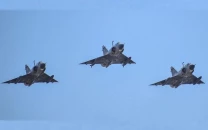
The US-Israel military blitz comprising some 200 fighter jets destroyed over 2,000 targets including Iran's air defence (AD) systems, missile and drone launch sites, naval ships and military infrastructure like command centres, naval headquarters, military airfields, etc.
Iran responded through operation 'True Promise-4', firing ballistic missiles and drones at US troop deployments around the Gulf, targeting Israel, Bahrain, Kuwait, Qatar, Oman, the UAE and Jordan. Pasadaran-e-Inqilab or IRGC (Revolutionary Guards) have warned vessels not to pass through the Strait of Hormuz in the Gulf, the sea lane ferrying about 20% of global oil and gas shipments. It has acknowledged targeting and burning three oil tankers.
The US stated objectives of the war include: a) ensuring Iran does not develop a nuclear weapon, b) destroying Iran's missiles and missile industry, c) encouraging people 'to prepare to overthrow' the clerical establishment, and d) forcing Iran's armed forces to lay down arms in return for 'complete immunity', or face 'certain death'. Israeli PM Benjamin Netanyahu echoed the US sentiment, stating the "operation [is] to remove the existential threat posed by Iran".
The Coalition Strategy is thus summed up as nuclear and missile neutralisation; regime change; decapitation of leadership intended to fracture the regime's command structure; and regional dominance especially by Israel by annihilating Iranian navy and dismantling its network of regional proxies.
Iran's response comprises retaliatory strikes as deterrent; proxy mobilisation (Hezbollah, Houthis and Hamas) to embroil Israel and others, widening the conflict into Lebanon; and ideological defiance, projecting 'martyrdom' as it did in the Iran-Iraq war successfully.
Iran aims to raise the cost of war for the Coalition by disrupting oil supply chain and economic activity in the Middle East, and let Saudi Arabia and other rich Gulf states raise voice for ending the hostilities. It may, however, backfire. Iran ostensibly seems to be prepared for the long-haul, and will spread short-term chaos in the ME.
The war was reportedly started by the US on Israeli prodding, when Tel Aviv sensed breakthrough in the latest nuclear talks between Iran and the US in Geneva, at the residence of the Oman's ambassador. This article discusses attainability of the Coalition objectives.
First the de-nuclearisation. During the June 13, 2025 complex attack codenamed 'Rising Lion', the US and Israeli Air Forces, supported by missiles, drones and intelligence operations, were able to substantially damage the Uranium conversion and fuel fabrication facilities at Fordow and Natanz nuclear facilities, and research reactor 'reportedly' at Isfahan nuclear technology centre.
However, the nuclear programme was not obliterated and could be restarted in future, given Iran's scientific know-how and the enriched Uranium hidden by Iran elsewhere. This time the situation is likely to remain the same. However, despite public pressure, the 'surviving' regime is likely to yield to US/West's denuclearisation demands, if the military pressure is unbearable.
Second, the missile elimination. Iran's missile programme is indigenous, reliable, pervasive and battle-tested during its June 2025 conflict with US and Israel. Overwhelming the layered Israeli AD system, comprising the Arrows, David's Sling and Iron Dome, by a mix of inexpensive drones, cruise and ballistic missile combination, Tehran was able to significantly saturate the Israeli AD response repeatedly, enabling some missiles to sneak through. Tehran's reported 'hypersonic' missile capability (Fateh Series) though sparingly used is even more lethal.
Shortage of anti-AD munitions with the US/Israel, in dealing with the incoming missile-drone swarms, limited the June conflict to 12 days. Irani missile launchers and manufacturing is well-dispersed, multiple and well-protected. Its total elimination, in a verifiable manner, without employment of ground troops, is difficult, if not impossible.
Third, the regime change. On March 1, Alireza Arafi, a prominent cleric, was named 'interim' Supreme Leader. The Assembly of Experts comprising 88 senior clerics will formally select the new Supreme Leader by direct vote. Constitutionally, this must be done as soon as possible, but safety concerns are delaying the process. Irani regime, after 47 years in power, is down but not out.
Regime dismantling and putting 'another outside' alternative, if any, in place is tough without boots on ground. The clerics still enjoy support and consolidated power, even if badly eroded. It is possible that changed faces in the alternative/follow-up government, however, may negotiate on the nuclear programme.
Fourth, the surrender of Irani Armed Forces. Possible only if there is massive invasion of Iran, styled after the First Gulf War against Saddam's Iraq (1990-91). The US domestic environment is not supportive of another war in the ME, however, the Jewish lobby and Israel can manufacture another UN authorisation and resolution, over time, and involve NATO and other nations, as in Afghanistan. Given the Israeli tenacity, this is a lurking possibility, especially considering Iran's staying power and response so far.
In case of war's continuation, the military balance is likely to tip against the Coalition, given the worsening logistics of Israeli AD and its widened scope of war against Tehran's 3H proxies especially in Lebanon. So, if Iran could hold on for another month, difficult but not impossible, Trump may lose interest and go for a negotiated settlement.
For Pakistan, chaos next door is never helpful and would warrant more vigilance along the border in unstable Baloch belt of Balochistan and Afghanistan. Iran's further escalation against KSA would also be unwise, as it would draw in Pakistan, under the Pak-Saudi Defence Agreement. In any case, expanding the war to the Muslim nations in the ME would irreparably damage Iran's long-term regional interests, and is considered a bad strategy. The gulf nations should also be wary of Mossad manipulation meant to draw them into the inferno.











This material may not be published, broadcast, rewritten, redistributed or derived from. Unless otherwise stated, all content is copyrighted © 2026 The Express Tribune.


COMMENTS (1)
Comments are moderated and generally will be posted if they are on-topic and not abusive.
For more information, please see our Comments FAQ