In pictures: Muslims across the world observe Eidul Azha
Updated 1 hour ago

Officials say 15–20 new cases emerge daily; illegal clinics, repeat use of syringes biggest causes of infection spread
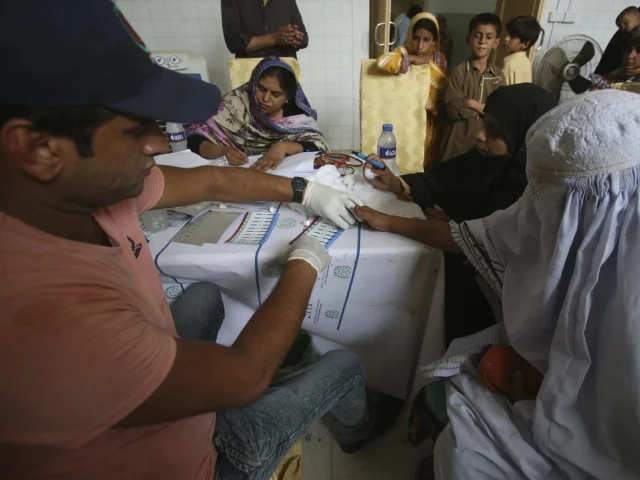
Nearly 40,000 people in Khyber-Pakhtunkhwa are currently living with HIV/AIDS, while 15 to 20 new cases are being reported daily, provincial health officials revealed on World AIDS Day.
Speaking at a press conference at the Peshawar Press Club on Monday, Dr. Tariq Hayat Taj, Director of the Provincial AIDS Control Program, said that around 9,800 HIV patients are officially registered in the province. However, the actual number is far higher as many people avoid testing due to social stigma and society's discriminatory behaviour.
“Due to the harsh attitudes in society, many patients are afraid to undergo a test,” Dr. Tariq said, stressing that this reluctance is fuelling the spread of the virus silently. Dr. Tariq warned that quack doctors, illegal street clinics, and the repeate use of syringes remain among the biggest causes behind rising cases.
He urged the Health Regulatory Authority to take decisive action against illegal health service providers. He said HIV is no longer untreatable, and patients in K-P are being provided free medicines and lifelong treatment by the provincial government. “Use of contaminated syringes multiple times leads to spread of the virus,” he cautioned.
According to UN estimates, around 40,000 people in K-P and 330,000 across Pakistan are living with HIV, a figure that health officials describe as 'highly alarming'. During vaccination drives in hotspots such as Iqbal Plaza in Peshawar, 197 transgender individuals tested positive for HIV. Dr. Tariq said this was deeply distressing and all affected individuals are now receiving treatment.
He added, the virus does not spread only through sexual contact, but also through the use of infected needles, unsterilised equipment at barbershops and beauty salons, and other unsafe practices.
“In K-P, about 60% of HIV patients are men, 30% women, and 10% transgender individuals,” he said, adding, drug users top the list of vulnerable groups, followed by transgender communities and sex workers. “General population is no longer safe — the virus is silently creeping beyond high-risk groups.”
UNICEF Health Specialist Dr. Inamullah Khan appealed the public to treat people living with HIV with dignity. “These patients deserve compassion, not discrimination. They are already relying on the mercy of God; society must not isolate them,” he said.
Assistant Director HIV/AIDS Program, Abbas Durrani added that many Pakistanis returning from Gulf and African countries show signs of HIV infection. He urged citizens working abroad to avoid risky behaviour and uphold Islamic values to protect themselves.
Officials emphasised that early detection is crucial. “HIV patients need lifelong medication,” Dr. Tariq said. “People must get themselves tested and adopt preventive measures so they do not regret later.”








This material may not be published, broadcast, rewritten, redistributed or derived from. Unless otherwise stated, all content is copyrighted © 2026 The Express Tribune.










COMMENTS
Comments are moderated and generally will be posted if they are on-topic and not abusive.
For more information, please see our Comments FAQ