China's opening-up offers antidote to protectionism
Updated 44 minutes ago

CIIE shows how shared prosperity can replace trade wars
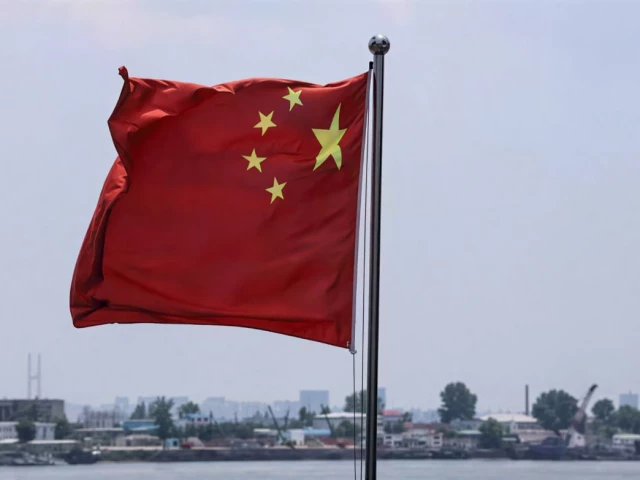
Since 1949, China has been developing a Socialist Market Economy with Chinese Characteristics (SMECC). Efforts accelerated after the 1978 reforms. President Xi's leadership added new dimensions. Xi believes SMECC is integral to Socialism with Chinese Characteristics and a Community with a Shared Future.
The SMECC model promotes the market by acknowledging its role in allocating factors and driving volatility. It also gives due weight to the state's role. It places the leading role on the state and institutions to ensure fairness, equal opportunities and fair competition so the market functions smoothly. Market forces drive volatility to unlock resource potential; the state protects people's interests, especially marginalised segments, and the private sector.
China believes it cannot build SMECC without mutually beneficial economic linkages. To achieve this, China adopted opening up and investment as core reform objectives and pursued them with dedication since 1978. President Xi refined the concept and introduced high-quality opening up, meaning opening up must benefit people, not only businessmen or the state.
China devised a comprehensive policy to ensure high-quality opening up, giving equal weight to trade, investment, development assistance and the market. Xi took innovative steps, most notably the China International Import Expo (CIIE). CIIE is unique; no other country had launched an import expo. This demonstrates Chinese leadership's determination to foster mutually beneficial linkages. It counters the liberal economic philosophy, which focuses on maximising profit without giving due regard to others' interests. This philosophy is a cornerstone of SMECC, and it not only challenges traditional concepts but also offers a mutually beneficial model for global trade.
CIIE is becoming a major global event, attracting countries and thousands of companies yearly, including Fortune 500 firms. This year, 162 countries, regions and international organisations participated. It attracted 4,142 companies, including 300 Fortune 500 companies. Notably, 2,000 attended for the first time. China organised matchmaking sessions in Egypt, Germany and Britain under "Export to China." This attracted 51 trade delegations and 700 sub-delegations to CIIE. It is an encouraging sign, as the world is looking at CIIE as an opportunity to make deals.
CIIE's main value is providing a platform for new products and innovative companies. In 2026, projects from emerging innovators rose 20%. Data show 633 projects from nearly 40 countries and regions. Exhibitors and visitors increase yearly. This performance encourages China and the world amid fierce anti-globalisation campaigns and trade wars. Unfortunately, the architects of globalisation, the US and West, have launched anti-globalisation campaigns.
Second, to strengthen openness, China deemed it necessary to invite the global business community to invest in its growing market. This requires a business-friendly environment, equal opportunities and fairness. China began expanding the catalog of encouraged industries for foreign investment, introducing new areas. Over the last decade, the catalog grew to 987 items in 2017 and 1,678 in 2025.
The 2025 catalog focuses on nucleic acid pharmaceuticals, zero-magnetic medical devices, smart testing instruments, high-speed cameras, intelligent energy management systems, deep-sea robots, gas-fired power equipment and core components for industrial robots.
China offers incentives: tax exemptions for imported equipment, preferential land access and lower corporate income tax. For example, special incentives for the Western region include 15% corporate income tax if criteria are met. The government offers tax exemptions for reinvestment. Industrial land is provided on priority, with base land transfer prices reduced up to 70%. Self-use equipment receives customs duty exemption.
Third, the launch of island-wide independent customs operations in Hainan Free Port shows China's willingness to create opportunities. It is a step ahead of previous initiatives. Amid protectionism, restrictions, anti-globalisation movements, trade wars and my-country-first mentalities, China must act as a beacon of hope for global economic development and globalisation. It must deepen reforms and create concrete opportunities, not just talk. The initiative facilitates trade and provides space to explore opportunities. It brings global businesses to Hainan, where they interact to find opportunities in China and elsewhere. Data show 9,600 foreign enterprises operate in Hainan, and investors from 170 countries and regions invested in 2025.
Fourth, China invites investment and tries to bridge the global investment gap. This is another way to create linkages and build the SMECC model. China launched the Belt and Road Initiative (BRI) to create opportunities. It has invested over $1.5 trillion and mobilised over $3 trillion from other countries and sources. China has enhanced trade with BRI countries.
Fifth, China launched the Global Development Initiative (GDI) to help the world pursue sustainable development, build trade capacity, promote green industry, support climate-compatible development and improve welfare. According to data, China has invested over $23 billion under GDI. Sixth, China established the Asian Infrastructure Investment Bank (AIIB) to meet investment needs and bridge the gap. In 2025, total investment disbursements exceeded $38 billion.
Seventh, the domestic consumption push supports opening up. Under the initiative, China encourages people to consume more and provides subsidies from domestic and international sources. Increasing consumption encourages foreign companies to invest. Eighth, China is deepening economic openness through modernisation. Xi believes China must engage deeply with other economies. As Xi said, "Openness is a key driving force behind the progress of human civilisations and an intrinsic path toward global prosperity and development."
Ninth, the 15th Five-Year Plan strengthens this notion and shows commitment to reform and openness. China targets high-end companies to invest and opens investment opportunities. These efforts increase investment in China, Chinese investment abroad and Chinese imports. For example, in the first nine months of 2026, Chinese imports reached $2.4 trillion, the highest growth rate (22.3%) since 2021.
In the end, three conclusions follow. First, the Socialist Market Economy with Chinese Characteristics will create more opportunities for win-win cooperation by deepening reforms, opening the economy, enhancing investment and providing development assistance. Second, the vision of opening up is not run-of-the-mill or a knee-jerk reaction to global dynamics. It is well-thought-out, deeply anchored in China's economic vision and philosophy of shared and common prosperity. Moreover, it demonstrates China's and the CPC's commitment to contributing to the global economy. Thus, it is hoped it will help sustain global economic growth and development and counter the waves of anti-globalisation, trade wars and protectionism.
THE WRITER IS A POLITICAL ECONOMIST AND A VISITING RESEARCH FELLOW AT HEBEI UNIVERSITY, CHINA











This material may not be published, broadcast, rewritten, redistributed or derived from. Unless otherwise stated, all content is copyrighted © 2026 The Express Tribune.







COMMENTS
Comments are moderated and generally will be posted if they are on-topic and not abusive.
For more information, please see our Comments FAQ