Pakistan needs a gold treasury
Updated 25 minutes ago

Without these steps, outlook will look messy, fragile & frightening at the end of a govt's tenure
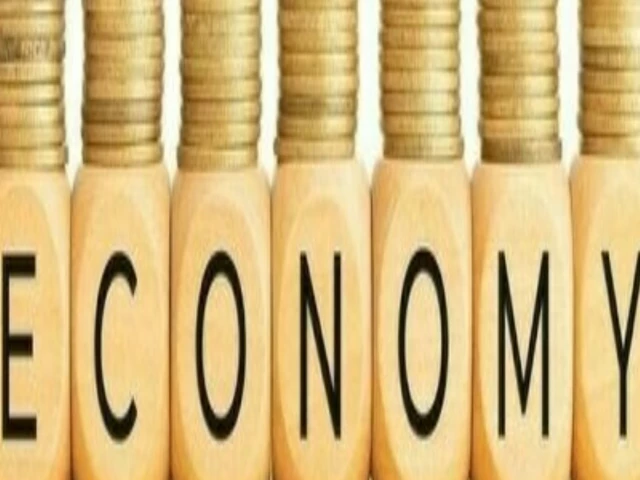
Pakistan needs to take five concrete measures within one year to reset the trajectory of its economy. Otherwise, the outlook will look as it usually does at the end of a government's tenure: messy, fragile and frightening. Read it as a high current account deficit, a devalued currency, low growth and rising unemployment.
The good news is that all five steps can be taken within existing political, economic and resource constraints, and within a single calendar year.
First, restructure the Planning Commission as Growth & Reforms Commission. In a recent article, former deputy chairman Dr Nadeem ul Haque laid out a compelling rationale. As he argued, the commission, built on the 1960s Haq-HAG model of five-year plans and heavy state intervention, has become irrelevant.
It should be replaced by an agency focused on economic growth rather than project management. India did exactly that in 2016. Instead of using public sector investment as its tool, the new commission should rely on incentives, reforms and productivity. To give it weight, the portfolios of the Special Investment Facilitation Council (economic reforms) and the National Productivity Organisation should be merged into it.
Second, restructure the Federal Board of Revenue (FBR) and introduce basic reforms. As Dr Ikramul Haq has often argued, the FBR cannot be consulted on its own restructuring, because it has deep interests in preserving the status quo. Georgia offers a lesson here. It prepared a new tax code and replaced its entire tax machinery overnight, becoming the world's leading reformer of its time and triggering a fresh wave of investment. Georgia's experience cannot be replicated entirely, given the difference in size between the two countries, but it does offer a good template.
A fundamental part of FBR reforms is harmonising the tax base itself. The federal government must re-centralise the GST on services into its pool and pay provinces the same share, so that no one loses revenue. This should be eventually followed by a drastic cut in the GST rate, from 18% to 5%, with no exemptions.
Informal businesses would lose their incentive to stay informal, and the informal sector would shrink almost at once. As a result, Pakistan's recorded GDP would rise substantially, giving a boost to local businesses.
Third, redefine in the Rules of Business all the non-policy work that ministries perform. Work related to agencies, state-owned entities and corporations, which are now clubbed under specific ministries, should be reallocated to relevant boards without the secretary's oversight. Secretaries would then have more time to focus on implementation of policy decisions, and this reform will help them directly.
Each secretary should also sign a performance-based contract with the minister concerned, with secure tenure of at least three years. In return, they should receive at least three times their current salaries, with no additional benefits.
Fourth, introduce a constitutional amendment to harmonise business regulations across provinces. This can take many forms, and the details can be worked out through research and analysis. Divergence from a single, business-friendly regulatory regime has been identified as one of the obstacles to doing business and attracting fresh investment. The reform can be completed in a reasonably short time, since the basic institutional setup is already in place after the Asaan Karobar Act.
Fifth, abolish the Economic Coordination Committee. Established in 1965 as a war cabinet, it served its purpose well. Over the years, however, it has become a platform where every decision with even a small economic footprint travels all the way up, undermining the bureaucracy's capacity to analyse issues and suggest a desirable course. Abolishing it should go hand in hand with ending the era of price controls and quota distribution. It is not the business of government to allocate quotas of LPG and gas, yet it still does.
Do these measures require huge foreign loans that we usually contract in the name of reforms? The answer is no. In fact, Pakistan should also announce that it will not take any foreign loan in the name of technical assistance, institutional reform or good governance. Such an announcement would clear much of the clutter we accumulate in the name of reports which are not implemented.
Reform needs clear thinking, agile and purposeful action, and learning by doing. Elaborate technical plans written without substantial inside knowledge often backfire. The decision would also close at least one avenue of external borrowing, which is hurting Pakistan's economy. Pakistan may continue to borrow for infrastructure when it can establish an economic case for the loans.
Finally, these reforms need a legislative anchor. In 1992, parliament passed the Protection of Economic Reforms Act, which set the framework for liberalisation, deregulation and privatisation. We now need another Protection of Economic Reforms Act 2027, with all relevant amendments packaged in a single piece of legislation. Parliament should take the lead in protecting the long-term interests of Pakistan's economy.
The writer is the founder and CEO of PRIME Institute








This material may not be published, broadcast, rewritten, redistributed or derived from. Unless otherwise stated, all content is copyrighted © 2026 The Express Tribune.





COMMENTS
Comments are moderated and generally will be posted if they are on-topic and not abusive.
For more information, please see our Comments FAQ