China's opening-up offers antidote to protectionism
Updated 36 minutes ago

Rising global financing costs, ageing plants threaten modernisation plans
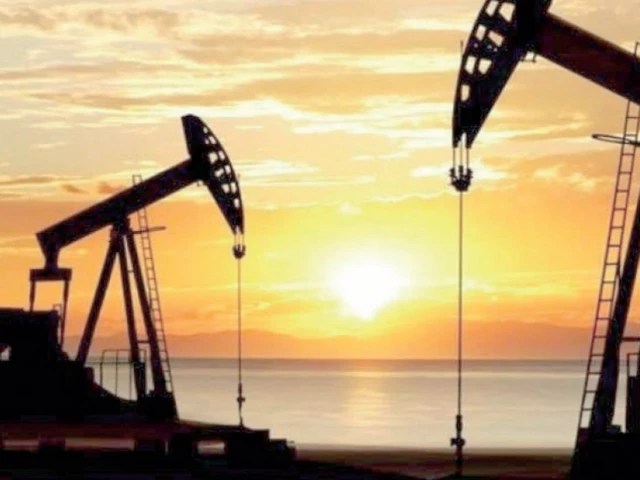
Pakistan's oil refining sector has staged a remarkable financial recovery, with four listed refineries collectively earning more than Rs57 billion during the first quarter of FY2026-27. The surge in profitability reflects stronger international refining margins, improved capacity utilisation and favourable petroleum product prices.
Yet, beneath the impressive financial performance lies a more fundamental challenge: an ageing and technologically inefficient industry that requires billions of dollars in investment at a time when global financing is becoming increasingly expensive and there is a diminishing appetite among global investors for the refining sector.
Attock Refinery Ltd (ATRL), National Refinery Ltd (NRL), Pakistan Refinery Ltd (PRL) and Cnergyico PK Ltd (CNERGY) collectively posted net profits of approximately Rs57.1 billion during July-September, compared with Rs2.9 billion in the corresponding period last year. Combined revenues increased 116.5% year-on-year to Rs567.5 billion, while gross profit surged to Rs98.5 billion from Rs8.9 billion.
The recovery was broad-based. ATRL reported a net profit of Rs18.65 billion, followed by PRL at Rs13.97 billion, Cnergyico at Rs12.88 billion and NRL at Rs11.57 billion. The results mark a significant turnaround for an industry that has struggled in recent years with weak refining margins, low capacity utilisation, rising operating costs and regulatory uncertainties.
The improvement has coincided with considerable volatility in international petroleum markets. Disruptions to crude supplies and shipping routes, particularly around the Strait of Hormuz, have pushed up freight and insurance costs and contributed to higher premiums for refined petroleum products. Diesel and petrol prices have experienced substantial volatility, creating an unusually favourable environment for refiners able to maintain crude supplies and sustain production.
Operational improvements have also contributed to the recovery. During FY2025-26, industry refinery output increased, with estimates placing production at around 11.7 million tonnes, although reported totals vary depending on the inclusion of PARCO and non-energy products. Average refinery utilisation improved to approximately 55% from 48% in the preceding year. Diesel production increased by 17.2% and petrol output by 12.4%. The momentum continued in the first quarter of FY2026-27, with NRL increasing utilisation to 81% from 65% a year earlier.
However, the sustainability of current earnings remains uncertain. Refining profitability depends less on the absolute price of crude oil than on the difference between feedstock costs and the prices received for finished products. When diesel and petrol prices rise faster than crude acquisition costs, refining margins expand. Conversely, normalisation of shipping through the Strait of Hormuz, restoration of crude supplies and recovery in international inventories could reduce product premiums and compress refining spreads. Falling oil prices could also expose refiners to inventory valuation losses.
More importantly, the sector faces structural weaknesses that cannot be addressed through higher capacity utilisation alone. Most Pakistani refineries were established several decades ago and operate with relatively outdated configurations, limited secondary conversion facilities and lower energy efficiency. Their inability to convert heavier petroleum fractions into higher-value products restricts profitability and leaves them with a relatively high furnace oil output. Demand for furnace oil has declined as the power sector has increasingly shifted towards imported LNG, coal and renewable energy.
The government's new refining policy seeks to address these shortcomings through an extensive brownfield modernisation programme. Four listed refineries have entered into upgrade arrangements involving estimated investments of around $5 billion over five years. The broader national framework also includes PARCO, taking the potential investment requirement for five major refineries to approximately $5.7 billion-$6 billion.
The programme aims to improve refining complexity, increase petrol and diesel production, reduce furnace oil output and bring fuel quality in line with Euro-V standards. PRL's proposed expansion and upgrade programme, for instance, envisages increasing crude processing capacity from 50,000 to 100,000 barrels per day. Other refiners also face substantial modernisation requirements.
The difficulty, however, lies in financing these investments. Refinery upgrades are capital-intensive, require specialised technology and involve lengthy construction and commissioning periods. Rising global interest rates, higher borrowing costs and tighter financing conditions have increased the cost of long-term industrial investment. For Pakistani refiners, the challenge is compounded by country risk, currency exposure and the relatively high cost of accessing international capital markets.
There is also a structural shift in global investment appetite. International lenders and institutional investors have become increasingly cautious about financing conventional refining capacity as energy-transition policies, environmental requirements and expectations of slower long-term fossil fuel demand reshape investment priorities.
Many global financial institutions are directing capital towards renewable energy, electrification and lower-carbon infrastructure rather than new conventional refining projects. Consequently, attracting foreign strategic partners and securing affordable long-term financing for Pakistan's upgrade programme could prove difficult.
This presents a significant challenge for an industry that must modernise precisely when international capital is becoming less accessible. Domestic profitability may provide some internal funding, but the scale of the proposed investment is unlikely to be met through retained earnings alone, particularly if current refining margins normalise.
Regulatory consistency will therefore be critical. Investors will need clarity on pricing formulas, taxation, furnace oil disposal, investment incentives and the treatment of imported machinery. Delays or changes in policy could undermine project economics and discourage potential financing partners.
For Pakistan, the stakes extend beyond the profitability of individual companies. Modernising domestic refineries could reduce imports of finished petroleum products, conserve foreign exchange, improve fuel quality and strengthen energy security. But these benefits depend on successful project execution and commercially sustainable operations.
The present earnings windfall offers the industry a valuable opportunity to strengthen its financial position. However, geopolitical disruptions are unlikely to provide a dependable foundation for long-term profitability. The real test will be whether refiners can convert temporary gains into technological improvements and whether the government can create a sufficiently stable investment environment to attract the capital needed.
Pakistan's refining challenge is therefore twofold: modernising an ageing industrial base while competing for increasingly expensive and selective global financing. Without timely investment and consistent policy support, the current profit recovery may prove temporary, leaving the industry increasingly exposed to international competition and changing energy markets.
THE WRITER IS A FINANCIAL MARKET ENTHUSIAST AND IS ASSOCIATED WITH PAKISTAN'S STOCKS, COMMODITIES AND EMERGING TECHNOLOGY













This material may not be published, broadcast, rewritten, redistributed or derived from. Unless otherwise stated, all content is copyrighted © 2026 The Express Tribune.






COMMENTS
Comments are moderated and generally will be posted if they are on-topic and not abusive.
For more information, please see our Comments FAQ