No urgent case for rupee depreciation
Updated 54 minutes ago

Climate-proofing farms can rescue economy running $4b food trade deficit
In a middle-class kitchen in Lahore or Karachi, economic policy is measured not in basis points or Eurobond yields, but in the weekly cost of cooking oil, tomatoes, lentils, and milk. Few hundred kilometres away, in a mango orchard near Multan or a vegetable belt in lower Sindh, that same economic reality looks entirely different: a smallholder farmer watching a sudden heatwave scorch blossoms on the tree, only to see much of what survives bruise and rot in the back of an open, unrefrigerated truck before reaching a wholesale mandi.
These two scenes, urban households squeezed by stubborn food inflation and rural growers wiped out by extreme weather, are two halves of the same broken system. For decades, Pakistan has treated agriculture as a low-tech, rain-and-canal-fed subsistence sector that requires little more than periodic support-price announcements and fertiliser subsidies.
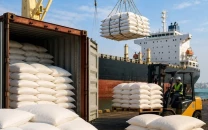
Climate change has violently exposed the limits of that neglect. Consider the paradox revealed by recent trade figures. In a country where farming employs more than a third of the workforce and generates nearly a quarter of GDP, Pakistan's food trade deficit widened dramatically in the 2025-26 fiscal year. Food imports climbed to $9.15 billion, led by $3.8 billion spent on palm oil alone, while agricultural exports fell nearly 30% to $5.02 billion, leaving a $4.13 billion hole in the external account. We are, in effect, borrowing scarce foreign exchange to import basic calories while allowing billions of dollars' worth of domestic produce to wither in the heat.
That vulnerability is intensifying by the season. A joint assessment by the Food and Agriculture Organisation of the United Nations and the World Meteorological Organisation warned that recurring heatwaves across Punjab are steadily turning fertile agrarian pastures drought-prone, slashing fruit yields by as much as half, spreading livestock disease, and depressing milk output. Rising temperatures are not merely shrinking harvests in the field; they are accelerating the spoilage of vegetables and dairy along every mile of our supply chain.
Yet to frame this solely as an environmental tragedy is to miss the larger economic opportunity. Climate-proofing Pakistan's agriculture is arguably the fastest, highest-return reform available to policymakers, one capable of simultaneously cooling domestic kitchen inflation, narrowing the current account deficit, and transforming Pakistan into an indispensable food-security partner for the Gulf Cooperation Council states just across the Arabian Sea.
Unlocking that transformation, however, requires confronting why our farms remain so fragile. According to the Asian Development Bank, Pakistan invests a dismal 0.2% of its agricultural GDP in research and development. Fewer than 3% of farms use water-saving drip or sprinkler irrigation, even though agriculture consumes over 90% of our freshwater. Worse still, an estimated 30-40% of fruits and vegetables, and roughly 15% of grains are lost after harvest, representing around $4 billion in vanished food value every year. Fewer than 6% of perishable goods ever pass through temperature-controlled logistics.
In short, Pakistan does not have a production problem so much as a preservation, water-efficiency, and incentive problem. Fixing it demands four concrete shifts. First, the state must rewire agricultural subsidies away from water-guzzling surpluses and towards import substitution. For years, distorted pricing and procurement policies have encouraged the over-cultivation of water-intensive sugarcane and flood-irrigated staples in a water-stressed basin, while leaving domestic oilseed and pulse production stunted. Redirecting subsidies and incentives towards climate-resilient, high-yield seeds for sunflower, canola, olives, and lentils, backed by guaranteed market off-take, could shave billions off our edible oil import bill within a few harvest cycles.
Second, Pakistan needs a decentralised, solar-powered cold chain built at the farm gate. Just as ordinary households and factories bypassed an unreliable power grid through rooftop solar, rural cooperatives and agritech startups can deploy modular, off-grid solar cold-storage units at village collection centres. Pairing these units with simple, standardised plastic crates instead of jute sacks, and extending low-interest State Bank green credit lines for refrigerated transport, would drastically cut post-harvest spoilage, stabilising urban vegetable prices while boosting farm incomes.
Third, government must rebalance its climate finance strategy. Nearly 80% of climate financing flowing into Pakistan has historically targeted emissions mitigation, even though the country accounts for less than 1% of global greenhouse gases. International climate funds, sovereign green bonds, and domestic development budgets must tilt decisively towards adaptation: heat-tolerant seed varieties, precision satellite weather advisories in local languages, and subsidised micro-irrigation for smallholders. Finally, Pakistan must replace knee-jerk export bans with credible export corridors. Whenever domestic onion or tomato prices spike, authorities routinely slap sudden bans on exports, a reflex that punishes growers and destroys Pakistan's reliability among international buyers. By investing in internationally certified grading, packaging, and processing facilities, turning bruised mangoes into export-grade pulp and surplus tomatoes into paste, Pakistan can honour long-term supply contracts with Gulf sovereign food funds without starving local markets.
Every crisis in Pakistan eventually forces a reckoning with an outdated economic model. Power tariffs inadvertently sparked a citizen-led solar boom, and currency pressures pushed young freelancers into the global digital economy. Agriculture now stands at that same inflection point. If we continue to leave farmers at the mercy of 50-degree heatwaves and 19th-century logistics, food inflation will remain a permanent tax on every Pakistani household. But if we modernise the farm gate, the very fields battered by climate change can become the bedrock of Pakistan's economic recovery.
The writer is an international economist






This material may not be published, broadcast, rewritten, redistributed or derived from. Unless otherwise stated, all content is copyrighted © 2026 The Express Tribune.









COMMENTS
Comments are moderated and generally will be posted if they are on-topic and not abusive.
For more information, please see our Comments FAQ