No urgent case for rupee depreciation
Updated 49 minutes ago

Cargo must keep moving even when relations break down; also Pakistan must invest in alternative routes
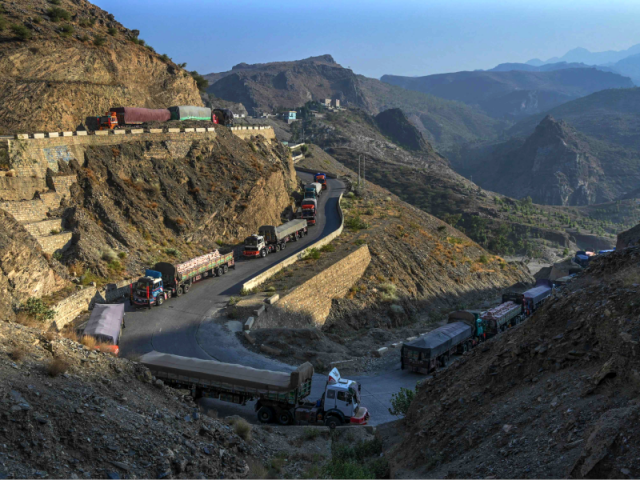
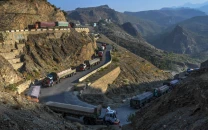
On October 11-12, 2025, Pakistan closed all the major crossings with Afghanistan. A year later, formal trade remains largely at a standstill. Within five months, the US-Iran war disrupted the second western route, through Taftan. Pakistan's land trade with its western neighbours has, in effect, been left with the road to China through Khunjerab.
Closures of the border are not new. Torkham was shut for about nine days in September 2023, for around 10 days in January 2024 and for 26 days in February and March 2025. The closure of October 2025 is, however, different in both breadth and duration. The fundamental question is what this has cost Pakistan, and who has borne the burden.
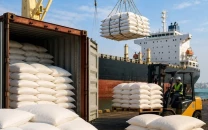
Exports to Afghanistan were $1.39 billion in 2024-25, or 4.3% of Pakistan's total exports. They fell to $364 million in 2025-26, almost all of it shipped before the closure. Relative to other products, exports to Afghanistan fell by more than 80% in the first quarter after the closure and by more than 90% once the war began. These goods did not find other buyers. Products which depended on the Afghan market lost 72-75% of their total exports, a loss of about $1.25 billion a year, or close to 4% of Pakistan's exports. Exports of these products to other destinations barely rose, and only the Gulf took a measurable share. Export prices of affected products did not change in other destinations, so the burden fell on volumes.
The losses are concentrated in food. Sugar, rice, potatoes, cement and medicines were the leading items, and food products alone accounted for $757 million of the fall. The burden, therefore, fell largely on growers, mills and the transport and clearing businesses of Khyber-Pakhtunkhwa and Balochistan. The closure has also cut imports. Pakistan lost about $750 million a year of cotton, vegetables, fruit and coal from Afghanistan, and other sources replaced only about one-third of this.
Pakistan's competitors have moved into the Afghan market. Uzbekistan, Kyrgyzstan, China and Turkiye have expanded their exports to Afghanistan in exactly the products which Pakistan used to export. Together, however, they have replaced only about one-fifth of Pakistan's lost sales. India, in turn, has become a larger buyer of Afghanistan's own exports. The market which Pakistan developed over decades is passing gradually to others.
The costs do not stop at the Afghan border. Pakistan's imports from Central Asia, which travel through Afghanistan, fell by 87%. The transit through Pakistan to Uzbekistan fell from $244 million in 2024-25 to $30 million in 2025-26. Afghan transit trade through Karachi had already declined from $6.8 billion in 2022-23 to about $1 billion in 2024-25, as Afghan importers shifted to Iranian ports after the restrictions of 2023.
The closure has its defenders, and their concerns are not without basis. It is often argued that trade with Afghanistan puts pressure on the rupee, as imports for the Afghan market are partly financed with dollars purchased in Pakistan and dollars are smuggled across the border. It is also alleged that duty-free goods imported under the Afghan transit regime are opened inside Pakistan and never reach the border. Smuggling in both directions is said to cost the exchequer sizeable revenue and undercut domestic industry. Security concerns are, of course, paramount.
The relevant question, however, is whether a full closure is the least costly way of dealing with these problems. Leakage of transit cargo can be addressed by tracking trucks, bank guarantees and verification of exit at the border. Currency smuggling is a matter for border control and the exchange market. A closure, by contrast, stops all formal trade, including legitimate exports of sugar, rice and medicines, while informal trade is likely to continue.
Several conclusions follow. First, the closure of a transit corridor imposes losses on every country along it, not only on the two parties to the dispute. There is, therefore, a strong case for an agreement which keeps cargo moving even when relations break down. Second, Pakistan must invest in alternative routes. The Khunjerab route, the links through Iran and the planned railway through Afghanistan all have value, although the railway, which uses the same corridor, will add capacity rather than an alternative. Third, exporters who lost the Afghan market must be helped to find new buyers, especially in the Gulf, the one market which absorbed some of the diverted trade.
Central Asia is attracting growing attention. On October 19, 2026, the US secretary of state met the foreign ministers of the five Central Asian states in Samarkand, in the C5+1 format, with a planned delegation of more than 100 American companies. The agenda included transport infrastructure. China, Russia, the European Union and the Gulf states are also courting the region. Much of this interest depends on routes out of a landlocked region, and Pakistan offers the shortest of them.
For these landlocked states, Karachi and Gwadar are the natural ports, and both corridors leading to them were cut within five months. Any new grouping of Pakistan with the Central Asian states should, therefore, give priority to two things: a transit agreement which protects cargo during bilateral disputes and binds Afghanistan as the transit country, and at least two working routes, so that one closure does not cut the region off.
Trade across the eastern border with India has been suspended since 2019. If the western border also remains closed, Pakistan will have cut itself off by land on two sides. The Afghan market will pass to its competitors, and the opportunity of becoming the gateway to Central Asia will be lost. Instead, if the problems which led to the closure are addressed directly and the corridors are protected by agreement, the benefits to the economy, to the region and to the people of the border areas in particular will be substantial.
The writer is Head of Policy (Trade, Investment and Industrial Cooperation) at the Centre of Excellence for CPEC, Pakistan Institute of Development Economics





This material may not be published, broadcast, rewritten, redistributed or derived from. Unless otherwise stated, all content is copyrighted © 2026 The Express Tribune.









COMMENTS
Comments are moderated and generally will be posted if they are on-topic and not abusive.
For more information, please see our Comments FAQ