COP31 slips on delivery
Updated 17 minutes ago

Draft drops key emissions references as talks likely to extend beyond deadline
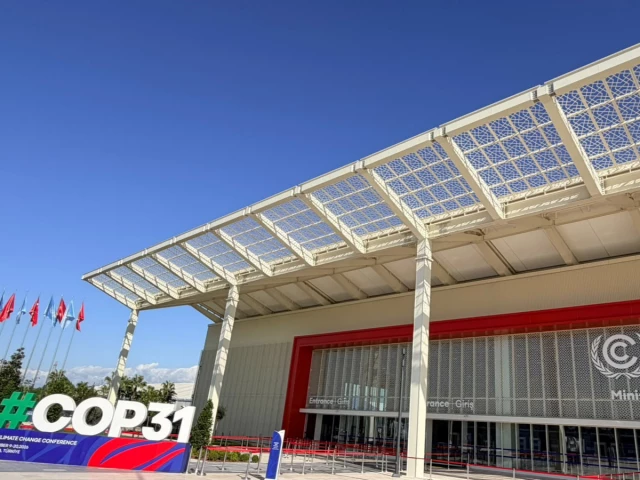
Negotiators arriving in Antalya for the final hours of COP31 are being asked to sign off on a cover decision that, whatever its defenders call it, marks a retreat from the commitments the summit was supposed to uphold.
The revised text released by the Australian presidency just before the scheduled close has removed every reference to transitioning away from fossil fuels, the main driver of the climate crisis, and in their place it leans on carbon capture, utilisation and storage as a central pillar of the energy transition.
Bracketed targets for storing hundreds of millions of tonnes of carbon annually by 2035 remain in the draft, a provision critics describe as a lifeline for the fossil fuel industry to keep operating while promising that unproven technologies will clean up the consequences later.
Adaptation finance has fared no better during the two-week long climate conference. A proposed $120 billion target has disappeared entirely and been replaced by a vague commitment to discuss tripling adaptation funds by 2035, without a baseline, delivery pathway or new pledges.
The call to raise electricity’s share of global energy demand to 35 per cent by 2035 has also been weakened because the text no longer says that electricity must come from renewable sources, leaving a loophole for fossil-fuel-generated power to count as clean electrification. Although the draft acknowledges that warming is now projected to exceed the 1.5°C threshold of the Paris Agreement, it refuses to name the cause or require the obligations that would make a transition real.
Tasneem Essop, executive director of Climate Action Network International, said the network was “unambiguously stating that we are rejecting what is currently on the table in these negotiations today” and called on governments, particularly in the Global South, to reject it as well. “There is nothing on the table that protects people or addresses the priorities of the Global South. In fact, the opposite is true.
Read: COP31 negotiators publish revised deal draft with no mention of fossil fuels
The current text has opened the door to the most harmful and dangerous options of any COP so far,” she said. Essop listed what her network had come to Antalya to secure: a Just Transition Mechanism, the BAM, the adaptation finance developed countries committed to in Belém, climate finance focused on public finance, and a strengthened Mitigation Work Programme. “What we have right now is nothing in all of those areas,” she said.
She also pointed to the volume of industry presence in the negotiating halls, noting that this COP “has had the highest number of lobbyists: fossil fuel lobbyists, AI lobbyists, CCUS lobbyists, CDR lobbyists,” and that what delegates are leaving with are “decisions made to promote the interests of those corporations making profits from the destruction of people.”
Rejecting the summit’s official narrative outright,Mohamed Adow, founder and director of Power Shift Africa, said: “The COP Presidents want to tell us this has been a great COP. Well, I can tell you without any doubt that this has been the worst COP ever.” He argued that “overseeing a failing COP is bad enough, but trying to sell it as a success rubs salt into the wounds of those people who need it to deliver.”
Adow questioned the purpose of the gathering if the outcome merely repeats decisions made in Belém and renegotiates the balance agreed in Paris 11 years ago, adding that “communities living in drought, floods and failed harvests were promised action. They cannot survive on an annual renewal of promises.”
Responsibility for the failure, in his view, sits with wealthy countries: “They demand action from developing countries, then block public finance, block Just Transition, block climate finance, and they expect ambition. You cannot keep your foot on the brake and complain that countries are not moving fast enough.”
He also accused the co-presidencies of enabling that dynamic, saying “Trump and the US may not be here, but the rest of the rich world are doing his dirty work, facilitated and enabled by the two co-Presidents,” and called on Türkiye and Australia to “stop preparing their victory speeches and start examining what they would do to rescue this corpse.”
Read more: COP31: the crisis of climate finance
Avantika Goswami, programme manager for climate change and green economy at the Centre for Science and Environment in India, directed her criticism at the European Union, which she said had consistently blocked “discussions of substance on many critical issues” while posturing in the media.
“When the time comes to show up and enable all of the moving pieces that will help us avert the climate crisis, that’s when they act in bad faith and play destructive games,” she said. “Developed countries, particularly the European Union, have in a way taken on the mantle the US has left, the vacuum of the blocker that the US was. We expected them to be leaders, but they have disappointed us.”
Anabella Rosemberg, senior adviser on just transition at CAN International, described the process as under deliberate attack rather than simply inefficient. “The COP is not dying. The COP is being killed. Not because it’s bloated. Not because it’s inefficient or useless. It’s being killed because it’s the last space where civil society, where developing countries, can hold developed countries accountable,” she said.
In her account, the presidency’s cover decision “emptied each and every negotiating room and gave actual cover to developed countries that didn’t want to engage on the actual agenda items of this COP,” with just transition becoming “its casualty.” She said the promised Just Transition Mechanism for working people, communities and countries fighting for prosperity had been replaced by “more empty words. We say no, we will fight back, and we say thank you for nothing.”
Irked by the outcome so far, Denise Cauchi, chief executive of Climate Action Network Australia, tied the technical arguments back to the people the summit was meant to serve. “People all around the world are burning, drowning, starving and mourning their loved ones. This was the COP that was meant to deliver for them,” she said, adding that Australia “put up its hand to shepherd these negotiations, and it’s failing. It’s as clear as that.”
Also read: UN climate chief urges faster action at COP31
She called the cover decision “a disgrace, and the only winners in it are the fossil fuel industry and the corporations and others who profit from human suffering and misery and the destruction of the planet. We reject it.”
With negotiations likely heading into overtime, delegates, experts said, face a choice between accepting a text that protects fossil fuel interests and postpones the hard decisions, or keeping the summit open until it produces something that does not abandon the countries least able to withstand the consequences. Essop, for one, made clear that walking away from the process is not on the table for her network.
“We have to defend this multilateral space,” she said. “If we moved away from it, the international cooperation and support countries need to take more ambitious action and protect their people would disappear. We’ll defend it, strengthen it and fight for it.”
This story was produced as part of the COP31 Climate Change Media Partnership, a fellowship for journalists covering the UN climate talks














This material may not be published, broadcast, rewritten, redistributed or derived from. Unless otherwise stated, all content is copyrighted © 2026 The Express Tribune.






COMMENTS
Comments are moderated and generally will be posted if they are on-topic and not abusive.
For more information, please see our Comments FAQ