Mustafa Kamal links MQM-P's demand for new provinces to failure of local governments
Updated 1 hour ago

Health minister says Karachi, urban centres in Sindh deserve representation, resources in line with their population
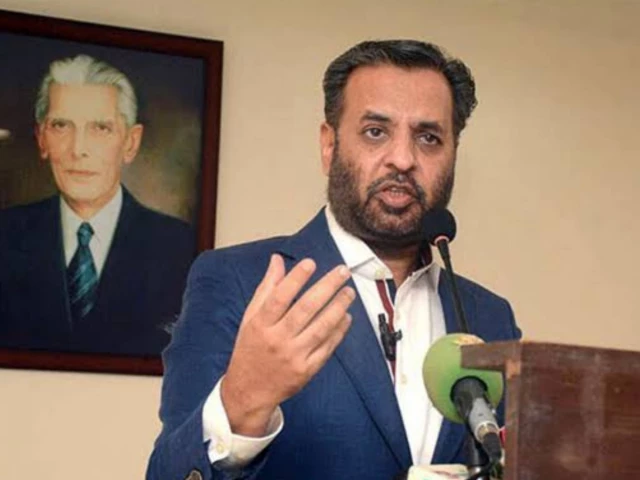
Health Minister Mustafa Kamal on Friday said the Muttahida Qaumi Movement-Pakistan (MQM-P) had been left with no option but to demand new provinces after Karachi and other urban centres in Sindh were denied basic civic facilities and adequate representation in line with their population.
Addressing the media on the sidelines of a Startup-Government Dialogue organised by the National Incubation Centre (NIC) in Karachi, Kamal said the failure to empower local governments had compelled the party to support the creation of new provinces.
“If the 26th or 27th Constitutional Amendment had granted constitutional powers to local governments, we would have supported it. However, we have been left with no option but to support the creation of new provinces,” he said.
“Local governments do not even have the authority to install manhole covers,” he remarked, criticising the Sindh government for resisting calls to devolve powers to local administrations. He added that whenever the issue was raised, it was met with opposition and even threats of bloodshed.
Kamal's remarks came amid an escalating political row between the MQM-P and the Pakistan Peoples Party (PPP) over the creation of new provinces.
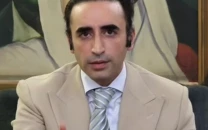
Earlier this week, he had warned that PPP Chairman Bilawal Bhutto Zardari would be held responsible for any bloodshed over the issue, following the latter's fiery speech that escalated political tensions.
The minister said Prime Minister Shehbaz Sharif's willingness to consider a referendum and the support expressed by the federal information minister showed that the debate over new provinces was already under way.
Also Read: MQM-P postpones Nov 29 rally for new provinces, reiterates demand for administrative division
Defending the constitutional basis for the demand, Kamal said the Constitution provided a mechanism for creating new provinces and that discussing the issue could not be termed unconstitutional.
Referring to Article 239, particularly Clause 4, he said the Constitution had already been amended 27 times and could be amended further if required to address constitutional matters.
He also said MQM-P did not want confrontation over the issue and would voluntarily withdraw from its planned rally if there was even a “slight risk” of a clash.
“Our objective is not confrontation but to maintain peace in the city. We do not want to give the rally a political or any other colour,” he said, clarifying that the November 29 rally had not been postponed on anyone's instructions or orders.
Commenting on political parties' differing positions on the establishment's involvement in politics following Bilawal's speech, Kamal said its intervention was considered legitimate when it favoured a particular party and illegitimate when it went against its interests.
“It has become a political trend to declare the establishment's support halal when it is favourable and haram when it is not,” he remarked.
He alleged that political parties which had sought the establishment's support complained when they faced its opposition, adding that none had apologised for seeking such backing or assured the public that they would refrain from doing so in the future.
“Every political party wants the establishment to intervene in its favour. Even those who object to the establishment's interference want its support,” he said, adding that the public was now capable of distinguishing between right and wrong.
Responding to questions about differences within MQM-P, Kamal said every member had the right to express their views and that internal disagreements were a party matter.
“Everyone has the right to express their views. We are doing what we believe is best. Differences within the party are our internal matter,” he said.
On the prospect of Muhajir unity, Kamal said he would speak to Dr Khalid Maqbool Siddiqui in response to Afaq Ahmed's invitation to a press conference and would take the proposal seriously.
“If the proposal for Muhajir unity came under discussion at the MQM-P's Central Executive Committee, I would vote in favour of it,” he added.
Karachi's civic problems and population dispute
Highlighting Karachi's longstanding administrative and civic problems, Kamal said the city was being denied its rightful share of resources and facilities because its actual population was not being properly counted.
Objecting to the population figures recorded in the 2017 and 2023 censuses, he said Karachi's population had been recorded at 16 million in 2017 but was shown to have declined to 13 million in the 2023 census.
He claimed that a subsequent recount put the city's population at 20.3 million, alleging that around 7.7 million residents had been excluded from the initial count.
“If Karachi's population itself is not acknowledged, how can its residents demand basic civic facilities?” he asked, pointing to shortages of drinking water, inadequate sewage disposal, deteriorating roads and poor waste management.
He said the city's actual population and the existence of its residents needed to be officially recognised to ensure that Karachi received resources and facilities in proportion to its population.
Kamal also said employment opportunities for the city's young people had become increasingly limited, with working as delivery riders for online platforms emerging as one of the few available options.
Although he said he was a strong opponent of the quota system, the MQM-P leader complained that the 40% job quota allocated to Sindh's urban areas was not being implemented.
Commenting on recruitment and promotions in the police department, he said the appointment of 150 deputy superintendents of police (DSPs) in Karachi was restricting promotion opportunities for local officers.
Debate around new provinces
The debate on carving new provinces for broader governance reforms gained momentum on July 31, when Naqvi called for additional administrative units or provinces to overhaul what he described as the country's outdated governance system. Addressing the Pakistan Economic Summit 2026 in Islamabad, he argued that the existing governance model had effectively “collapsed” after decades of failing to deliver.
His remarks drew a mixed response, with several political leaders also calling for a debate on the issue in parliament instead of public fora.
The proposal drew the interest of the Muttahida Qaumi Movement-Pakistan (MQM-P), which has repeatedly advocated carving out new provinces from Sindh. Even before Naqvi's July 31 remarks, Mustafa Kamal had floated the idea of dividing Sindh.
On September 4, the Sindh Assembly passed a resolution rejecting attempts to divide the province or create new administrative units. Chief Minister Syed Murad Ali Shah declared that there will be no compromise on Sindh's geographical unity.
More recently, Bilawal’s speech at the Karachi Press Club stirred up a storm after he said a bloodbath was imminent if Sindh was administratively divided. He also hinted that the government was mulling a 28th amendment for the purpose, while asserting that the 27th amendment was coerced onto the PPP lawmakers.
The PPP scion said he acknowledged a system collapse and was up for a reset ‘only’ through political interventions. The comments drew the ire of the political elite, with Adviser to the Prime Minister on Political Affairs Rana Sanaullah saying that Bilawal's remarks could lead to disqualification
"They were fully involved in the 26th Amendment. For the 27th Amendment, they ensured that every single vote was accounted for, and now they are calling it brute force,” Sanaullah said.
Meanwhile, Defence Minister Khawaja Asif also hit back at Bilawal, questioning his moral standing to lecture others while pointing to the PPP's 18-year rule in Sindh.
In response, Bilawal reasserted his views, giving out multiple statements in various televised interviews. He asked the government officials to "calm down" and hear out his opinions as one of the largest political stakeholders in the country. He once again turned down a referendum, saying it was never "historically" used for democratic reasons. The PPP stalwart also snubbed calls for the division of Sindh.
Today, the MQM-P once again joined the chorus of new provinces, stating that their resolve to make new provinces was final.
The president and the prime minister have held a series of meetings on the issues that are in the limelight in the political space.
On November 14, President Zardari met PM Shehbaz at his Model Town residence after Interior Minister Naqvi proposed a referendum on the issue. According to a statement issued by the PM's office, the two leaders had agreed on cooperation between coalition partners, continuity of consultations and progress on public welfare initiatives.
The duo met once again yesterday and vowed to resolve differences through dialogue.





This material may not be published, broadcast, rewritten, redistributed or derived from. Unless otherwise stated, all content is copyrighted © 2026 The Express Tribune.



COMMENTS
Comments are moderated and generally will be posted if they are on-topic and not abusive.
For more information, please see our Comments FAQ