German importers look to Pakistan amid China shift
Updated 1 hour ago

Scheme offers 5% baseline support, 10% on incremental exports
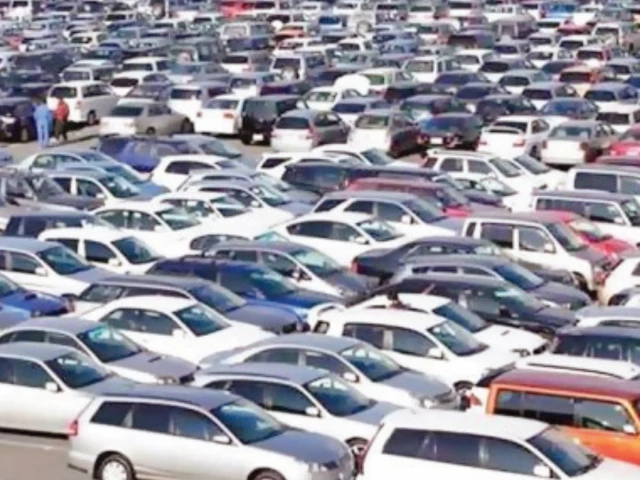
With an ambitious target of $6 billion in exports, the government has decided to implement a duty drawback scheme to encourage the exports of automobiles and auto parts from Pakistan. Sources told The Express Tribune that a fiscally neutral Drawback of Local Taxes and Levies (DLTL) scheme will be implemented for this purpose. The DLTL scheme has demonstrated success in enhancing export competitiveness across multiple sectors by partially offsetting domestic taxes, levies and infrastructure-related costs not otherwise refundable.
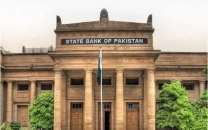
Under the scheme, all automobile and parts manufacturers working in Pakistan and registered with the EDB shall be eligible to benefit from the DLTL, provided they meet the minimum value addition requirement under section 4.5.3. The scheme shall extend to parts and completely built automobiles, whether left or right-hand driven. An exporter will be eligible for 5% compensation of the net free on board (FOB) value of eligible exports in rupee terms as baseline support, while an additional 10% of the net FOB value of the incremental export will be disbursed provided the FOB value is 5% or more than the previous year. During subsequent years, exports equal to or more than the first year of 2026-27 will serve as the baseline, with payments linked to third-party audits and made through the State Bank of Pakistan after realisation.
Quoting an example, an official said that if an exporter exports eligible exports worth Rs100 at FOB value in the first year of 2026-27, the exporter shall be eligible for payment of Rs5 as baseline support, and Rs50 calculated at 10% on additional exports. For any subsequent year, the previous year will become the base year for the calculation of additional DLTL only, provided the exporter meets the minimum benchmark based on the first year. The second scenario for 2027-28 is that if an exporter, who has exported Rs100 in the first year, exports eligible exports worth Rs104 during the next year, the exporter shall be eligible for Rs5.2 of DLTL, calculated as 5% of the entire export value because the exporter has not crossed the 5% minimum threshold.
The effectiveness of the policy will depend not merely on the availability of incentives, but on whether they alter the economic behaviour of manufacturers and participants. Policy support has been designed to be conditional upon measurable performance. Benefits will be available to firms that demonstrate specified outcomes, while failure to meet binding obligations may result in adverse consequences. This approach is intended to align the private commercial interest of manufacturers with the policy objectives of increased domestic value addition, exports, technology development and efficiency. The policy will progressively change the relative returns associated with different business strategies, making domestic sourcing more attractive.
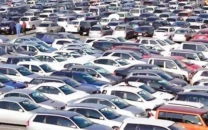
Pakistan has exported a few hundred cars in recent years. The export of tractors, rickshaws and motorcycles has been consistent but low in volume. However, the real potential for export lies in the auto parts. Pakistani auto parts manufacturers possess expertise in casting, machining, forging, rubber and plastic parts, sheet metal, welding, jig and fixture manufacturing, heat treatment, wire harnesses, die making, fabrics, interior, adhesives and floor mats.
Pakistan's auto parts exports have been gradually rising and stood at $190 million in 2025-26. The exported parts are mostly made through labour-intensive techniques requiring lower technical skills. The main export destinations include the United States, the European Union, Afghanistan and the United Arab Emirates. It is possible to enhance this potential with relatively low fiscal and policy support. For this purpose, interventions will be implemented with the collaboration of relevant ministries and federal and provincial agencies, with the Ministry of Industries and Production and the EDB coordinating this effort.




This material may not be published, broadcast, rewritten, redistributed or derived from. Unless otherwise stated, all content is copyrighted © 2026 The Express Tribune.

COMMENTS
Comments are moderated and generally will be posted if they are on-topic and not abusive.
For more information, please see our Comments FAQ