SBP warns of premature deindustrialisation
Updated 26 minutes ago

Manufacturing value added stagnant since 1960s; investment falls to 12.6% of GDP
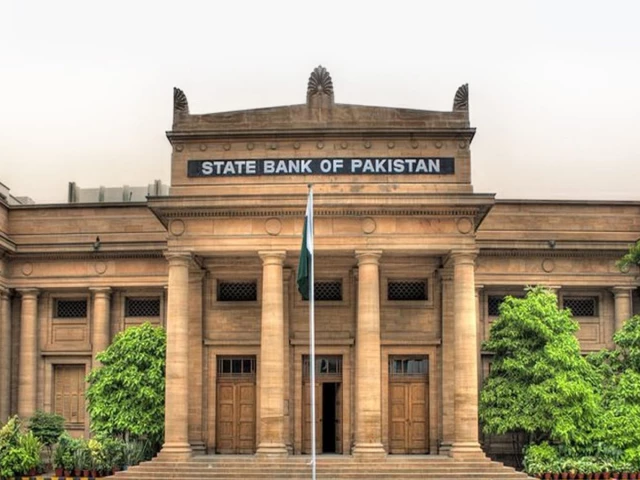
Pakistan is at risk of premature deindustrialisation as its manufacturing sector struggles to expand its contribution to economic output and employment, with decades of stagnating industrial value addition, declining productive investment and a shift towards low-value services threatening the country's long-term growth prospects, the State Bank of Pakistan (SBP) has warned.
In its Annual Report on the State of Pakistan's Economy for FY2025-26, the central bank said Pakistan's manufacturing value added had remained largely stagnant between 1960 and 2023, recording a slight increase until the mid-1990s before gradually declining. Manufacturing employment, meanwhile, has grown slowly since the 1990s and remained largely stagnant since 2017. The report cautioned that Pakistan appeared to be either approaching premature deindustrialisation or had already entered the process, as manufacturing was losing its role as an engine of structural transformation before the country had reached the income and productivity levels normally associated with industrial decline.
The trend is particularly concerning as the economy is increasingly shifting towards low-value services without a corresponding expansion in manufacturing, limiting productivity gains, export diversification and the creation of higher-productivity employment.
The weakening industrial base is accompanied by a persistent decline in investment. According to the SBP, Pakistan's gross fixed capital formation fell from an average of 15% of GDP during FY2006-11 to 12.6% during FY2022-26, primarily reflecting a decline in private-sector investment.
The reduction was particularly pronounced in large-scale manufacturing and information and communication technology (ICT), and investment in transport and storage also declined.
The central bank observed that investment in manufacturing, modern tradable services and logistics brings together capital, skills and technology, enabling businesses to expand production, improve quality and compete in international markets. A shift away from these sectors weakens productivity, export diversification and demand for skilled workers. Several structural constraints are discouraging businesses from investing in productive capacity. These include high tariffs on raw materials, intermediate goods and capital equipment that increase production costs and undermine the competitiveness of downstream industries.
The report also identified an anti-export bias in the tariff structure, arguing that protection of finished goods makes domestic sales relatively more attractive than exports, weakening incentives for firms to invest in export capacity, efficiency and product quality.
Limited access to long-term financing, public-sector crowding out, macroeconomic instability, policy uncertainty, regulatory costs, unreliable energy supplies and inadequate logistics infrastructure further constrain industrial expansion. The tax treatment of real estate also creates an incentive for investment in property rather than manufacturing and tradable services, the SBP noted.
The impact of structural weaknesses is already visible across several manufacturing industries. Iron and steel production contracted for the fourth consecutive year in FY26, with the SBP attributing the decline primarily to high energy costs, particularly electricity tariffs. Finished steel imports increased by 27.4%, while capacity utilisation in long steel products fell from above 50% in FY22 to around 30% in FY25, according to industry data cited in the report. The rising reliance on imported finished steel reflects the difficulty domestic producers face in competing with foreign suppliers.
The chemicals industry also recorded a second consecutive annual decline in output, partly because of higher gas prices and reduced gas supplies amid falling domestic gas production. These constraints affected fertiliser manufacturing. Meanwhile, textile exports grew by only 0.3% in FY26. Although apparel exports increased by 1.3%, the growth largely reflected higher prices, and export volumes declined. Textile export volumes to the European Union increased by 0.9%, but unit values fell by 8.2%. These developments underline the challenges facing export-oriented industries in maintaining international competitiveness. The consequences extend beyond manufacturing output and export earnings, particularly as Pakistan struggles to generate sufficient productive employment for its growing working-age population. The SBP said historically low and volatile economic growth, combined with slow structural transformation, had constrained job creation.
Youth unemployment stood at 12.8% in FY2024-25, compared with an overall unemployment rate of 7.2%. The youth unemployment rate increased from 11.1% in FY2020-21, indicating that rising labour-force participation has not been matched by sufficient employment opportunities. Female unemployment is particularly pronounced. Among people aged 25-34, the unemployment rate reached 14.9% for women, compared with 5.8% for men. The report also highlighted a persistent mismatch between education and employers' requirements, with Pakistan facing both shortages of skilled workers in certain occupations and graduate underemployment in others.
The weak industrial base compounds the problem by limiting opportunities for skilled workers and encouraging reliance on low-productivity agriculture, informal employment and self-employment. Around 80% of workers are employed in the informal economy, leaving the majority outside formal social protection arrangements. Weak labour inspection, low compliance with minimum-wage requirements and limited coverage of pension and social security schemes further undermine decent employment.










This material may not be published, broadcast, rewritten, redistributed or derived from. Unless otherwise stated, all content is copyrighted © 2026 The Express Tribune.







COMMENTS
Comments are moderated and generally will be posted if they are on-topic and not abusive.
For more information, please see our Comments FAQ