A barcode is only the first link
Updated 32 minutes ago

DRAP asks medicine distributors, wholesalers and retailers to register and report suspect products, but sets no deadli
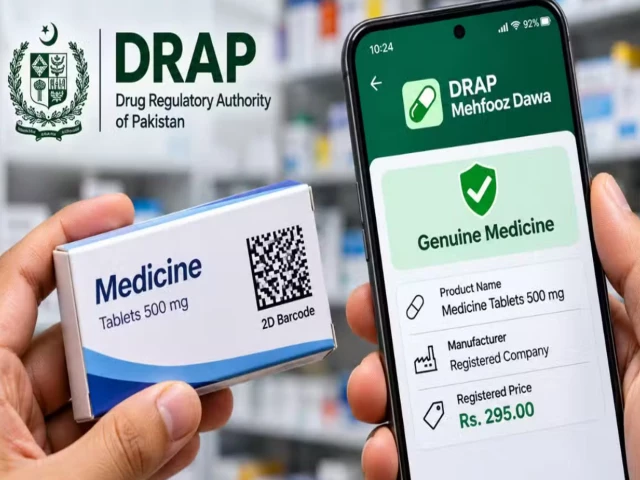
In the last week of October, DRAP issued two alerts about fake flu vaccines. One carried the Vaxigrip Tetra name and a batch number that nobody had ever imported into Pakistan. The other carried the Influvac Tetra name, and the authorities learned it was fake only when they asked the authorised supplier whether the batch was theirs. Both fakes reached the market while pharmacies had run short of the leading imported brands.
That check should take seconds, and Pakistan now has part of the 'railroad' to do it. In June, the federal cabinet approved a nationwide track and trace system for medicines. Since October 9, manufacturers and importers must print a 2D barcode with its own serial number on every pack. DRAP holds the data, and a customer can scan a pack with its Mehfooz Dawa app to check the product and its price.
I give credit to the Ministry of National Health Services. The government first notified barcodes on medicines in 2017 and then left them on paper for nine years. This time the ministry has set a deadline, DRAP has built a working portal, and the minister has warned companies that the ministry will seal their plants if they do not submit their data.
A serial number on a box is the first link of a chain. The other links are missing. The rules bind manufacturers and importers. DRAP's guidelines ask distributors, wholesalers and retailers to register, to scan and to report suspect products, but set no date by which they must record what they receive, dispatch or sell. DRAP has told manufacturers to plan for up to six years before they serialise every shipping carton. The rules also exempt packs made before October 9, so for some time a shop can legally sell a box with no code at all.
A counterfeiter can copy any code that nobody has marked as sold. He buys one genuine pack and prints its code on a thousand boxes. Unless the system knows that a pharmacy has already dispensed the original, each of the thousand will look genuine. DRAP should tell us what its app shows when someone scans the same serial number for the hundredth time. We cannot ask the patient to police the supply chain.
The FBR has already taught us this lesson with cigarettes. Its track and trace system also starts at the factory. In 2024, counterfeit stamps turned up on cigarette packs and the prime minister ordered an inquiry. This January, a survey of retail outlets found stamps on only 22 of the 477 brands on sale. Nobody checks the code at the shop, so the code from the factory achieves little.
Banking taught me that recording a transaction is the easy part. The hard part begins when a record looks wrong. If a pharmacy scans a pack and the system rejects it, who responds? Who removes the stock and investigates the supplier?
The missing steps are simple. The distributor records each receipt and dispatch against a licensed business, and records returns and destroyed stock as well. The pharmacy or hospital verifies each pack when it arrives and marks it as sold when it hands it to the patient. With those records, DRAP can trace a recalled batch to the outlets that hold it, where today it can only issue a general notice. The counter will give the most trouble. Manufacturers print the code on the outer box, and many Pakistanis buy their medicine by the strip, so the procedure has to cover loose strips and part packs.
Why would a medical store owner bother? Turkiye was the first country to trace medicines through its entire regulated supply chain. It began in 2010 with manufacturers and pharmacies, added wholesalers in 2012 and tied reimbursement to the scan, so the pharmacist scanned because that was how he got paid. The European Union has required pharmacies to verify each prescription pack before they hand it over since February 2019. Pakistan has no such payer at the counter. Households pay nearly half of our health spending straight out of their pockets, and half of that goes on medicines.
I know what moves a small shopkeeper. When we launched easypaisa in 2009, every 'dukandaar' (shopkeeper) asked us the same question: "is main mera kya faida?" (what is in it for me?). We paid him a commission on every transaction, and the network grew to more than 70,000 shops. Scanning a medicine pack pays the medical store nothing. So compliance has to cost the store very little, and it has to connect to something the owner values. He should not have to buy expensive equipment or hire another employee. DRAP should test the procedure in a busy shop with patchy internet before it makes it compulsory. The provinces license medical stores, which makes licence renewal the lever. DRAP has to bring the provincial health departments and drug inspectors in from day one.
Somebody also has to pay. Manufacturers have already said that not every firm owns the printing equipment, and the government regulates the prices of many medicines. Government and industry need to agree who pays for maintenance and enforcement after the launch. Development partners can help with the setup.
I would ask for three things. Firstly, DRAP should publish the next phases with dates. Distributors come next, then hospitals and pharmacies, and then the day after which no shop may sell an uncoded pack. Secondly, DRAP should give every alert a named owner and a deadline, and the ministry should publish the results. I would want to see the share of packs it can trace from factory to sale, and how long it takes to close an alert and to complete a recall. Thirdly, the government should start with its own hospitals. If it buys only traceable stock, and its hospitals record what they receive and dispense, they test the system at scale and suppliers gain a commercial reason to comply.
Track and trace has limits. It cannot test what is inside a tablet. It does nothing about medicines that people sell outside licensed outlets, and the sellers of the fake Influvac worked online. Laboratories must keep testing, inspectors must keep inspecting, and the authorities must keep acting against illegal sellers. The system will make it much harder for anyone to introduce, divert or recycle a medicine without leaving a record. Pakistan has built the first link. DRAP and the provinces now have to build the rest.
The writer is the Chairman of the Pakistan Fintech Network








This material may not be published, broadcast, rewritten, redistributed or derived from. Unless otherwise stated, all content is copyrighted © 2026 The Express Tribune.











COMMENTS
Comments are moderated and generally will be posted if they are on-topic and not abusive.
For more information, please see our Comments FAQ