A barcode is only the first link
Updated 55 minutes ago

Existing framework extracts more from economy without creating proportionate productive capacity
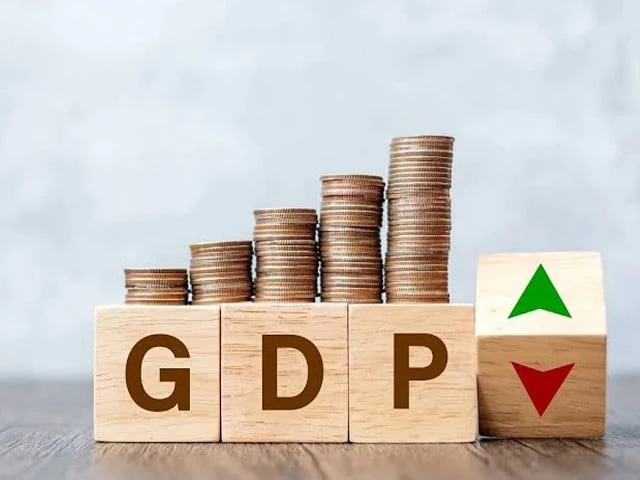
An economy cannot achieve sustainable prosperity by taxing productive enterprises into submission, subsidising inefficiency, protecting expensive imported fuel-based electricity and exempting its ruling elite from the financial discipline imposed on ordinary citizens.
Pakistan's fiscal surplus has declined 40% year-on-year from Rs2.119 trillion. Fiscal surplus stands at 0.9% of GDP, down from 1.7% a year earlier. Total revenue collection fell 3% to Rs6.004 trillion in 1QFY2027. Pakistan's fiscal dilemma is no longer simply about collecting more revenue or reducing the budget deficit. It is fundamentally about a dysfunctional economic model in which successive governments have relied on excessive taxation, borrowing, administrative controls and IMF bailouts while avoiding structural reforms.
Over the last decade, Federal Board of Revenue (FBR) tax collections increased by 317.77% in nominal terms, rising from Rs3,112 billion in FY2015-16 to Rs13,001 billion in FY2025-26, representing a compound annual growth rate of 15.37%. FBR tax revenue has increased by 7% to Rs3.086 trillion during the 1QFY2027. Meanwhile, the government expenditure has increased 16% to around Rs4.730 trillion with interest payment rising by 23%. Primary surplus declined by 15% to Rs2.974 trillion, equal to 2.1% of GDP. Government expenditures are largely driven by debt servicing and current expenses.
Despite this massive increase in revenue collection, Pakistan's average real GDP growth remained around 3.4-3.5% during the decade. This is a damning reflection of an economic framework that extracts more from the economy without creating proportionate productive capacity. The consequences are evident: declining industrial activity, weak exports, inadequate investment, unemployment, expensive electricity, mounting public debt and persistent inflationary pressures. Disruptions in the Strait of Hormuz are an external factor affecting economies worldwide. However, excessive government expenditure and an insatiable appetite for borrowing are domestic policy failures. While governments elsewhere are reviewing expenditure and adopting austerity measures, Pakistan continues to burden future generations with additional debt. The fundamental problem is not merely insufficient taxation; it is an oversized, inefficient and expensive state.
Taxing businesses into stagnation
The FBR continues to face pressure to meet ambitious revenue targets, use all kinds of tactics, freezing bank accounts and withdrawing funds to extract more unjustified tax to meet targets. Unfortunately, the easiest route appears to be squeezing existing taxpayers rather than bringing untaxed sectors into the documented economy. This approach is economically destructive. Businesses are expected to invest, expand production, generate employment and increase exports while facing excessive taxation, high energy costs, regulatory uncertainty and expensive financing.
The contradiction is obvious: the government wants economic growth but pursues policies that discourage it. When documented enterprises face an ever-increasing compliance burden while undocumented competitors operate with relative freedom, the tax system effectively penalises honesty and rewards informality. This is one of the reasons, services sector grew more than industrial and export sectors. Agriculture, wholesale and retail trade, real estate and other undertaxed sectors must contribute according to their actual economic capacity. Tax administration must become transparent, predictable and technology-driven. Pakistan needs a broader tax base, not repeatedly increased taxation on the same taxpayers. Revenue mobilisation must follow economic expansion rather than suffocate it.
Energy policy: protecting inefficiency at public expense
Pakistan's energy policy represents one of the most expensive structural failures of economic management. The country possesses enormous solar-energy potential, yet policymakers remain excessively focused on protecting an electricity system dependent on expensive thermal generation, imported fuels and legacy contractual arrangements. Capacity payments, transmission inefficiencies, distribution losses and accumulated circular debt of approximately Rs5.3-5.45 trillion continue to undermine the economy.
Manufacturers competing in international markets cannot remain competitive with electricity costs that make domestic production increasingly uneconomical. Many industries have been forced to operate substantially below installed capacity or shut down their operations. Solar energy should be treated as an opportunity rather than a threat to established commercial interests. Pakistan needs accelerated renewable-energy investment, battery storage, grid modernisation, competitive power procurement, energy market and transparent reviews of generation contracts. This does not mean abandoning thermal generation overnight. Grid stability and industrial reliability require a carefully managed transition. Pakistan cannot aspire to see export-led industrialisation while maintaining an electricity system that makes its products uncompetitive.
Reduce the jumbo-sized cabinet
The incumbent government's federal cabinet is one of the largest in the world, comprising around 57 ministers, state ministers and advisers, yet the country is struggling to come out of economic mess, increase FDI, exports, boost domestic commerce to widen its tax base and good governance to provide better services to citizens. The cost of running the civil government (RoCG) rose about 16% to reach Rs1.03 trillion in fiscal year 2025-26, up from Rs892 billion in the previous year. For the ongoing fiscal year (2026-27), the target for running the civil government's expenditure has been set at Rs971 billion, according to budget documents. Need of the hour is to reduce duplicate federal ministries, already devolved to provinces, and merger of ministries working for same domain to cut RoCG expenses.
SOEs: a bottomless drain on taxpayers
Another major source of fiscal leakage is the continued financing of chronically loss-making state-owned enterprises (SOEs). Their accumulated losses and liabilities reached approximately Rs7.22 trillion by December 2025. Every day the government delays meaningful restructuring, privatisation or winding up of commercially unviable entities adds nearly Rs3 billion financial burden on taxpayers. Electricity distribution companies, Pakistan Steel Mills, Trading Corporation of Pakistan and other inefficient public-sector entities continue consuming resources that could otherwise finance education, healthcare, infrastructure and debt reduction.
The injustice is glaring: profitable private enterprises face aggressive taxation, while inefficient public enterprises enjoy repeated financial bailouts without comparable accountability. Every commercial SOE should undergo an independent financial and operational assessment. Entities that can operate competitively under private ownership should be privatised transparently. Those retained under public ownership must have professional management, independent boards and enforceable performance targets. Public ownership must not become a permanent licence to waste public money.
BISP: relief without economic empowerment
The Benazir Income Support Programme (BISP), despite its poverty-alleviation objective, cannot substitute for a productive economic strategy. Cash transfers may provide temporary relief to vulnerable households, but they do not address the structural causes of poverty: unemployment, low productivity, inadequate education, lack of skills and limited economic opportunities. Pakistan needs to move beyond a welfare model that risks institutionalising dependency. Public resources should increasingly support vocational training, entrepreneurship, agricultural development, healthcare and employment generation so that disadvantaged households can become economically self-reliant.
Furthermore, recurring reports of corruption, administrative irregularities, fraudulent beneficiaries and fake registrations raise serious questions about transparency and accountability. Ineligible beneficiaries and weaknesses in verification mechanisms undermine public confidence and waste taxpayers' money. With an allocation of Rs838 billion, BISP must demonstrate measurable outcomes. How many families have graduated out of poverty? How many beneficiaries have acquired employable skills or sustainable livelihoods? The objective should be to graduate people out of poverty, not institutionalise poverty through permanent dependence on government assistance.
Austerity must begin at the top
Austerity in Pakistan has largely remained a political slogan. Official residences, rest houses, extensive security protocols, large vehicle fleets, free fuel, foreign travel, overlapping departments and discretionary privileges continue to consume public resources. It is unacceptable to demand sacrifices from taxpayers, businesses and common man while those exercising political and administrative authority remain insulated from meaningful expenditure reductions.
Austerity is not demonstrated through press conferences or symbolic cuts in stationery budgets. It requires measurable reductions in unnecessary expenditure. Every government institution should publish its administrative costs, vehicle utilisation, travel expenditure and discretionary benefits. Tax exemptions and concessions must undergo independent scrutiny. Pakistan should also rationalise its overseas administrative footprint, including diplomatic and commercial establishments, based on strategic necessity and measurable performance. Austerity must be practiced by those who govern before it is demanded from those who pay.
Salaries, pensions and an expanding state
Government salaries, pensions and administrative expenditure represent substantial recurring fiscal obligations. Unfunded pension liabilities are particularly concerning because they accumulate over decades and restrict future governments' financial flexibility. Civilian and military pension systems require actuarially sound reforms, including contributory pension arrangements for new entrants, transparent liability reporting and digital verification.
Similarly, overlapping federal and provincial departments following constitutional devolution must be identified and rationalised. Digital public services can reduce administrative costs while improving service delivery. Pakistan needs a smaller, smarter and more accountable government, not an ever-expanding administrative machinery financed through additional borrowing.
Debt servicing: borrowing to pay for borrowing
Pakistan's debt burden is the cumulative consequence of decades of fiscal mismanagement. Public debt reached 70.7% of GDP by June 2025. Interest payments now consume more than half of government revenue, leaving limited fiscal space for development, education, healthcare and infrastructure.
The cycle is destructive: borrowing finances expenditure, interest payments increase future liabilities and the government responds by imposing additional taxes or borrowing further. Breaking this cycle requires sustained fiscal discipline, improved debt management, longer borrowing maturities and, most importantly, stronger economic growth. Fiscal consolidation must not become an excuse to sacrifice development expenditure while protecting inefficient recurring commitments.
Exports & investment: abandon protectionist mindset
Pakistan cannot achieve sustainable external stability through import compression and remittances alone. Long-term economic security requires competitive exports and productive foreign and domestic investment. High import tariffs on machinery, industrial inputs and intermediate goods increase production costs, discourage technological modernisation and undermine export competitiveness.
Protectionism may temporarily shelter selected industries, but prolonged protection breeds inefficiency, discourages competition and ultimately penalises consumers. The National Tariff Policy 2025-30 offers an opportunity to move towards a more competitive trade regime. However, implementation must be consistent. Foreign investors require predictable taxation, affordable energy, efficient customs procedures, enforceable contracts and confidence in the repatriation of legitimate profits. Pakistan must stop protecting domestic markets at the expense of its ability to compete internationally.
Human capital: missing economic investment
No fiscal reform can succeed without improving national productivity. Pakistan's youthful population represents an enormous economic opportunity, yet inadequate education, weak vocational training, insufficient healthcare investment and low female labour-force participation continue to constrain growth. Education and healthcare must be treated as productive investments, not discretionary budgetary expenses. Agricultural modernisation, water efficiency, technological advancement and climate resilience also deserve greater priority. A more educated, skilled and productive workforce generates higher incomes, stronger consumption, greater exports and ultimately higher sustainable tax revenues.
Way forward: reform the state, not the taxpayer
Pakistan needs a new fiscal compact based on reciprocal responsibility between the state and its citizens. The government must commit to expenditure discipline, transparent procurement, restructuring of loss-making enterprises, rational energy pricing and elimination of unjustified privileges. Businesses must contribute fairly through documented transactions and genuine tax compliance. Provincial governments must assume greater responsibility for revenue mobilisation and expenditure efficiency.
The federal government should establish independently monitored targets for reducing circular debt, restructuring SOEs, broadening the tax base and improving export competitiveness. Social protection should remain available to genuinely vulnerable households, but it must increasingly be linked with skills development, employment opportunities and economic empowerment. Most importantly, fiscal policy must shift from extracting more revenue from a constrained economy towards enabling the economy to generate greater wealth.
Conclusion: plug revenue drain first
Pakistan possesses the entrepreneurial capacity, natural resources, agricultural potential, geographical advantages and human talent required for sustained prosperity. What is missing is a policy framework that places productivity above institutional privilege. A country cannot indefinitely borrow to finance inefficiency, tax its competitive industries into decline, preserve expensive energy arrangements and expect investment-led growth. Macroeconomic stabilisation is necessary, but stabilisation without structural transformation is merely another temporary pause between recurring crises.
The real measure of fiscal reform should not be how much additional revenue the government extracts from taxpayers. It should be how much unnecessary expenditure it eliminates, how much investment it attracts, how many jobs it creates and how effectively it expands productive economic activity. Pakistan's fiscal dilemma is ultimately a crisis of priorities. The government must stop treating businesses as an endless source of revenue while ignoring the financial drain within its own institutions. Plug the revenue drain first. Cut waste, eliminate privileges, dismantle protectionist barriers, make energy affordable and allow businesses to breathe, invest, flourish and contribute more to the national exchequer.
The writer is a former vice president of Karachi Chamber of Commerce & Industry







This material may not be published, broadcast, rewritten, redistributed or derived from. Unless otherwise stated, all content is copyrighted © 2026 The Express Tribune.











COMMENTS
Comments are moderated and generally will be posted if they are on-topic and not abusive.
For more information, please see our Comments FAQ