Final tariff relief decision after review
Updated 25 minutes ago

NEPRA raises incremental consumption rate for farmers, industries by Rs2.32
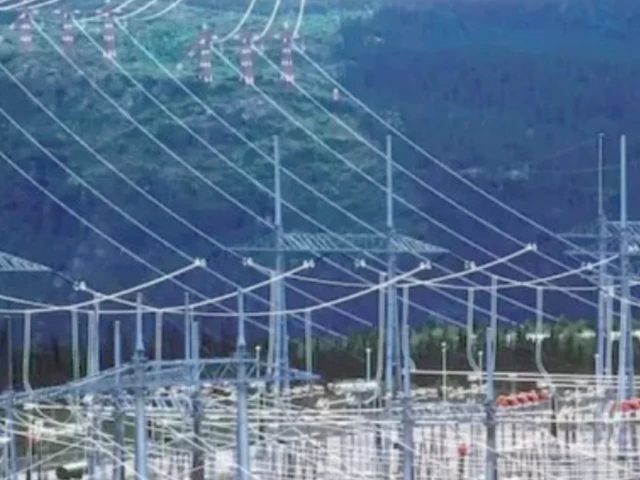
Despite dissenting views from the member tariff and member development, the National Electric Power Regulatory Authority (Nepra) has increased the incremental consumption tariff by Rs2.32 per unit for agricultural and industrial consumers.
The government had earlier announced a lower tariff to encourage the increase in grid electricity consumption following a surge in solar power generation at private businesses and residences due to high electricity tariffs. But the regulator has now jacked up the electricity price by 10.1% under the incremental package.
The new rate applies to all agricultural and industrial consumers that come under power distribution companies (DISCOs) including K-Electric.
The existing incremental consumption package (ICP) tariff of Rs22.98 per kilowatt-hour (kWh) has been revised on an interim and provisional basis to Rs25.30/kWh with effect from the November 2026 billing month and for subsequent billing months until a further decision is taken following a comprehensive review.
In its decision on Saturday, Nepra said that any bill already issued for the November 2026 billing month before the notification of this decision would be adjusted in subsequent months in accordance with the statutory requirements and operating directives.
"The industrial consumption package shall not be suspended at this stage and shall continue at the provisional rate determined in the clause without prejudice to the lawful exercise of relevant statutory powers to make a further decision regarding revision, modification or termination in accordance with the applicable law and the original decision," it said.
The Power Division, in coordination with other relevant entities, as applicable, shall submit a comprehensive review and supporting information in accordance with the timelines, methodology and requirements specified. The submission shall include the outstanding assessment for the first review period and the complete assessment for the second review period from June to November 2026.
Upon receipt and examination of the comprehensive review, according to Nepra, the matter shall be placed before the regulatory authority for further determination of the appropriate rate and the future course of the incremental package on the basis of validated data and the legal and regulatory framework. "The provisional rate determined herein shall not constitute a final determination of the historical marginal cost or of any claim concerning the allocation or recovery of the difference arising before the effective date of the revised rate."
The findings for each review period shall be separately assessed for different purposes, including whether an upward tariff adjustment is required in each review. "Nothing in this decision shall be construed as waiving, suspending or deferring the requirement concerning termination where upward tariff adjustments are required for two consecutive reviews."
Member (tariff and finance) and member (development), in a dissenting note, said that multiple letters to the energy ministry requested it to undertake consultation with the stakeholders and provide the regulator with reliable data to make an informed decision. Regrettably, they said, the ministry never responded in a proper manner to the queries raised by the regulator, "which is unfortunate".
The marginal price, in proper form, was not provided to the regulator by either Independent System and Market Operator (ISMO) or Power Planning and Monitoring Company (PPMC), which were duty-bound to do so. "Since the ICP is a flagship project of the ministry, it should give due consideration to the observations of Nepra and the lack of interagency coordination among the entities working under the ministry," they said.
This determination sets timelines where each entity is required to provide information. "If the information is not provided within these timelines, the outcome of the review would be adverse, and we may have to either suspend or terminate the ICP," Nepra said. "Furthermore, any entity that fails to provide the required information within the stipulated timeline shall lead to the initiation of legal proceedings under the applicable legal framework."
Power Division's response
A spokesperson for the Power Division remarked that a wrong impression had been created that the industrial tariff had been increased and termed it "incorrect" and "misleading". "Rs25.30 per unit is the revised marginal rate under the incremental consumption package for industrial and agricultural consumers. It is not the industrial tariff," the official said.
The industrial electricity tariff has been reduced by approximately Rs18.94 per unit, inclusive of all taxes, compared with the tariff applicable in March 2024. The spokesperson stated that the average industrial rate in October 2026 stood at Rs34.40/kWh, excluding taxes.
"The package is being revised because marginal generation costs have risen due to the prevailing war situation," the official stressed and pointed to the temporary nature of the increase in the incremental package, with the revised marginal rates applicable from November 2026.
Commenting on the impact of Nepra determination, the spokesperson said that the adjustment ensured that the cost of relief under the package was not passed on to other consumers, particularly non-beneficiaries.
According to the official, the package has delivered substantial relief. Between December 2025 and September 2026, a total of 6,940 gigawatt hours (GWh) of incremental consumption was covered and an estimated Rs43.5 billion benefit had already been passed on to consumers. Industrial consumers received a benefit of Rs5 to Rs10 per unit on incremental consumption, which lowered their overall bills by an average of Rs1.5 to Rs2.5 per unit. So far, 209,335 of the eligible 518,316 consumers, about 40%, have benefited from the package.











This material may not be published, broadcast, rewritten, redistributed or derived from. Unless otherwise stated, all content is copyrighted © 2026 The Express Tribune.









COMMENTS
Comments are moderated and generally will be posted if they are on-topic and not abusive.
For more information, please see our Comments FAQ