Syrian leader visits Riyadh to boost defence ties
Updated 1 hour ago

Trump's global playbook set for rewrite

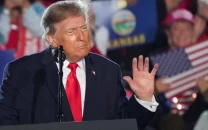
The results of the US midterm elections are out, and they represent nothing short of a stunning blow to President Donald Trump and his Republican Party.
The final results delivered a sweeping victory for Democrats, who have taken control of both chambers of Congress.
It is a remarkable comeback for a party that, only a few months ago, could hardly have imagined such a reversal of fortunes. Republicans suffered major defeats in traditionally conservative states, including Texas, Ohio, South Carolina and North Carolina. In Kansas, Democrats won a Senate seat for the first time since 1932. Michigan also made history by electing Abdul El-Sayed as the first Muslim American to serve in the US Senate.
What do these results mean for President Trump, the war with Iran and Pakistan?
Losing control of Congress does not mean Trump has lost his presidential powers. Under the American political system, it is not unusual for the president to belong to one party while the opposition controls Congress. President Bill Clinton suffered a major midterm defeat in 1994 but went on to win re-election two years later.
There are, however, important differences between Clinton and Trump, as well as between the political circumstances of the two periods.
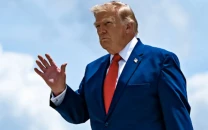
Trump is an unconventional president, known for his mercurial temperament and unpredictability. Nevertheless, these elections demonstrate that nothing is permanent in politics. Trump may have passed the high point of his political fortunes, and the road ahead could prove considerably more difficult.
The US Constitution provides for a separation of powers, meaning Trump will continue to wield considerable executive authority. He has already threatened to veto legislation passed by a Democratic-controlled Congress if it does not meet his demands.
Overriding a presidential veto requires a two-thirds majority in both chambers, a threshold Democrats are unlikely to achieve on their own. However, the new congressional majority will have considerable powers of its own, including the ability to investigate the administration, scrutinise its policies and block legislation and nominations.
The newly elected Congress will take office on January 3, 2027. Until then, Republicans retain their existing majorities.
The Iran question
Perhaps the biggest question arising from the election results is what happens to the war with Iran.
Trump has acknowledged that the conflict contributed to Republican losses. Yet he has expressed no regret over launching the war, insisting that he did the right thing and would do it again.
Tehran, meanwhile, has interpreted the Democratic victory as a rejection of Trump's Iran policy.
Will the election results bring the war to an end?
Trump retains the authority to direct US foreign policy and order military operations. But the political costs of continuing the conflict have increased considerably. He essentially has three options.
First, he could take the election results as a warning, reassess his Iran policy, pursue a diplomatic breakthrough and find a way to end the conflict while claiming to have achieved his objectives.
Second, he could double down on military action, launch another major offensive and attempt to declare victory by claiming that Iran's military and nuclear capabilities have been sufficiently degraded.
Third, he could maintain the status quo, keeping military and diplomatic pressure on Tehran while avoiding another major escalation.
None of these options is without risks. The election defeat will undoubtedly embolden Iran, which may calculate that Trump is now politically more vulnerable and has less room for manoeuvre.
But there is another possibility. A battered and politically weakened Trump could become even more unpredictable. With no possibility of seeking a third presidential term, his attention may increasingly turn towards his political legacy. He could conclude that a decisive military action against Iran would help secure that legacy, even if it carries considerable risks.
That is precisely why the election outcome should not automatically be interpreted as a guarantee of de-escalation.
One important point also needs to be kept in mind: Democratic opposition to Trump's handling of Iran does not mean that Democrats are prepared to compromise on America's core strategic interests in the region.
They may want the war to end, but that does not necessarily mean they would support a deal that Washington considers unfavourable. A change in congressional control should not be confused with a fundamental change in American foreign policy.
Impact on Pakistan
Under Trump, Pakistan-US relations have witnessed an unprecedented improvement in recent years. However, much of this progress has been driven by Trump's personal rapport with Pakistan's military leadership.
Since Trump remains in office for another two years, a dramatic and immediate shift in bilateral relations is unlikely.
Nevertheless, with Democrats taking control of Congress, the administration will face greater domestic political scrutiny. Trump will also have his hands full managing the political fallout of the election defeat and dealing with an increasingly assertive opposition.
This could leave him with less political capital and attention to pursue an ambitious foreign policy agenda.
For Pakistan, the challenge will be to ensure that the improvement in relations does not remain dependent solely on personal chemistry with the president. Islamabad will need to broaden its engagement with both Republicans and Democrats and build institutional support in Washington.
Ultimately, these elections have demonstrated the resilience of the American political system. Its checks and balances have provided voters with an opportunity to correct the course of their country's politics.
Whether the damage Trump has inflicted on America's global standing can be reversed remains an open question. But American voters have sent a clear message: no president, however powerful, is above electoral accountability.













This material may not be published, broadcast, rewritten, redistributed or derived from. Unless otherwise stated, all content is copyrighted © 2026 The Express Tribune.






COMMENTS
Comments are moderated and generally will be posted if they are on-topic and not abusive.
For more information, please see our Comments FAQ