Eurobond debt may be tokenised
Updated 1 hour ago

Slows despite SBP's rate hike rationale; widening gap benefits banks
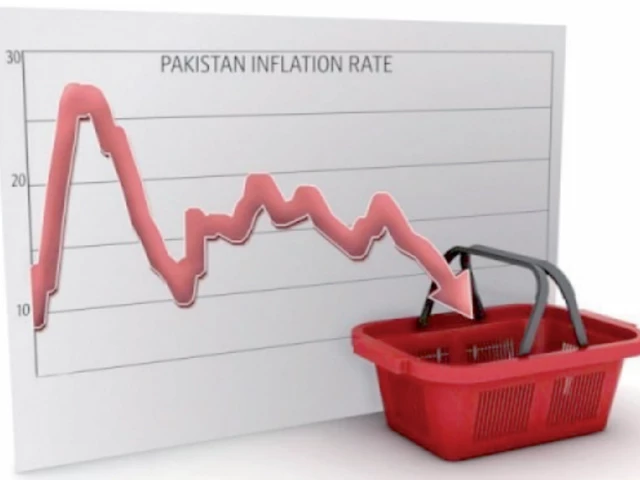
The non-energy and non-food inflation eased for the second consecutive month to 7.5% in October, putting a question mark over the central bank's assumption that increasing energy and food prices may "seep into core inflation", which was used to raise its policy rate.
With the slowing pace, the difference between core inflation and the policy rate has substantially widened to 4.5% for the benefit of commercial banks, but at the expense of borrowers, mainly the finance ministry.
Pakistan Bureau of Statistics (PBS) reported on Monday that the urban core inflation rate, calculated after excluding volatile energy and food prices, slowed down to 7.8% and rural inflation further fell to 7.1% in October. It was the second straight month when core inflation eased after peaking at 8.8% in August.
Core inflation gauges the underlying inflationary pressures without taking into account the highly volatile energy and food prices. The indicator was used as a base by the State Bank to increase the policy rate to 12% last week.
"There is a risk that elevated food and energy inflation may further increase inflation expectations, which may seep into core inflation going forward," said the monetary policy statement issued by the central bank after the policy rate decision.
The central bank noted that re-escalation in the Middle East conflict and domestic wheat supply frictions were the two major factors keeping inflation at elevated levels and their expected continuation over the next few months had worsened the inflation outlook.
It added that elevated prices of energy and wheat and its allied products contributed significantly to the headline inflation in September, which turned out to be higher than the Monetary Policy Committee's (MPC) expectation.
However, according to the PBS, the headline inflation slowed down to 9.6% last month, which was largely in line with the finance ministry's forecast for the month.
The International Monetary Fund (IMF) has raised Pakistan's inflation forecast to 9.9% for the current fiscal year, which is above the official target of 8.2% and is said to be a reason for the recent rate hike. The Planning Commission of Pakistan has projected a 7.5% inflation rate, even lower than the target.
According to the PBS, inflation went down both in urban and rural areas, reaching 9.5% in urban areas and 9.8% in rural areas. Food inflation slowed down from 8.1% to 7.8% in urban areas while it dropped to 7.1% in rural areas. The energy group saw a southbound movement in both urban and rural areas. The pace decelerated to 10.6% in urban areas and 12.1% in rural areas.
During review talks last month, the IMF asked Pakistan to adjust both exchange rate and interest rate policies to tame inflation and keep the current account deficit under check.
However, the cost of housing, water, electricity, gas and fuel remained the main concern in addition to transportation charges, according to the official bulletin.
PBS reported that petrol price was 42% higher in October compared to a year ago. Within one month, there was a 3% increase in prices of petrol, which was a steep rise given the overall high rates. The per-litre petrol cost was Rs379 on Friday last week and the price was Rs402 for high-speed diesel, which was keeping transport charges elevated.
The cost of transport services went up 27% last month compared to a year ago, according to the PBS. The national data collecting agency stated that electricity tariffs rose 23% in October. The high cost of electricity is already driving consumers away from the national power grid. Motor vehicle taxes jumped 39% over a year ago, contributing to the increase in expenses.
PBS said that onion prices were 82% higher year-on-year in October followed by a 39% increase in wheat prices. Owing to serious wheat management issues, the government is already in the process of importing 765,000 tonnes of wheat. Meanwhile, wheat flour prices surged 35% compared to a year ago, according to the PBS.
But prices of tomatoes, potatoes, sugar, eggs and pulses were lower in the range of 55% to 10% last month. The closure of border with Afghanistan and the subsequent suspension of trade have helped keep prices low for these commodities, which are either exported or smuggled, but contributed to an increase in prices of fruits that were imported from the western neighbour.












This material may not be published, broadcast, rewritten, redistributed or derived from. Unless otherwise stated, all content is copyrighted © 2026 The Express Tribune.








COMMENTS
Comments are moderated and generally will be posted if they are on-topic and not abusive.
For more information, please see our Comments FAQ