Pakistan plans to explore Eurobond tokenisation after cabinet approval: finance minister
Updated 1 hour ago

Says financial innovation should lower business costs, expand financial inclusion and deliver economic benefits
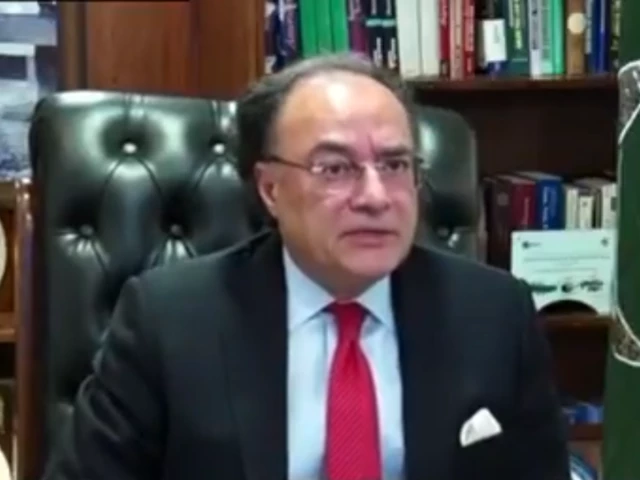
Finance Minister Muhammad Aurangzeb on Monday said that the government was reviewing the possibility of tokenising Pakistan’s existing Eurobond debt and was seeking cabinet approval before inviting proposals for the initiative.
“We are in discussions at this point in time, and we are looking forward to the Cabinet approval on this before we move ahead with issuing the RFP on this front,” he said while delivering a virtual keynote address at the “Dialogue on Digital Assets and the Future of Banking”, organised by the Pakistan Banks’ Association (PBA) in collaboration with LUMS.
Aurangzeb also identified remittances as another potential use of tokenisation, saying Pakistan had received $41.6 billion in remittances during the previous fiscal year, while inflows in the first quarter of the current fiscal year suggested the figure could exceed $44 billion this year.
“Therefore, having this as a use case makes a lot of sense from a tokenisation perspective,” he said.
The finance minister said Pakistan needed "financial innovation" that reduced the "cost of doing business and brings more people into the formal economy," adding that digital assets should be assessed based on the economic benefits they could deliver.
“Can a family receive money from abroad at a lower cost? Can a business get paid sooner? Can an entrepreneur obtain financing on reasonable terms? Can we attract productive investment while protecting the stability of our financial system?” he asked. “These are the outcomes that I would suggest should guide this discussion,” he added.
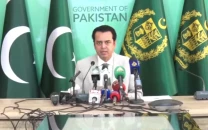
Federal Minister for Finance and Revenue, Senator Muhammad Aurangzeb, delivering a virtual keynote address at the “Dialogue on Digital Assets and the Future of Banking”, organised by the Pakistan Banks’ Association (PBA) in collaboration with LUMS, today. pic.twitter.com/wXQy1IvCHE
— Ministry of Finance, Government of Pakistan (@Financegovpk) November 2, 2026
Aurangzeb said Pakistan was moving from macroeconomic stability towards sustainable growth, a transition that required fiscal discipline, stronger exports and greater private investment.
“Digital innovation should therefore support these priorities with its value demonstrated through results and impact,” he said.
Referring to international developments, he cited JPMorgan's use of deposit tokens to facilitate money transfers for institutional clients over blockchain networks and the Bank for International Settlements' Project Agora, which is examining how tokenised commercial bank deposits and central bank reserves could improve cross-border settlements.
He said banks had a critical role in the development of digital finance, as their responsibilities for safeguarding money, managing risk and serving customers would remain central as technology evolved.
The minister also stressed the need to distinguish between different forms of digital assets: “A tokenised bank deposit remains a claim on a bank. A stablecoin's risk depends on its issuer, backing, and redemption arrangements. An unbacked cryptoasset carries a different set of risks."
“A regulatory approach therefore must reflect these differences and the economic activity behind each product,” he added.
Aurangzeb said Pakistan had established a statutory framework through the Virtual Assets Act 2026, with the Pakistan Virtual Assets Regulatory Authority (PVARA) responsible for licensing and supervising virtual asset service providers.
“The task now is to make that framework effective in practice through capable supervision and clear coordination among institutions,” he said.
Read: Hackers steal $6.3b from Binance
He credited PVARA's chairman with helping move the country from prohibition and regulatory ambiguity towards a statutory framework for supervised participation. He also acknowledged the roles played by the State Bank of Pakistan (SBP) and the Securities and Exchange Commission of Pakistan (SECP) in developing the regulatory framework.
Aurangzeb said the SBP had provided a conditional route for banking services to businesses licensed by PVARA, subject to due diligence and the segregation of client funds. Accounts for holders of no-objection certificates had a more limited purpose while licensing formalities were completed, he added.
“The restrictions on banks investing, trading, or holding virtual assets using their own funds or customer deposits also remain in place,” he said.
“You bring the customer relationships, operational experience, and risk management capabilities that this work requires,” he said, addressing banking leaders. “Please invest in the expertise to assess these technologies and work with relevant regulators on the activities permitted within your mandates and of course with the support of your respective boards,” he added.
Aurangzeb also warned of growing cybersecurity threats, saying that one needed to acknowledge that "we are under attack 24/7" by state and non-state actors and that therefore there was "no room" for complacency.
He urged banks and the SBP to follow through on measures to address emerging cybersecurity risks as the financial sector adopted digital technologies.
The minister also referred to Pakistan's engagement with international discussions on blockchain and tokenisation, including a dialogue co-convened with the United Nations Office for Digital and Emerging Technologies in New York in late September.
Read more: Pakistan raises $3b through Eurobond
He said Pakistan's assumption of the G-24 chairmanship would provide another opportunity to contribute to the global discussion, particularly by bringing the perspectives of developing economies to the debate.
Aurangzeb concluded by calling for practical recommendations from the banking sector and other stakeholders to guide the country's approach to digital assets.
Tokenisation involves creating digital representations of assets, such as government bonds, on a blockchain, allowing ownership to be recorded and potentially transferred digitally. In December 2025, the government signed a memorandum of understanding with Binance to explore tokenising up to $2 billion worth of government assets, including sovereign bonds, treasury bills and commodity reserves.
Pakistan raised funds from international investors through Eurobonds, which are government debt securities issued in foreign currencies, usually US dollars. Investors lend money to the government in return for regular interest payments, with the principal repaid when the bonds mature. Pakistan used these borrowings to meet external financing requirements and build foreign exchange reserves. In September 2026, the government raised $3 billion through a dual-tranche Eurobond issue, offering bonds with maturities of five-and-a-half and 10 years.
The government had also been working towards regulating virtual assets, including cryptocurrencies and digital asset service providers. The Virtual Assets Act 2026 established the Pakistan Virtual Assets Regulatory Authority (PVARA), which is responsible for licensing and supervising virtual asset businesses. The framework covers activities such as exchanges, custody services and asset management. The Express Tribune reported in August 2026 that the authorities had launched the virtual assets licensing system.
In a separate initiative, PVARA and the State Bank have been examining the possibility of issuing tokenised sovereign notes to improve access to investment for overseas Pakistanis, speed up settlements, and make securities ownership more transparent,





This material may not be published, broadcast, rewritten, redistributed or derived from. Unless otherwise stated, all content is copyrighted © 2026 The Express Tribune.











COMMENTS
Comments are moderated and generally will be posted if they are on-topic and not abusive.
For more information, please see our Comments FAQ