The direct tax illusion
Updated 1 hour ago

Why Pakistan's rising reported ratio conceals the failure to tax actual income
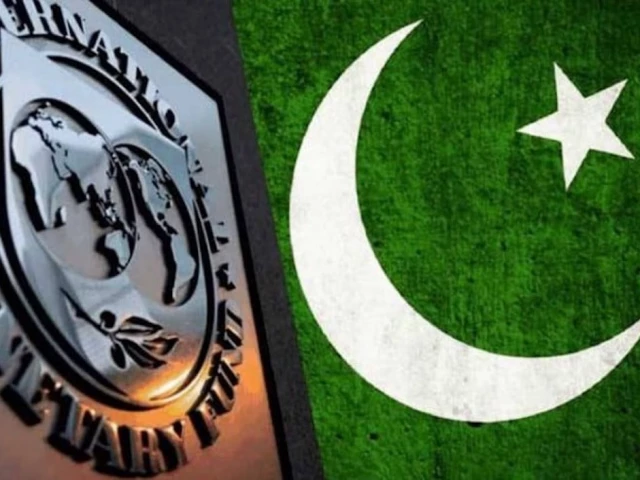
The International Monetary Fund (IMF) has rediscovered an uncomfortable truth: Pakistan's tax system punishes those already documented while leaving powerful interests comparatively undisturbed. Its regional director, Jihad Azour, has called for fairness, neutrality and predictability. These are welcome words. The real test is whether the Fund and the government will examine what the Federal Board of Revenue (FBR) actually collects, rather than what it chooses to call the collection.
The latest fiscal operations present an apparently encouraging picture. During 2025-26, the FBR collected Rs13.010 trillion, equivalent to 10.3% of gross domestic product (GDP). Of this, Rs6.586 trillion was classified as direct taxes: 5.19% of GDP against 5.05% a year earlier. Our examination of the finance ministry's July-June statements over 25 years confirms that this reported ratio is relatively high by historical standards, but extremely poor by international standards. It would be factually wrong to call it the lowest in a quarter-century. The failure lies elsewhere: the ratio increasingly conflates income taxation with collection on transactions and gross receipts.
The FBR's own mode-of-collection figures expose an alarming distortion. Of approximately Rs6.577 trillion recorded as income tax in 2025-26, Rs3.654 trillion came through withholding and another Rs2.208 trillion through advance payments under Section 147 of the Income Tax Ordinance, 2001. Payments accompanying returns supplied Rs250 billion. Thus, 92.9% came through these channels, compared with only 7.1% recovered out of demand. Assessment-based collection has improved, but remains a small fraction of the whole.
Withholding itself is not objectionable. Salary deductions, for example, can represent genuine taxation of income. The deception begins when levies on imports, contracts, electricity, telephone connections, exports and property transactions are advertised as proof of effective progressive income taxation.
Minimum and presumptive taxes on turnover can fall even where there is little profit, or a loss. Their legal classification does not establish who ultimately bears their economic burden; some may be passed into prices, depending on markets and contracts.
Our September 2026 briefing for the World Bank estimated that, after separating such transaction-linked and presumptive collections, the defensible measure of taxation of actual net income is around 3% of GDP and below 4%. This is an analytical estimate, not an independently audited official series. Comparable adjusted figures are unavailable for all 25 years. Nevertheless, the gap between 5.19% officially reported and approximately 3% economically estimated is too substantial to ignore.
The inequity is unmistakable. As The Express Tribune reported, salaried taxpayers paid Rs629 billion by June 2026, against Rs391 billion before the present IMF programme. Meanwhile, only 137 additional retailers had entered the designated scheme by October 15 against an annual target of one million. Provincial agricultural income tax receipts remained meagre. These figures demand scrutiny of implementation, exemptions and enforcement, not another indiscriminate squeeze on compliant citizens.
Pakistan needs to replace collection-point coercion with a credible system that taxes real incomes and demonstrable capacity to pay. Publish, separately, normal income tax, adjustable withholding, minimum and final taxes, assessed demands, and refunds due and paid. Bring untaxed wealth and valuable property into an administratively sound framework; protect modest livelihoods. Replace excessive rates and arbitrary advance deductions with broad, low, predictable taxation, meaningful audit and enforceable taxpayer rights.
The administrative record points to another failure. Tax authorities celebrate advance payments as voluntary compliance although those payments are mandated by statute. Counting return payments alongside automated deductions obscures the distinction between reporting income, paying on account and having taxable profits verified.
Equally, a tax collected by a bank or an importer may be legally adjustable later but still impose an immediate financing cost, especially where refunds are delayed. The system thereby penalises the documented enterprise twice: first through compliance costs, then through immobilised working capital. Real reform requires reconciliation of each deduction with the final liability, timely cash refunds and a transparent record of disputed demands. That is an institutional challenge, not merely a question of raising rates.
The IMF should insist on this transparency before congratulating the FBR on rising 'direct taxes'. A tax system is not equitable because a ledger says so. After decades of withholdingisation, the measure of success must be the income actually assessed, fairly taxed and honestly accounted for; not the amount extracted before income is even determined.
The writer is the Advocate Supreme Court, Adjunct Faculty at Lahore University of Management Sciences, member Advisory Board and Visiting Senior Fellow of PIDE







This material may not be published, broadcast, rewritten, redistributed or derived from. Unless otherwise stated, all content is copyrighted © 2026 The Express Tribune.









COMMENTS
Comments are moderated and generally will be posted if they are on-topic and not abusive.
For more information, please see our Comments FAQ