The direct tax illusion
Updated 1 hour ago

14 of 30 proposed units will breach 10% fiscal sustainability benchmark
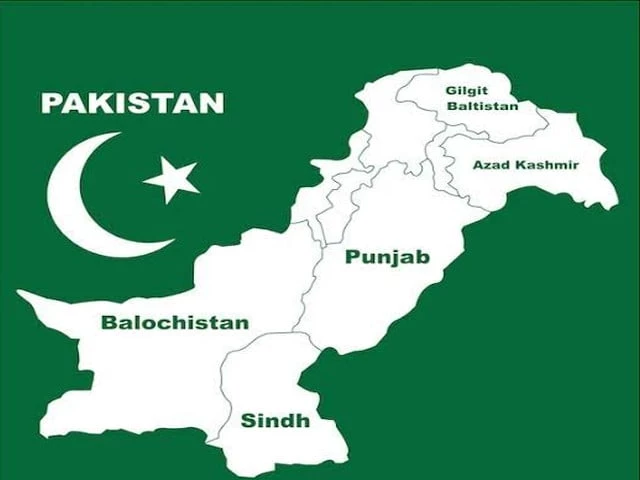
In Pakistan's policy and political circles, the debate over the creation of new provinces has resurfaced again with unusual intensity. Different proposals are coming not only from regional political movements, but also from senior government officials, universities and policy institutions.
The case for creating additional provinces is increasingly linked to persistent regional disparities in socio-economic indicators, particularly where low-performing areas remain geographically distant from the provincial capitals and centres of decision-making. These persistent disparities are often associated with structural imbalances arising from the concentration of large and demographically diverse populations within geographically broad administrative units. Poverty rates also vary significantly across provinces, that is Punjab at 23.3%, Sindh at 32.6%, Khyber-Pakhtunkhwa at 35.3% and Balochistan at 47%. Such differences highlight the uneven socio-economic conditions that persist under the current provincial structure.
Advocates of provincial restructuring further argue that creation of additional provinces would improve governance, public service delivery and citizen welfare by bringing decision-making closer to underserved regions. The size and administrative complexity of the existing provinces are viewed as contributing to disparities in access to public service delivery.
Our recent report, on the contrary, suggests that reorganisation of the federation into many smaller provinces, while remaining within the existing resource envelope, will most likely deteriorate the quality of public service delivery, particularly in provinces with smaller population size. The fiscal case for creation of new provinces remains weak, and in fact missing. Therefore, any attempt to increase the number of provinces will increase fiscal stress for Pakistan, which we can ill-afford especially as we are now in the last year of the IMF programme.
The report considers two restructuring scenarios. Scenario A divides Punjab into Bahawalpur, South Punjab and the remaining Punjab, increasing the number of provinces from four to six. Scenario B treats each existing administrative division within Punjab, Sindh, Khyber-Pakhtunkhwa and Balochistan as a province, resulting in 30 provinces.
The NFC exercise uses a nested allocation approach in which each existing province retains its current 7th NFC share, which is then distributed among its successor units according to the existing NFC criteria of population, poverty and backwardness, revenue collection or generation and inverse population density. Under Scenario A, South Punjab receives an illustrative allocation of Rs1,001.06 billion, while Bahawalpur receives Rs537.01 billion. Under Scenario B, allocations differ considerably, ranging from Rs720.94 billion for Lahore and Rs690.84 billion for Karachi to Rs45.62 billion for Loralai and Rs49.83 billion for Zhob. Eleven of the 30 proposed units receive less than Rs150 billion.
The most important finding emerges when these fixed institutional costs are compared with the NFC resources available to individual proposed provinces. Large units such as Lahore and Karachi would spend only around 3% to 4% of their illustrative NFC allocations on the core provincial structure, while the burden rises sharply for smaller units.
Using a 10% fiscal sustainability benchmark based on the low recurring-cost estimate, 16 of the 30 proposed provinces under Scenario B remain at or below the threshold, while 14 exceed it. The burden is particularly high in the smallest units. The core provincial structure would absorb around 49% of Loralai's allocation, 45% of Zhob's and 37% of Rakhshan's even under the low-cost estimate.
A provincial government requires a minimum political, administrative and judicial structure irrespective of population size. Consequently, these costs represent only a small share of the resources available to large proposed provinces but absorb a much greater proportion of the NFC allocation of smaller units. Every proposed province with a population below 1.2 million would require more than one-third of its illustrative NFC allocation to finance the core provincial government structure. The findings therefore show that the fiscal implications of restructuring depend strongly on the number and size of the provinces created. Limited restructuring involving relatively large units produces a much smaller recurring burden, whereas several smaller division-based provinces would face disproportionately high administrative costs relative to their expected NFC resources.
This pressure would be higher for proposed provinces with relatively small NFC allocations and limited revenue generation capacity. Where a larger share of available resources is absorbed by the recurring cost of provincial institutions, less fiscal space would remain for other provincial expenditures, including education, health, infrastructure and development spending. Smaller and fiscally weaker provinces would therefore face a greater risk that institutional costs crowd out resources available for public service delivery.
The proposed restructuring would also generate some additional expenditure at the federal level, particularly through changes in Senate representation, but the larger fiscal pressure would arise at the provincial level. Any proposal for new provinces should therefore be accompanied by a formal fiscal costing exercise, consideration of the resource base of the proposed units and application of a fiscal screening benchmark to assess whether recurring provincial-government costs remain proportionate to available resources.
Where the primary objective is improved access to government and public services, stronger local governments should be considered as an alternative to replicating the full structure of provincial government. That itself needs serious research on constitutional arrangements, political economy and institutional implications.
THE WRITERS ARE AFFILIATED WITH PRIME INSTITUTE, AN INDEPENDENT ECONOMIC POLICY THINK TANK






This material may not be published, broadcast, rewritten, redistributed or derived from. Unless otherwise stated, all content is copyrighted © 2026 The Express Tribune.










COMMENTS
Comments are moderated and generally will be posted if they are on-topic and not abusive.
For more information, please see our Comments FAQ