Australian court sets February hearing for accused Bondi Beach gunman
Updated 1 hour ago

Broken commitments cannot be excused, international law cannot be applied selectively: Esmaeil Baghaei
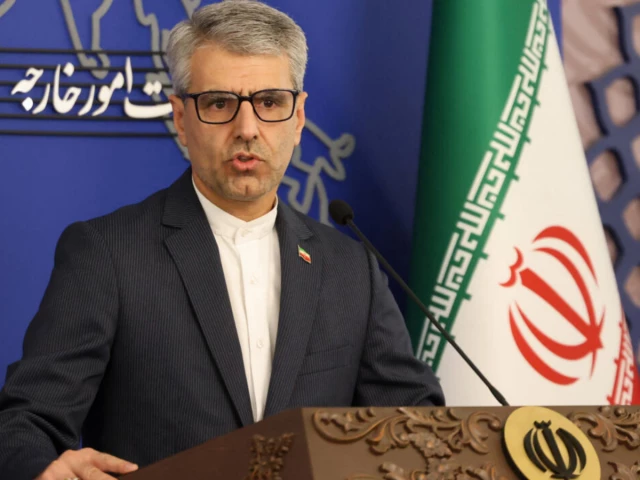
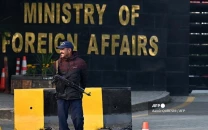
Iranian Foreign Ministry spokesperson Esmaeil Baghaei criticised US President Donald Trump's reported remarks on the Islamabad Memorandum of Understanding (MoU), accusing Washington of undermining diplomatic commitments and disregarding international obligations.
In a post on X on Wednesday, Baghaei said, “Washington’s contempt for diplomacy is once again laid bare.”
He said that Trump's admission that he had never believed in the Islamabad MoU and considered it a waste of time exposed what he described as the “hollowness of their diplomatic commitments”.
Washington’s contempt for diplomacy is once again laid bare. President Trump’s admission that he never believed in the Islamabad MoU and considered it a waste of time exposes the hollowness of their diplomatic commitments.
— Esmaeil Baqaei (@IRIMFA_SPOX) October 28, 2026
For Iran, this is nothing new. Washington has a long…
“For Iran, this is nothing new,” Baghaei said, accusing Washington of repeatedly reneging on its commitments and treating international obligations as disposable whenever they became inconvenient.
The Iranian spokesperson also criticised European states and other supporters of Washington, saying there was “absolutely no justification” for continuing to defend US actions or shielding Washington from accountability.
He accused them of “whitewashing US misconduct” and maintained that the United States should be held accountable for its actions.
“Broken commitments cannot be excused, international law cannot be applied selectively, and no amount of political spin can absolve Washington of accountability,” Baghaei added.
Regional cooperation without foreign intervention key to security: Araghchi
Iranian Foreign Minister Abbas Araghchi stressed that regional cooperation, without foreign military intervention, is essential to sustainable security, calling for joint efforts to counter Israeli aggression and terrorism, according to Press TV on Wednesday.
His comments come as vote counting is underway in Israel's general election.
Iran’s foreign minister stresses regional cooperation, without foreign military intervention, as key to sustainable security, calling for joint efforts to counter Israeli aggression and terrorism.
— Press TV 🔻 (@PressTV) October 28, 2026
Follow: https://t.co/boCY50qN7H pic.twitter.com/ttR7I2tsdB
Separately, Iranian Ambassador and Chargé d’Affaires to the United Nations, Gholamhossein Darzi, likened sanctions to a form of economic terrorism, saying they constitute acts of aggression under international law, according to IRNA.
“Sanctions are examples of economic terrorism, while blockades enforced by armed force constitute acts of aggression under international law,” Darzi said, addressing the United Nations General Assembly on “Necessity of Ending the Economic, Commercial, and Financial Embargo Imposed by the United States of America Against Cuba”.
Iran urges Qatar to uphold principles of mediation
Iran’s Foreign Ministry urged Qatar to exercise greater caution in its media statements and uphold the principles of mediation, citing Doha’s role in ongoing diplomatic efforts, IRNA reported on Wednesday.
Iran’s Foreign Ministry has urged Qatar to exercise greater caution in its media statements and uphold the principles of mediation, citing Doha’s role in ongoing diplomatic efforts.https://t.co/37UfhMCmjn pic.twitter.com/cuEk5c8YTA
— IRNA News Agency ☫ (@IrnaEnglish) October 28, 2026
Head of Public Relations Department of Iran’s Foreign Ministry Mahmoud Maleki made the remarks on Wednesday in response to comments by Ibrahim bin Sultan Al-Hashmi, director of the Media and Communication Department at Qatar’s Ministry of Foreign Affairs, regarding the visit of senior Pakistani, Turkish, and Saudi officials to Tehran.
On Tuesday, al-Hashmi said, “The ball was in Iran’s court to demonstrate its commitment to regional security principles and prove its goodwill by ending threats against regional countries and reopening the Strait of Hormuz.”
Maleki said the four-way meeting in Tehran was, in itself, a sign of Iran’s goodwill and responsible approach toward the shared interests of the region’s peoples.
He said Iran expected all regional countries, including Qatar, to demonstrate reciprocal goodwill in their policies and approaches and to respect the principle of good neighbourliness.
Iran also expects regional countries to firmly refrain from allowing aggressors to use their territory and facilities to launch military attacks against Iran, Maleki added.
US costs of Iran war rise to over $47b, according to Pentagon estimate
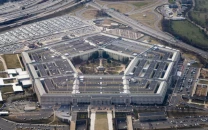
The US military has spent over $47 billion so far to prosecute the war in Iran, more than 25% higher than the Defence Department's estimate in July, according to Pentagon data obtained by Reuters.
The Pentagon did not immediately respond to a request for comment on its estimate, which has not been shared publicly.
The disclosure about the rising cost of the Iran war comes as Republicans wrestle with the political fallout of the unpopular conflict ahead of the November 3 election that will determine control of Congress for the next two years.
The war's impact on global energy costs has weighed on support for Republican candidates and hurt President Donald Trump's approval ratings. Trump's Republican Party holds a narrow majority in both chambers of Congress.
The Pentagon's latest estimate was tied to the operational costs of carrying out the war, with a projected cost of more than $29 billion to replace expended munitions used in the conflict.
Read: Iran's supreme leader calls for tighter control of Strait of Hormuz to end US war
More than $6 billion would be needed to replace military equipment and so-called "platform losses," which include the loss of aircraft, including many drones lost during the war.
Trump launched the Iran war jointly with Israel in February, predicting that the conflict would last a short time.
Trump's initial strategy in the Iran war focused on first using expensive, high-end precision missiles to bomb Iran's defences so it could later use less expensive munitions, including gravity bombs like the air-launched JDAMs, which are plentiful.
But an April ceasefire gave time for Iran to dig out underground storage facilities, bringing back online some Iranian defences, as well as missiles and drones that had been inaccessible.
Trump has since imposed a naval blockade on Iran to starve it of oil export revenue and held out the possibility of restarting combat operations after the midterm elections. US officials, speaking on condition of anonymity, say the Pentagon has been planning to restart heavy fighting if ordered to do so.
The latest Pentagon estimate compares to Defence Secretary Pete Hegseth's July estimate of $37.5 billion for the cost of the war.
While the figures include a host of operational costs, from flight operations to cyber support, the US military's Iran war cost estimates did not clearly account for the massive expense expected to repair damage to US bases sustained by Iranian missile and drone attacks.
With additional input from Reuters









This material may not be published, broadcast, rewritten, redistributed or derived from. Unless otherwise stated, all content is copyrighted © 2026 The Express Tribune.





COMMENTS
Comments are moderated and generally will be posted if they are on-topic and not abusive.
For more information, please see our Comments FAQ