Russia demands Finland leave NATO in Abu Dhabi talks: report
Updated 1 hour ago

It is expected to make landfall in the southern coastal state of Andhra Pradesh by Wednesday morning
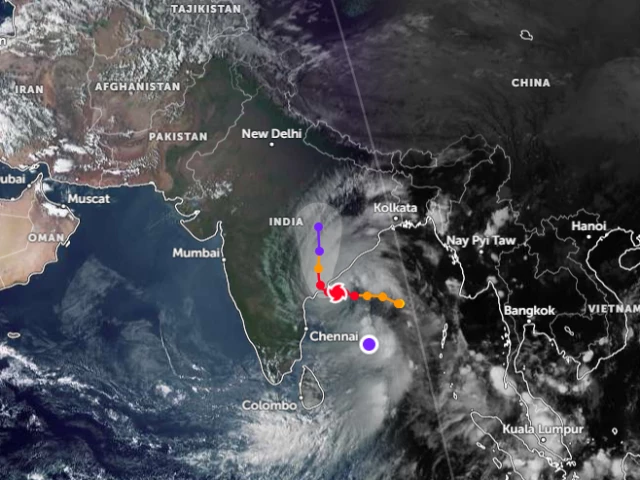
Thousands of people were evacuated along India's eastern coast, and some train services cancelled, authorities said on Tuesday, one day before a severe cyclone was scheduled to make landfall, bringing gusting winds and heavy rain.
The risks come at a time when the mountainous country is starting to recover from a deadly flash flood in August, which killed about 1,500 people.
Arnab, which formed over the Bay of Bengal, has intensified since Monday, India's weather office said on Tuesday.
दैनिक मौसम परिचर्चा (27.10.2026)
— India Meteorological Department (@Indiametdept) October 27, 2026
बहुत भीषण चक्रवाती तूफान "अर्नब" के प्रभाव के कारण, 27-28 अक्टूबर, 2026 के दौरान तटीय आंध्र प्रदेश, यनम और ओडिशा में तथा 28 अक्टूबर, 2026 को छत्तीसगढ़ में कहीं-कहीं बहुत भारी वर्षा होने की संभावना है।
YouTube : https://t.co/BAXJYDMhyH… pic.twitter.com/xKOyxMCF88
It is expected to make landfall in the southern coastal state of Andhra Pradesh by Wednesday morning, bringing strong winds and intense showers to parts of the state as well as neighbouring Odisha state.
India's weather bureau said it expects the cyclone to result in "total destruction" of thatched houses and create localised flooding, uprooting of power and communication poles, and "widespread damage" to standing crops.
State Chief Minister Nara Chandrababu Naidu has ordered the storm to be "constantly monitored and advance precautions taken", his office said in a statement on Monday.
Local media reported that Andhra Pradesh authorities had ordered evacuations in key, low-lying areas and shut "all educational institutions" in some districts from Tuesday until Saturday.
Also Read: Strong El Nino could push 49m into acute hunger
Nearly 50,000 people had been moved to shelters from vulnerable areas by Monday night, out of 400,000 estimated to need evacuation, Prakhar Jain, Managing Director of Andhra Pradesh State Disaster Management Authority, told Reuters. "Evacuation is continuing," Jain added.
Over 4,700 pregnant women residing in potentially dangerous localities were moved to hospitals, according to The Indian Express newspaper.
There have been no evacuations in Odisha so far, Rajesh Prabhakar Patil, Special Relief Commissioner of Odisha, told Reuters. The state had already announced closure of schools and colleges in five districts for Tuesday and Wednesday.
Televison showed waves crashing on deserted beaches and shuttered shops lining the streets along affected areas.
At least 12 trains were cancelled in the east, while rail services on 53 routes along the southern coast were suspended for Tuesday and Wednesday, regional railway authorities said in social media posts.
Also Read: Pakistan among countries vulnerable to 'super' El Niño
The Bay of Bengal is one of the world's major regions for tropical cyclones, which makes India's eastern coast particularly vulnerable to sea-linked weather disasters.
Neighbouring Sri Lanka, meanwhile, closed schools with warnings of torrential rain, with the island's Department of Meteorology warning storms could trigger flash floods and mudslides.
The military has been placed on alert, Colombo's Disaster Management Centre
Cyclones, called hurricanes in the North Atlantic and typhoons in the Pacific, are a regular menace in the Bay of Bengal and northern Indian Ocean.
The storm season, however, has been turbocharged by the El Niño weather phenomenon that has caused unprecedented warming.
















This material may not be published, broadcast, rewritten, redistributed or derived from. Unless otherwise stated, all content is copyrighted © 2026 The Express Tribune.






COMMENTS
Comments are moderated and generally will be posted if they are on-topic and not abusive.
For more information, please see our Comments FAQ