Banking links sought with Ethiopia
Updated 2 hours ago

Warn of weaker industrial activity, low investment, rising costs and detriorating competitiveness, seek single-digit p
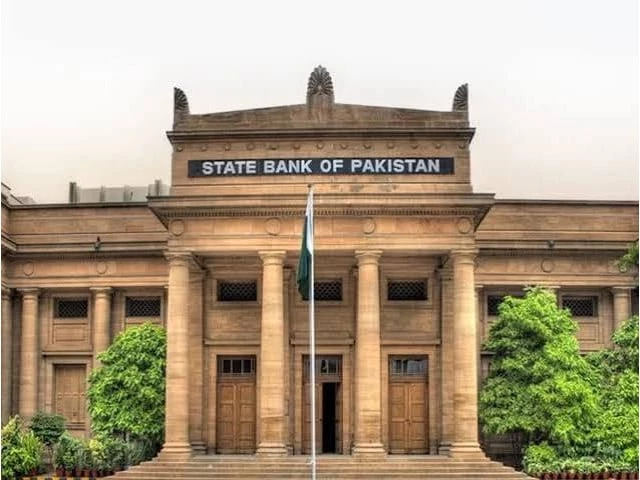
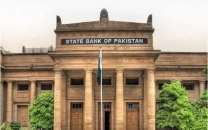
Pakistan's leading business organisations have criticised the State Bank of Pakistan's (SBP) decision to raise the policy rate by 50 basis points to 12%, warning that higher borrowing costs could weaken industrial activity, discourage investment, erode export competitiveness and hamper economic recovery.
The Federation of Pakistan Chambers of Commerce and Industry (FPCCI) expressed concern over the monetary tightening, arguing that businesses were already struggling with high energy tariffs, heavy taxation, expensive raw materials and limited access to affordable financing.
FPCCI President Atif Ikram Sheikh termed the rate hike counterproductive, saying it could undermine economic stabilisation efforts and further weaken the competitiveness of Pakistani products in international markets.
He argued that manufacturers and commercial enterprises were facing substantial operating costs and liquidity constraints, leaving them with little capacity to absorb additional borrowing expenses.
Sheikh said persistently high interest rates had turned borrowing from a business-enabling tool into a financial burden. He maintained that inflation was being driven largely by structural supply-side constraints, rising energy costs and fiscal weaknesses rather than excessive domestic demand.
According to the FPCCI chief, monetary tightening penalises productive industries without adequately addressing these underlying sources of inflation, potentially forcing formal businesses to scale down operations or shut down. He called for the policy rate to be brought into single digits, arguing that affordable financing was essential for businesses to upgrade technology, increase value addition and compete with regional manufacturers. He also urged policymakers to consult the business community before introducing measures affecting economic activity.
Korangi Association of Trade and Industry (KATI) President Sheikh Umer Rehan said the 50-basis-point increase could undermine industrial activity, business growth and economic recovery.
While acknowledging that the decision appeared to reflect inflationary pressures, the current account position and external financial challenges, he warned that higher interest rates would make borrowing more expensive and discourage businesses from expanding production capacity or undertaking new projects.
Rehan said the industrial sector was already under pressure from high operating costs and international economic uncertainty, including tensions surrounding the Iran-US conflict. He added that further increases in financing costs could constrain small and medium-sized enterprises (SMEs), weaken employment generation and slow export growth.
He argued that inflation should also be addressed through lower energy costs, improvements in the taxation system, more business-friendly regulations and effective industrial policies rather than relying predominantly on monetary tightening.
Karachi Chamber of Commerce and Industry (KCCI) President Talat Mahmood also opposed the rate increase, saying inflationary pressures were largely linked to higher energy and fuel prices, geopolitical uncertainty, supply-chain disruptions and rising essential commodity prices.
He said raising interest rates would increase the cost of financing without directly resolving international oil-price movements, expensive electricity and gas tariffs or supply-chain problems.
Mahmood warned that higher borrowing costs could push up production expenses, raise prices of locally manufactured goods and weaken their competitiveness abroad. He urged policymakers to adopt a balanced, growth-oriented approach that controls inflation without compromising industrial development and business sustainability.
Meanwhile, SITE Association of Industry President Abdul Hadi described the increase as an additional setback for manufacturers already operating under severe financial pressure.
He said many industrial units were running well below their installed capacity and struggling with expensive utilities and rapidly changing global economic conditions.
Hadi warned that the rate hike would make fresh financing harder to obtain while increasing interest payments on existing loans. This, he said, could intensify financial stress, discourage new investment and further weaken industrial growth.








This material may not be published, broadcast, rewritten, redistributed or derived from. Unless otherwise stated, all content is copyrighted © 2026 The Express Tribune.







COMMENTS
Comments are moderated and generally will be posted if they are on-topic and not abusive.
For more information, please see our Comments FAQ