Power supply chains face a new test
Updated 2 hours ago

For grid expansion at required pace, availability of key components is critical

The world's power sector is entering a period in which the availability of electricity will depend not only on generation capacity but also on the ability to secure the equipment, materials and services needed to build and maintain the electricity network. Transformers, cables, switchgear, turbines, solar modules and batteries are increasingly becoming strategic inputs rather than routine procurement items.
Electricity demand is rising rapidly as industries electrify, data centres expand and countries add renewable-energy capacity. The International Energy Agency (IEA) estimates that annual grid investment must increase by around 50%, from about $400 billion today to roughly $600 billion by 2030, to keep pace with electrification and climate goals.
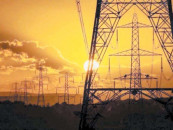
Yet factories producing critical equipment are already under pressure. Long lead times for large power transformers, high-voltage cables and other grid equipment can delay projects even when financing and generation capacity are available. According to the IEA's Building the Future Transmission Grid report, lead times for large power transformers have almost doubled since 2021, reaching up to four years for the largest units. High-voltage cables now take two to three years, while direct-current cables for long-distance transmission can exceed five years.
The Utilities for Net Zero Alliance (UNEZA) estimates its members alone will need close to 90,000 kilometres of transmission cable by 2030 – more than twice the Earth's circumference – and over 270 high-voltage transformers, with waiting times now exceeding three years. A country may therefore have sufficient investment capital, plans for new generation and growing electricity demand, yet still find that its grid cannot expand at the required pace because critical components are unavailable.
Manufacturing and mineral processing are heavily concentrated. China accounts for around 60% of global mined production of magnet rare earths, more than 90% of refining and nearly 95% of permanent magnet production, according to IEA data. In solar manufacturing, China produces roughly 80% of global PV modules and over 90% of polysilicon and wafers. Lithium, copper, cobalt, nickel, graphite and rare-earth elements are increasingly viewed not simply as commodities but as strategic inputs into the energy transition. Over half of strategic energy minerals are now subject to some form of export control, making diversification a security imperative rather than a procurement preference.
Renewable energy adds another layer of complexity. Solar and wind generation are variable, requiring stronger transmission networks, storage, flexible generation and more sophisticated grid-management systems. The supply chain must therefore support not just additional generation but an increasingly complex electricity system. The rapid growth of data centres and AI applications is adding to this pressure. The IEA projects that data-centre electricity consumption could rise from about 415 TWh in 2024 to roughly 945 TWh by 2030, with the US and China accounting for almost 80% of the increase. Large computing facilities require reliable and continuous electricity supplies, often in locations where existing grids have limited spare capacity.
A modern power supply chain is also an information system. Utilities need visibility across several tiers of suppliers to know where critical components are manufactured, what raw materials they depend upon and how quickly alternative sources can be activated. Digital technologies can help. Internet-connected sensors, AI, advanced forecasting and digital twins can improve inventory management, predict equipment failures and provide earlier warnings of potential disruptions. Better data-sharing between utilities and manufacturers can also help suppliers plan production instead of responding only when orders arrive. But technology alone cannot solve a supply shortage. If several utilities place orders for the same specialised equipment at the same time, better software cannot manufacture transformers or high-voltage cables faster. Procurement strategy therefore matters. Utilities need to move beyond the lowest-bid approach and consider quality, delivery reliability, technical capability, supplier concentration, cybersecurity and geopolitical exposure when selecting suppliers.
Long-term contracts can give manufacturers greater confidence to invest in production capacity, while utilities obtain greater assurance of future supplies. Collaborative procurement could become particularly important. Utilities and governments can provide manufacturers with clearer multi-year demand forecasts while standardising equipment specifications where technically possible. This can reduce unnecessary customisation, shorten procurement cycles and allow manufacturers to benefit from larger production runs.
Diversification is equally important. A resilient supply chain does not mean abandoning global trade or producing everything domestically. It means avoiding excessive dependence on a single supplier, country or transport route for a critical component. Strategic inventories can also have a role. Maintaining stocks of every item would be prohibitively expensive, but selected critical components, particularly those with long manufacturing lead times, can be held to reduce the consequences of unexpected failures or supply disruptions.
The same principle applies upstream to critical minerals. Greater investment in mining, processing, recycling and alternative materials can reduce dependence on concentrated sources. International partnerships and regional supply arrangements can complement domestic production. The circular economy offers another opportunity. Power-sector companies do not always need to respond to rising demand by buying entirely new equipment. Transformers and other assets can sometimes be refurbished and kept in service longer. Copper, aluminium and steel can be recovered from retired equipment, while batteries and solar technologies offer increasing opportunities for recycling and second-life applications.
Cybersecurity is becoming another essential element of supply-chain management. Power systems increasingly depend on digital technologies and connected equipment, making suppliers themselves part of the security perimeter. IBM's 2024 Cost of a Data Breach report put the global average cost of a data breach at $4.88 million, a 10% rise in a year. Procurement decisions therefore have to consider not only technical specifications but also the security of associated software, communications systems and vendors.
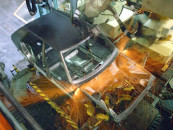
The shortage of skilled labour and manufacturing capacity adds to the challenge. Expanding production of specialised grid equipment requires engineers, technicians, factory workers and testing facilities. Building such capacity can take years. Governments and utilities therefore need to provide manufacturers with enough visibility of future demand to justify long-term investment.
For developing economies such as Pakistan, these global changes carry special significance. Pakistan's power sector remains heavily exposed to imported fuel, equipment, technology and capital goods. Cumulative solar imports have exceeded $3 billion in recent years, with the overwhelming majority sourced from China, according to trade data. A weakening currency can raise the local cost of imported equipment, while procurement delays can postpone projects and increase financing costs. Dependence on external suppliers also means that international disruptions can quickly become domestic problems.
This makes supply-chain resilience relevant not only to new generation capacity but also to the reliability of the existing transmission and distribution system. Maintaining adequate stocks of critical components, developing reliable local suppliers where economically viable, improving demand forecasting and establishing longer-term relationships with strategic manufacturers could reduce some of these vulnerabilities. Localisation, however, should not become an excuse for inefficient production. Domestic manufacturing makes economic sense where Pakistan has the skills, market size and cost advantages to compete. In other areas, diversified international sourcing may remain more efficient. The objective should be supply security at a competitive cost, rather than self-sufficiency for its own sake.
The writer is a mechanical engineer







This material may not be published, broadcast, rewritten, redistributed or derived from. Unless otherwise stated, all content is copyrighted © 2026 The Express Tribune.










COMMENTS
Comments are moderated and generally will be posted if they are on-topic and not abusive.
For more information, please see our Comments FAQ