Power supply chains face a new test
Updated 1 hour ago

Equilibrium is a must between protection, competition; tariff cuts put parts industry on notice
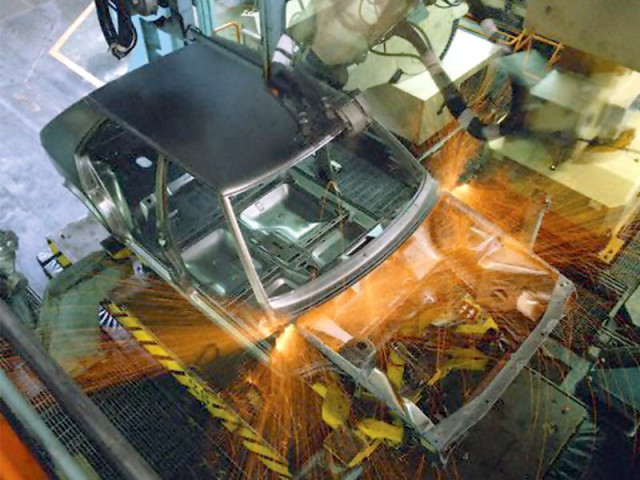
Pakistan's automobile industry stands at a critical crossroads as the government prepares to introduce the Automotive and Auto Parts Manufacturing Policy 2026-31. The proposed framework aims to transform a largely assembly-based sector into a competitive, export-oriented manufacturing industry.
For years, manufacturers have sought policy consistency, lower production costs, protection for local vendors and incentives for technological development. Consumers, meanwhile, expect affordable vehicles, better quality, improved safety and greater market competition. The challenge for policymakers is to balance these competing expectations without repeating the weaknesses of earlier automotive policies.
The draft policy has set an ambitious direction, including an export target of $6 billion over five years, gradual tariff reductions and greater adoption of electric vehicles. According to details reported after the prime minister approved the draft on October 20, 2026, the document is expected to move to the federal cabinet for in-principle approval before further legislative consideration. It proposes reducing tariffs on completely built-up vehicles and completely knocked-down kits to as low as 15% by 2030-31. This represents a significant shift from the protection-oriented approach that has historically shaped Pakistan's automobile market.
The industry's expectations, however, are more complicated than the policy's headline targets suggest. Local assemblers and parts manufacturers want a predictable tariff structure that allows them to plan investment and compete with imported vehicles. Parts manufacturers are particularly concerned that rapid tariff reductions could expose domestic vendors to cheaper imported components before they have achieved economies of scale or technological competitiveness. The Pakistan Association of Automotive Parts and Accessories Manufacturers has warned that tariff cuts on imported parts to 15% without addressing domestic cost disadvantages could weaken local manufacturing and turn Pakistan into an import-dependent market.
The concern is rooted in the structure of the industry. Pakistan has attracted several new automobile brands over the past decade, increasing competition and expanding consumer choice. However, additional assembly capacity has not automatically translated into higher production, deeper localisation or significant exports. The Pakistan Institute of Development Economics notes that the number of automobile manufacturing and assembling firms has increased to more than 15, while production capacity has more than doubled over the last decade. Yet sales have remained relatively stagnant and the industry continues to depend heavily on imported CKD kits and high-value components. This indicates that increasing the number of assemblers is not the same as building a strong manufacturing base.
Official production figures also highlight the gap between capacity and actual market demand. The Pakistan Economic Survey 2024-25 reported car production of 76,339 units during July-March FY2025, compared with 55,678 in the corresponding period of FY2024, an increase of 37.1%. Production of jeeps, SUVs, pickups and light commercial vehicles rose by 79.8% to 26,147 units. Although the recovery was encouraging, it followed a period of weak demand, high financing costs, inflation and exchange rate instability. The figures demonstrate that the sector remains sensitive to macroeconomic conditions and cannot achieve sustained expansion through policy incentives alone.
The proposed export target is another major test. The draft envisages combined vehicle and parts exports of $6.01 billion over five years, with annual targets rising from $256.6 million in 2026-27 to $2.19 billion in 2030-31. It also proposes export-linked incentives and penalties for manufacturers that repeatedly fail to meet their obligations. The direction is positive because Pakistan cannot continue treating the domestic market as the industry's principal destination. However, exports require internationally competitive prices, consistent quality, economies of scale, reliable supply chains and compliance with global safety and environmental standards. These capabilities cannot be created simply by setting targets.
Localisation must therefore become a practical industrial strategy rather than a numerical requirement. Pakistan has spent decades encouraging local production, yet many technologically advanced components are imported. Domestic vendors need access to modern machinery, technical training, research facilities and partnerships with international manufacturers. Small suppliers also require affordable financing and predictable orders to justify investment. If tariff reductions are introduced before local firms become competitive, the result could be industrial contraction rather than modernisation. Conversely, indefinite protection would weaken incentives to improve productivity and quality. A gradual, evidence-based transition is essential.
EVs provide another opportunity, but affordability and infrastructure remain major constraints. The draft proposes a 1% sales tax on battery electric vehicles, with different rates for range-extended and plug-in hybrid vehicles. It also proposes increasing the financing limit for EV purchases from Rs3 million to Rs10 million and extending repayment from three to five years. These measures could encourage adoption, but consumers also need accessible charging facilities, reliable electricity, battery warranties, maintenance networks and clarity about battery replacement costs. EV incentives should support mass-market mobility rather than primarily benefiting buyers of expensive vehicles.
The proposed establishment of the Pakistan Automotive Testing Institute is an important step towards improving vehicle safety, certification and export readiness. Pakistan needs enforceable standards for crash protection, emissions, durability and manufacturing quality. Consumers should also benefit from transparent pricing, realistic delivery commitments and effective after-sales services. The new policy's success should ultimately be measured not only by investment announcements or the number of assembly plants, but by whether vehicles become safer, more affordable and technologically advanced.
The government has also stated its intention to use an Automotive Development Levy to support export incentives and industrial development. The draft estimates collections exceeding Rs232 billion over five years. Such funds must be managed transparently, with measurable outcomes and independent oversight. Support should reach productive investment, technology upgrading, vendor development and research rather than becoming another permanent subsidy for established players.
Pakistan's draft auto policy offers an opportunity to move beyond an assembly-led model towards genuine industrial competitiveness. But the gap between industry hopes and policy realities will remain unless tariff reform is matched by lower production costs, stronger local suppliers, consistent regulation and export capability. The government must protect neither inefficient manufacturers nor consumers from competition; instead, it must create conditions in which efficient producers can compete and buyers receive better value. The real achievement will be a sustainable automobile industry that earns foreign exchange, creates skilled employment and delivers affordable, safe and reliable vehicles to the Pakistani market.
THE WRITER IS A MEMBER OF PEC AND HOLDS A MASTER'S DEGREE IN ENGINEERING




This material may not be published, broadcast, rewritten, redistributed or derived from. Unless otherwise stated, all content is copyrighted © 2026 The Express Tribune.







COMMENTS
Comments are moderated and generally will be posted if they are on-topic and not abusive.
For more information, please see our Comments FAQ