Gold flat as international prices slip
Updated 1 hour ago

Industry contracts 4.7%, govt approves $14.8b import data revision to fill gap
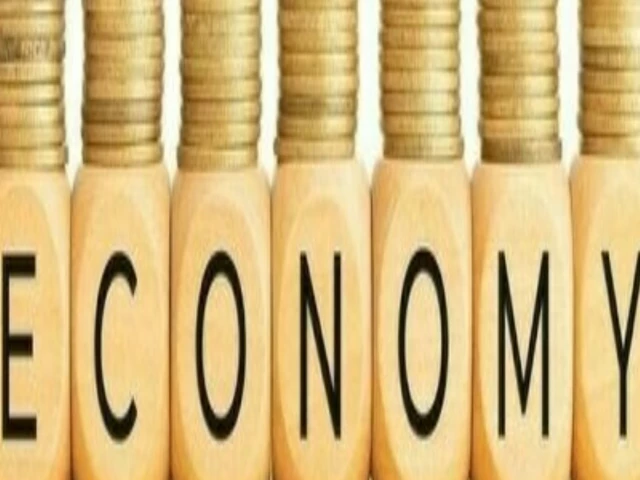
Pakistan's economic growth rate slowed to 2% during the last quarter of the previous fiscal year due to a contraction in the industrial sector, as the economy struggled to cope with continued fiscal stabilisation coupled with the impact of the Middle East conflict.
A year after The Express Tribune reported the $11 billion trade data discrepancy, the government also on Monday approved a revision of import data for five fiscal years till June 2025, adding cumulatively $14.8 billion to imports.
The National Accounts Committee (NAC) approved the "fresh" economic growth figure for the fourth quarter (April-June) of fiscal year 2025-26 and the revision in import data.
"Due to a high base growth of 6.1% in the fourth quarter of fiscal year 2025, the economy has posted a modest growth of 2% during the fourth quarter of fiscal year 2026," according to an official statement issued by the Pakistan Bureau of Statistics (PBS) after the NAC meeting.
It added that in the fourth quarter, the agriculture sector grew 3.7% but there was a contraction of 4.7% in the industrial sector, which pulled down the overall growth rate to a mere 2%.
The 118th meeting of the NAC was chaired by the secretary of the Ministry of Planning and Development. It added that the committee approved incorporation of revised imports data in the national accounts estimates from fiscal year 2021 to 2025, quarterly gross domestic product (GDP) growth rates and updated annual growth rates for the last two fiscal years.
Due to a slower growth rate in the last quarter, the government also slightly revised downward the annual growth rate for the last fiscal year to 3.65%.
Agriculture growth
Due to positive contributions from all constituents, the agriculture sector grew by 3.7% in the fourth quarter of the last fiscal year compared with almost flat growth in the corresponding period. Important crops grew by 2.2%, mainly due to increases in the annual benchmark for wheat, rice and sugarcane.
Industry
The PBS reported that industry contracted 4.7% in the fourth quarter compared with 20% value addition in the corresponding period. The government has attributed the massive contraction to the high base impact, but the prolonged period of fiscal stabilisation has hurt the formal sector. Regional tensions and the consequent increase in fuel prices have also dampened demand in the economy.
The PBS said the mining and quarrying industry still grew 8.9% due to higher mineral production, including gas (11.73%), oil (22.20%) and coal (8.17%).
Large-scale manufacturing (LSM) for the April-June quarter grew by a mere 0.41%, compared with 2.97% in the corresponding quarter. Small-scale and slaughtering witnessed normal growth. Because of an extremely high base growth of 123%, lower energy subsidies and a high consumer price index (CPI) deflator, the electricity, gas and water supply industry contracted by 33.2% in the fourth quarter of the last fiscal year, according to the PBS.
The construction industry posted growth of 3.52% due to higher cement production and higher spending on infrastructure in the public sector.
Services
The services industry grew by 3.62% in the last quarter of the previous fiscal year. The PBS stated that despite a contraction in the import component, wholesale and retail trade grew by 0.75% due to growth in agricultural and manufacturing output. The transport and storage industry grew by 3.3% due to increased road transport and railways.
Trade data revision
The PBS revised upward the import figures for five fiscal years, 2021 through 2025, due to differences in reporting between the PBS and the Pakistan Single Window (PSW) data, which was more comprehensive. The Express Tribune had reported last year that import figures were underreported by as much as $11 billion for just two fiscal years.
After the news story, the government and the International Monetary Fund (IMF) began scrutinising the data, which culminated on Monday in a revision of trade statistics.
The PBS stated that extraordinary revisions in source data also require subsequent revisions to national accounts estimates. The national statistical system has seen significant revisions in import data from fiscal year 2020-21 to fiscal year 2025 due to a systematic shift in import data compilation from Pakistan Revenue Automation Limited (PRAL) to the PSW, according to the handout.
While differences in data compiled through the two systems were relatively small during the first three years (fiscal years 2021 to 2023), significant variations emerged in fiscal years 2024 and 2025, it added.
The NAC approved that imports in fiscal year 2024-25 were in fact $64.5 billion, $6.1 billion more than earlier officially reported. Imports for fiscal year 2023-24 are now officially $59.9 billion, $5.1 billion higher than earlier reported figures.
Imports for fiscal year 2022-23 are now $56.9 billion, also higher by $1.7 billion. These were $81.1 billion for fiscal year 2021-22, higher by $1.1 billion. For fiscal year 2020-21, the new import figure is $57.3 billion, also up by $919 million.
The PBS said data on imports is used in compiling value added of wholesale and retail trade through the commodity flow approach, subsequently affecting growth rates of services and the overall economy. Further, changes in trade data also affect the economy as a whole, including overall size and per capita income, it added.
As a result of these revisions, Rs227 billion has been added to the size of the economy for fiscal year 2023-24, which then grew to Rs105.5 trillion. Likewise, the economy for fiscal year 2024-25 was increased by Rs137 billion and the total size amounted to Rs114.2 trillion, according to the PBS.
There was also a marginally positive impact of the revision in the size of the economy on per capita income.












This material may not be published, broadcast, rewritten, redistributed or derived from. Unless otherwise stated, all content is copyrighted © 2026 The Express Tribune.










COMMENTS
Comments are moderated and generally will be posted if they are on-topic and not abusive.
For more information, please see our Comments FAQ