Solar is our saviour, capacity charge our drain
Updated 1 hour ago

Oil is the largest risk, bonds are amplifiers; Islamabad's best defence is to protect reserves

Heavy borrowing to build AI infrastructure, and an oil price that has surged since the Iran war began, have created a shock in the US bond markets that has raised US long-term borrowing costs to levels not seen in almost two decades. The Trump administration's attempts to cap them, including expanded buybacks of long-dated debt and coordinated yen support with Japan, have failed to turn yields lower.
Brent crude, around $70 a barrel in early July, has since climbed above $110. The Federal Reserve, the European Central Bank and the Bank of Japan have all raised rates this summer. Because US yields anchor bond markets everywhere, the effects travel, though unevenly. Economies closely tied to America, or with fragile external finances, feel them most. Pakistan, an importer of both energy and capital, belongs to the second group.
However, this is not a sign of global recession fuelled by the Gulf crisis. The combined trade surplus of China, South Korea and Taiwan alone in September was a staggering $200 billion. What has changed is that this money is not flowing into the US bond market. The US needs the massive East Asian surplus to fund its deficit, but the surplus is landing in US equities instead. This phenomenon is known as de-reservification, where sovereign countries move dollars from traditional reserves to pension funds, banks and other investment funds.
Apparently, the dollar's role globally, and particularly in Asia, is increasingly driven by returns rather than safety. For Pakistan, higher yields matter less than what is driving them. The country sources roughly 90% of its energy from abroad, so every move in crude passes quickly into petrol, diesel, power tariffs, transport and food.
This year has already shown how fast it works. Domestic fuel prices were raised about 20% in early March as the conflict escalated. Headline inflation then rose from 7.3% in March to 10.9% in April and 11.1% in August, driven by energy, transport costs and food. Hence, the State Bank of Pakistan (SBP) raised its policy rate by 100 basis points to 11.5% in April and has held it there since, including at its September meeting. Officials have told the International Monetary Fund (IMF) that even with oil near $95, average inflation this fiscal year could stay below 9%, keeping real rates comfortably positive, but only if oil holds near $100. With Brent now above that level, the projection is being tested. A heavier fuel bill also eats into an import budget of roughly $69 billion to $70 billion, leaving less room for the machinery and raw materials that exporters need.
This removes the option of easing in the near future. That matters for the government, whose interest bill already absorbs a large share of the budget, and for businesses that need affordable credit to expand. It also complicates the official goal of 4% growth, after 3.7% in the last fiscal year. Despite that, Pakistan must keep borrowing abroad. It recently raised $3 billion through a Eurobond, a sign that market access has returned. But as US yields rise, investors demand wider spreads on frontier credits, so the next issuance, rollover or commercial loan will cost more. Capital also tends to drift towards the safety of dollar assets in such episodes, putting pressure on the rupee.
That pressure arrives at a delicate moment. Islamabad and the IMF remain divided over exchange-rate policy. The Fund wants a more market-determined rupee, while the government argues that stability contains imported inflation. Moreover, Pakistan is not entering this shock empty-handed. Reserves have been rebuilt, the current account has stayed relatively contained, and successive IMF reviews have unlocked official inflows. Dollar remittances stretch further when the rupee weakens, and domestic bond yields respond mostly to local inflation and SBP policy, so the pass-through from Washington is partial rather than automatic escalation.
What policymakers should do
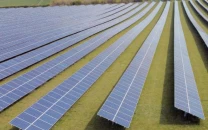
Three priorities stand out. Firstly, continue to pass through fuel prices honestly and shield the poorest with targeted support rather than blanket subsidies, which would jeopardise fiscal targets the IMF is watching. Secondly, allow the rupee reasonable flexibility instead of burning reserves to hold a line the market doubts. Thirdly, use calm windows to lock in longer-dated financing and accelerate energy substitution, from solar to domestic gas and efficiency, because every dollar of avoided oil imports is also a dollar of avoided exposure to global rates.
Pakistan's recovery is intact but newly fragile. The sell-off in US Treasuries, which has pushed 30-year yields to a 19-year high of 5.36%, will make dollars costlier, narrow SBP's room to manoeuvre and raise the price of fuel that Pakistan cannot produce itself. Oil is the largest risk. The bond market is the amplifier. Islamabad's best defence is to protect reserves, avoid spending them on an unsustainable rupee, and use the breathing room it has to cut its dependence on imported energy. If oil falls and yields stabilise, Pakistan's recovery stays on track. If both keep climbing into 2027, just as large external repayments fall due, the margin for error will shrink quickly.
THE WRITER IS A CAMBRIDGE GRADUATE AND WORKS AS A STRATEGY CONSULTANT









This material may not be published, broadcast, rewritten, redistributed or derived from. Unless otherwise stated, all content is copyrighted © 2026 The Express Tribune.





1727268465-0/Untitled-design-(42)1727268465-0-208x130.webp "sisyphus in the land of saviours")
COMMENTS
Comments are moderated and generally will be posted if they are on-topic and not abusive.
For more information, please see our Comments FAQ