PM Shehbaz condemns Houthi attacks on Saudi Arabia, calls for immediate halt
Updated 1 hour ago

Reiterates Pakistan’s commitment to the kingdom’s sovereignty, territorial integrity, security
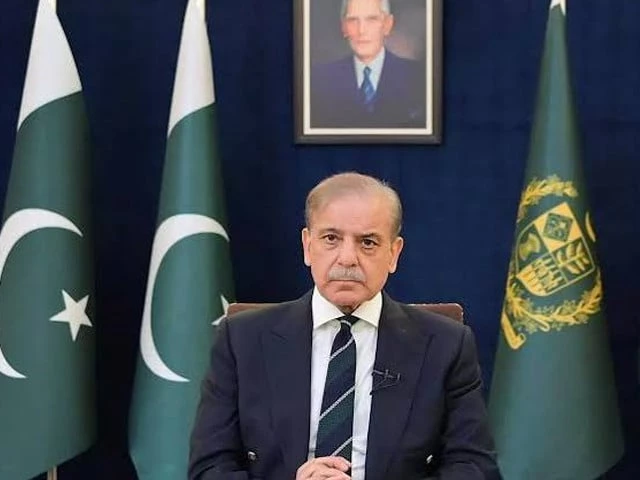
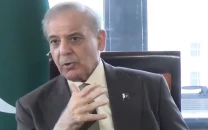
Prime Minister Shehbaz Sharif on Friday called on Yemen’s Houthi militia to “immediately cease these attacks” on Saudi Arabia, as he condemned the “repeated terrorist attacks” against the kingdom, including the targeting of airports in Riyadh and Abha.
In a post on X, PM Shehbaz said the attacks on King Khalid International Airport in Riyadh and Abha International Airport had resulted in “loss of lives and injuries to civilians”.
“I strongly condemn the repeated terrorist attacks by the Houthi militia against the Kingdom of Saudi Arabia,” he said.
I strongly condemn the repeated terrorist attacks by the Houthi militia against the Kingdom of Saudi Arabia, including the targeting of King Khalid International Airport in Riyadh and Abha International Airport, which resulted in loss of lives and injuries to civilians.
— Shehbaz Sharif (@CMShehbaz) October 9, 2026
I…
The prime minister commended the “vigilance and professionalism” of the Saudi armed forces and the coalition for intercepting multiple ballistic missiles, praising their “tireless efforts to protect innocent lives and safeguard the kingdom”.
Reaffirming Pakistan’s support, he said the country stood in “unwavering solidarity with the leadership and people of our brotherly kingdom of Saudi Arabia”.
Referring to the Makkah Joint Defence Agreement and recent decisions taken by the Strategic Political and Defence Committee, PM Shehbaz said Pakistan’s commitment to the kingdom’s “sovereignty, territorial integrity and security” was “resolute”.
He also expressed Pakistan’s “full support” for Saudi Arabia’s “legitimate right to defend its people and protect its cities and vital infrastructure”.
“We will continue to stand shoulder to shoulder with Saudi Arabia in the face of these threats,” he added.
Saudi-led coalition says it intercepted 3 Houthi ballistic missiles targeting Riyadh, Khamis Mushait
The latest attacks followed a series of Houthi missile and drone strikes targeting Saudi airports and other infrastructure. Saudi authorities said three people were killed and 36 injured, including a Pakistani national, in attacks on King Khalid International Airport in Riyadh and Abha International Airport on October 6 and 7.
The Saudi-led coalition said it had intercepted and destroyed multiple ballistic missiles launched towards Riyadh and Khamis Mushait in the southwestern Asir region. Coalition spokesman Maj Gen Turki al-Maliki said two missiles had been fired towards the Saudi capital and another towards Khamis Mushait.
Houthi military spokesman Yahya Saree claimed the group had targeted King Khalid International Airport with a ballistic missile, saying the strike had disrupted air traffic. He also warned workers at Saudi oil facilities and airlines operating in Saudi airspace about locations the group had declared targets for its military operations.
In response, the Saudi-led coalition said it had struck more than 80 Houthi military sites across the Yemeni governorates of Saada, Hodeidah, Jawf and Marib, warning that the attacks on Saudi Arabia “will not go unpunished”.
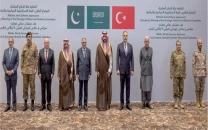
Pakistan, Saudi Arabia and Türkiye on October 5 agreed to implement their collective defence commitments and ensure the “rapid deployment” of agreed military forces and capabilities to Saudi Arabia amid escalating Houthi attacks on the kingdom. The decision was taken at an emergency meeting of the Strategic Political and Defence Committee of the Makkah Alliance for Defence in Riyadh.
Read: Information ministry rejects Reuters report on Makkah defence pact as 'speculative'
Under the decision, the committee directed the necessary measures to provide the agreed forces and capabilities and ensure their rapid deployment in Saudi Arabia, in accordance with approved arrangements and the national legislation of the three countries. It said the move would enhance “readiness, military integration, and the collective capacity to confront and counter threats”.
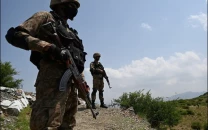
Inter-Services Public Relations Director General Lieutenant General Ahmed Sharif Chaudhry subsequently confirmed that Pakistani troops were present in Saudi Arabia in “multiple capabilities”, while the Ministry of Information and Broadcasting said operational details of the deployment remained confidential.
On August 7, Pakistan, Saudi Arabia and Turkiye formalised their longstanding strategic relationship through the newly signed MJDA, a trilateral security framework that its proponents describe as a defensive arrangement aimed at strengthening collective deterrence, enhancing military cooperation and promoting regional stability.
Houthi attacks
Houthis have repeatedly carried out missile and drone attacks against Saudi Arabia since the Yemen war escalated in 2015, targeting military installations, airports, oil facilities and other critical infrastructure.
In September 2019, the group claimed responsibility for drone attacks on Saudi Aramco’s Abqaiq processing facility and Khurais oil field, attacks that temporarily disrupted more than half of Saudi Arabia’s crude production.
The attacks continued in subsequent years, including strikes on Saudi energy infrastructure in March 2022.
More recently, Houthi attacks have again targeted Saudi territory. In September, the group claimed missile and drone strikes on a Saudi military base and other targets, while Saudi authorities reported attacks affecting several cities.
It is worth noting that on September 25, Pakistan, Saudi Arabia and Turkiye senior military leadership strongly condemned attacks targeting the holy city of Makkah as they reaffirmed their commitment to the collective defence of the kingdom under the Makkah Joint Defence Agreement.
Read more: Makkah defence alliance agrees to 'rapid force deployment' in Saudi Arabia: FO
A day after that, Saudi Defence Minister Prince Khalid bin Salman reaffirmed continued joint efforts to confront attacks targeting Makkah and civilian and economic facilities in the kingdom during a meeting with the Chief of Defence Forces (CDF) and Chief of Army Staff Field Marshal Asim Munir.
Then, on September 27, Defence Minister Asif also reiterated the resolve to implement the Makkah Joint Defence Agreement amid the rising Houthis attacks on Saudi Arabia and said that both Pakistan and Türkiye would stand with Saudi Arabia practically and diplomatically in case of any aggression.
Asif further stressed that protecting Saudi Arabia fell under divine duty.
"If there wasn't an agreement, if Saudi Arabia had been attacked, especially if the sacred cities of Makkah and Madinah were attacked, then we are bound by an eternal agreement; that is, we will protect the House of God and Madinah," he stated in an interview to a private channel.
He also outlined that the "worldly agreement" referring to the MJDA between Pakistan, Saudi Arabia and Turkiye to protect one another, would operate in all circumstances.
Significance of the Makkah Joint Defence Agreement
The MJDA was the latest step in longstanding military and strategic cooperation between Pakistan, Saudi Arabia and Turkiye. Signed in Makkah, the pact established a framework for collective deterrence and stipulated that an armed attack on any one of the three countries would be considered an attack on all three, while providing for wider cooperation across defence.
The agreement followed nearly a year of negotiations and came amid heightened instability across the Middle East. Turkiye and Pakistan had sought closer regional security cooperation, while Saudi Arabia had faced growing security concerns as conflicts spread across the region, threatening its territory, energy infrastructure and ambitious economic development plans.
For Pakistan and Saudi Arabia, the trilateral pact is built on their Strategic Mutual Defence Agreement signed in September 2025. That agreement stated that “any aggression against either country shall be considered an aggression against both” and committed the two sides to strengthening defence cooperation and joint deterrence.







This material may not be published, broadcast, rewritten, redistributed or derived from. Unless otherwise stated, all content is copyrighted © 2026 The Express Tribune.



COMMENTS
Comments are moderated and generally will be posted if they are on-topic and not abusive.
For more information, please see our Comments FAQ