$1.2b loan accord reached with IMF
Updated 49 minutes ago

Staff-level agreement subject to approval by executive board
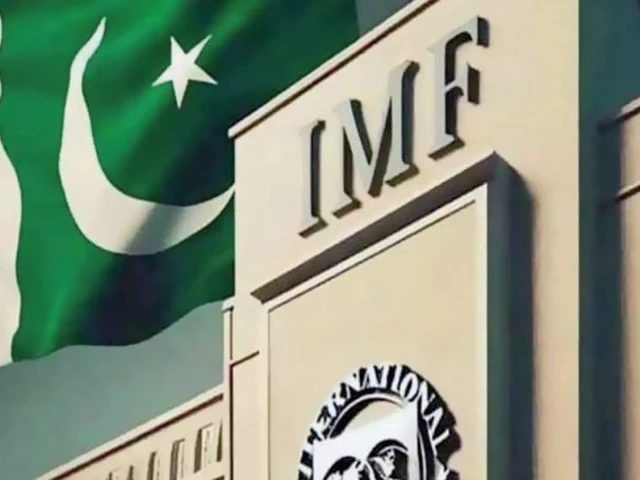
Pakistan and the International Monetary Fund (IMF) on Thursday reached a Staff-Level Agreement (SLA) on the fourth review of the 37-month Extended Fund Facility (EFF) and the third review of the 28-month Resilience and Sustainability Facility (RSF), paving the way for Pakistan to access about $1.2 billion from the Fund's resources.
The staff-level agreement is subject to approval by the IMF Executive Board and upon approval, Pakistan will have access to about $1.0 billion (SDR 760 million) under the EFF and about $210 million (SDR 154 million) under the RSF, bringing total disbursements under the two arrangements to about $5.7 billion.
The International Monetary Fund said that Pakistan should promptly phase out fuel subsidy scheme, as the number of people, who have been adversely affected by a prolonged period of fiscal adjustments, crossed 10 million and so far availed around Rs10 billion in compensations.
The global lender made its first public remarks about the government's scheme to give Rs100 per liter compensation on 20 liters of petrol used by motorcyclists and 30 liters per month by up to 800 cc car owners after the successful conclusion of review talks.
"The fuel support scheme should be phased out promptly, given its high cost and broad targeting," said Iva Petrova, the Mission Chief of the IMF.
Miss Petrova said that any future fuel supportshould oil prices surprise on the upsideshould be limited, time-bound, targeted using established social assistance programmes, and accommodated within the fiscal year 2026-27 budget envelope.
The finance ministry officially did not comment about the actual timing of phasing out the scheme but a senior official commented that there was an understanding that the scheme would continue till the approved Rs75 billion was fully exhausted.
The government had launched the nation-wise scheme on September 18 and approved Rs75 billion allocations for the fuel scheme for a period of three months, at an average of Rs25 billion per month.
According to the government officials, so far over 100 million people have registered themselves for the scheme and 9.7 million of them are motorbike owners. They said that the over Rs10 billion cost has been incurred so far and the actual fiscal impact of the scheme would be known after the end of the first month.
Initially there was a slow start of the scheme but due to constant increase in prices by the government coupled with unbearably high taxes, the number of beneficiaries is growing rapidly. A senior government functionary said that if the international prices remain high the government should think about extending the compensation to high speed diesel instead of ending it under the IMF pressure.
The Express Tribune had reported that the IMF objected to untargeted subsidy and its high cost.
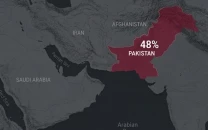
According to an alarming report by the World Bank, 48% of the poor of Middle East, North Africa, Afghanistan and Pakistan (MINAAP) region live in Pakistan. It said that the poverty rate in Pakistan increased because of prolonged period of fiscal adjustments and floods.
The IMF said that Pakistan has successfully navigated the impact of the Middle East conflict, and strong policies have helped preserve macroeconomic stability.
Iva said that "nevertheless, risks remain high, particularly from geopolitical tensions, volatile energy prices, tighter global financial conditions, and trade disruptions", said the IMF.
Pakistan has accepted the IMF's condition to amend three laws, the National Telecommunication Corporation Act, the National Bank of Pakistan Act and the Pakistan Railways Act before the approval of the loan tranche.
It added that the staff-level agreement is subject to approval by the IMF Executive Board. Upon approval, Pakistan will have access to about $1 billion under the EFF and about $210 million under the RSF, bringing total disbursements under the two arrangements to about $5.7 billion.
Petrova further said that Pakistan remained "committed to increasing health and education spending further to 2.8% of GDP in FY27, closely monitoring implementation, and reallocating resources as needed to meet this objective".
The 2.8% of GDP target is now lower than nearly 3% or Rs4.24 trillion given by the IMF earlier, as the four provinces had allocated less resources in their budgets compared to the target agreed with the IMF.
Iva said that the Pakistani authorities had arrested the long-term decline in health and education spending, raising it from 2.2% of GDP in fiscal year 2023-24 to 2.5% of GDP in FY26.
Finance Secretary Imdad Ullah Bosal said that Pakistan met the fiscal year 2025-26 IMF condition on health and education spending.
It said that the Pakistani authorities remain committed to sound macroeconomic policies, which are critical to safeguarding stability amidst the ongoing shock-prone environment. The authorities' policy priorities include:
The IMF emphasized that the SBP should maintain an appropriate monetary stance and exchange rate flexibility. "The SBP should continue maintaining an appropriately tight policy stance to ensure inflation returns durably to the SBP's target range".
It added that the exchange rate flexibility should continue to serve as an important shock absorber, while further reserve accumulation, gradual liberalization of the foreign exchange regime, and deeper domestic financial markets will strengthen resilience and support private sector development.
The IMF has again stressed that timely tariff adjustments and cost-reducing reforms remain essential to prevent renewed circular debt accumulation while protecting vulnerable consumers. Priorities include improving sector efficiency, advancing private participation in distribution, deepening electricity market competition, maintaining gas sector cost recovery, and reducing unaccounted-for gas losses.




This material may not be published, broadcast, rewritten, redistributed or derived from. Unless otherwise stated, all content is copyrighted © 2026 The Express Tribune.


COMMENTS
Comments are moderated and generally will be posted if they are on-topic and not abusive.
For more information, please see our Comments FAQ