PSX surges past 1,200 points as market sentiment improves
Updated 7 hours ago

Islamabad agrees to promptly phase out fuel subsidy scheme, and enhance governance of the state-owned companies
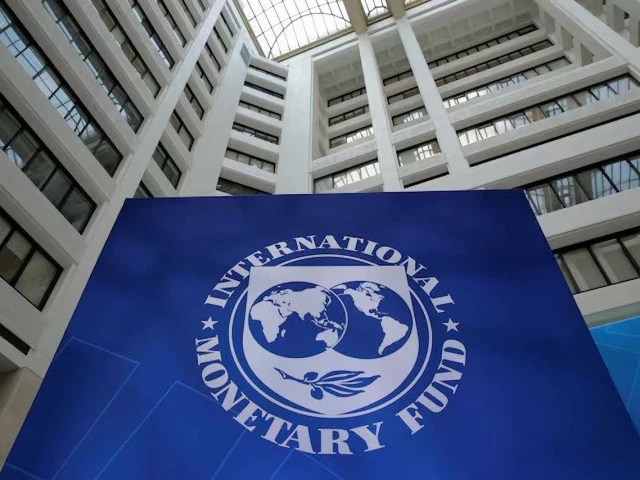
Pakistan and the International Monetary Fund have reached a staff-level agreement on $1.2 billion two loan tranches after Islamabad agreed to promptly phase out fuel subsidy scheme, bring improvements in social and health sector spending, and enhance governance of the state-owned companies.
“The IMF team has reached a staff-level agreement with the Pakistani authorities on the fourth review of the 37-month Extended Arrangement under the Extended Fund Facility (EFF) and the third review of the 28-month arrangement under the Resilience and Sustainability Facility (RSF), according to an early morning statement issued by the IMF.
It added that the staff-level agreement is subject to approval by the IMF Executive Board. Upon approval, Pakistan will have access to about $1billion under the EFF and about $210 million under the RSF, bringing total disbursements under the two arrangements to about $5.7 billion.
The IMF team was led by Ms. Iva Petrova and held discussions under the 2026 Article IV consultation and on the fourth review under the Extended Fund Facility (EFF) and the third review under the Resilience and Sustainability Facility (RSF) in Karachi and Islamabad from September 23 to October 7, 2026.
In a statement, Iva Petrova said that “the fuel support scheme should be phased out promptly, given its high cost and broad targeting”. The mission chief added that any future fuel support—should oil prices surprise on the upside—should be limited, time-bound, targeted using established social assistance programmes, and accommodated within the FY27 budget envelope.
Prime Minister Shehbaz Sharif had announced the three-month scheme and allocated Rs75 billion to compensate Rs100 per litre on 20 litres monthly consumption by motorcyclists and 30 litres by up to 800 cc car owners. He had met with the Managing Director of the IMF to convince her but could not succeed.
The Express Tribune had reported that the IMF objected to untargeted subsidy and its high cost. The government officials had claimed that despite objections, the scheme would continue for three months.
Petrova further said that Pakistan remained “committed to increasing health and education spending further to 2.8% of GDP in FY27, closely monitoring implementation, and reallocating resources as needed to meet this objective”.
The 2.8% of GDP target is now lower than nearly 3% or Rs4.24 trillion given by the IMF earlier, as the four provinces had allocated less resources in their budgets compared to the target agreed with the IMF.
Iva said that the Pakistani authorities had arrested the long-term decline in health and education spending, raising it from 2.2% of GDP in fiscal year 2023-24 to 2.5% of GDP in FY26.
The Secretary Finance Imdad Ullah Bosal said that Pakistan met the fiscal year 2025-26 IMF condition on health and education spending.
The Mission Chief said that the planned increase in targeted cash-transfer benefits, together with continued improvements in beneficiary coverage and payment systems, will strengthen protection for vulnerable households and support more inclusive growth.
The IMF said that Pakistan has successfully navigated the impact of the Middle East conflict, and strong policies have helped preserve macroeconomic stability.
Real GDP growth reached 4% in the first three quarters of FY26, and although higher energy prices and supply disruptions weakened the momentum somewhat, FY26 growth is estimated at 3.6%.
Headline inflation, after peaking in May, moderated to about 10.3% in September, while core inflation remained contained.
The current account was broadly balanced in FY26, supported by strong remittances, and gross reserves rose to about over $21 billion by end-September, according to the IMF.
“Nevertheless, risks remain high, particularly from geopolitical tensions, volatile energy prices, tighter global financial conditions, and trade disruptions”, said the IMF.
It said that the Pakistani authorities remain committed to sound macroeconomic policies, which are critical to safeguarding stability amidst the ongoing shock-prone environment. The authorities’ policy priorities include:
The government has reassured the IMF that it would achieve the primary budget surplus target of 2% of GDP in this fiscal year on the back of tax policy and revenue administration measures, is critical to placing public debt on a durable downward path.
Revenue administration reforms, including improved risk-based audits, digital invoicing, and use of third-party data, will help safeguard the revenue targets. A comprehensive medium-term tax reform strategy should make the system fairer, simpler, and more growth-friendly, while protecting revenues and reducing distortions.
It said that Pakistan was also making progress in strengthening public financial management to improve the efficiency and transparency of the budget process, public investment, procurement, and government cash management. They remain committed to reducing debt rollover risks and servicing costs amid elevated gross financing needs, while advancing the development of the domestic government securities market and diversifying the investor base.
The IMF emphasized that the SBP should maintain an appropriate monetary stance and exchange rate flexibility. “The SBP should continue maintaining an appropriately tight policy stance to ensure inflation returns durably to the SBP’s target range”.
It added that the exchange rate flexibility should continue to serve as an important shock absorber, while further reserve accumulation, gradual liberalization of the foreign exchange regime, and deeper domestic financial markets will strengthen resilience and support private sector development.
The IMF has again stressed that timely tariff adjustments and cost-reducing reforms remain essential to prevent renewed circular debt accumulation while protecting vulnerable consumers. Priorities include improving sector efficiency, advancing private participation in distribution, deepening electricity market competition, maintaining gas sector cost recovery, and reducing unaccounted-for gas losses.
Iva said that the Article IV consultation focused on reforms to support the structural transformation of the economy to higher value-added activities and reduce gaps relative to peer countries in key areas, including by strengthening competition, reducing regulatory and trade barriers, advancing privatization, enhancing SOE governance and transparency, and strengthening governance and anti-corruption institutions.
Together with efforts to introduce a simpler and fairer tax system, allocate greater public resources toward human and capital development, ensure a more cost-efficient energy sector, and deepen financial markets, these reforms are critical to raise productivity, increase labour force participation and job creation, and support private investment and exports.
In a post on X, the Ministry of Finance said IMF Mission Chief Iva Petrova held a “wrap-up session” with Finance Minister Muhammad Aurangzeb at the Q Block of the Pak Secretariat in Islamabad following the conclusion of the fourth review of the Extended Fund Facility (EFF) and the third review of the Resilience and Sustainability Facility (RSF).
At the conclusion of Fourth Review of Extended Fund Facility (EFF) and Third review of Resilience and Sustainability Facility (RSF), IMF Mission Chief Ms. Iva Petrova held a wrap up session with the Federal Minister for Finance and Revenue, Senator Muhammad Aurangzeb, at the Q… pic.twitter.com/KmIjVYqJsn
— Ministry of Finance, Government of Pakistan (@Financegovpk) October 8, 2026
The ministry said Finance Secretary Imdad Ullah Bosal and IMF Resident Representative Mahir Binici were also present.







This material may not be published, broadcast, rewritten, redistributed or derived from. Unless otherwise stated, all content is copyrighted © 2026 The Express Tribune.





COMMENTS (4)
Comments are moderated and generally will be posted if they are on-topic and not abusive.
For more information, please see our Comments FAQ