Toll on Gaza teachers
Updated 56 minutes ago

.
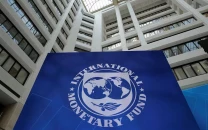
Pakistan pulled out all the stops to clinch its next $1.2 billion IMF tranche under the combined $7 billion EFF and $1.4 billion RSF frameworks. The breakthrough comes as little surprise; the government has consistently walked the talk by stringently complying with the lender's directives. By prioritising macroeconomic stability, stabilising the energy sector and driving deep structural reforms, Islamabad has successfully kept its economic programme on track. This latest tranche brings cumulative inflows under the programme to $5.7 billion, providing crucial breathing room as the government considers entering a subsequent programme next year.
The staff-level agreement is highly likely to receive approval from the IMF Executive Board, as Pakistan has met all its prior conditions. However, the discussions regarding the Article IV consultation proved delicate, as they directly tie into structural reforms aimed at transitioning the economy toward higher value-added activities. Looking ahead, Islamabad faces the steep challenge of enhancing competition, dismantling regulatory and trade barriers, accelerating privatisation and strengthening governance alongside anti-corruption institutions.
The government's austerity drive has proven to be a facade, failing to provide any meaningful relief for commoners. Instead, the IMF's persistent demands to broaden the tax base and boost revenue have resulted in crushing direct and indirect tax burdens. Regrettably, salaried professionals and middle-income earners have borne the brunt of these policies.
This inequity has fueled widespread public resentment toward the IMF and raised serious questions about the government's wisdom in shielding the elite from their fair share of economic liability. Concurrently, the IMF's pressure to maintain a high petroleum levy to address the power-sector circular debt is stifling domestic industry. By driving production costs to prohibitive levels, these energy mandates threaten to trigger a wave of industrial shutdowns, leaving the country in a dangerous paradox where the very measures meant to stabilise the economy are ultimately suffocating its engines of growth.






This material may not be published, broadcast, rewritten, redistributed or derived from. Unless otherwise stated, all content is copyrighted © 2026 The Express Tribune.






COMMENTS
Comments are moderated and generally will be posted if they are on-topic and not abusive.
For more information, please see our Comments FAQ